Contents
Spiritual and Philosophical Significance
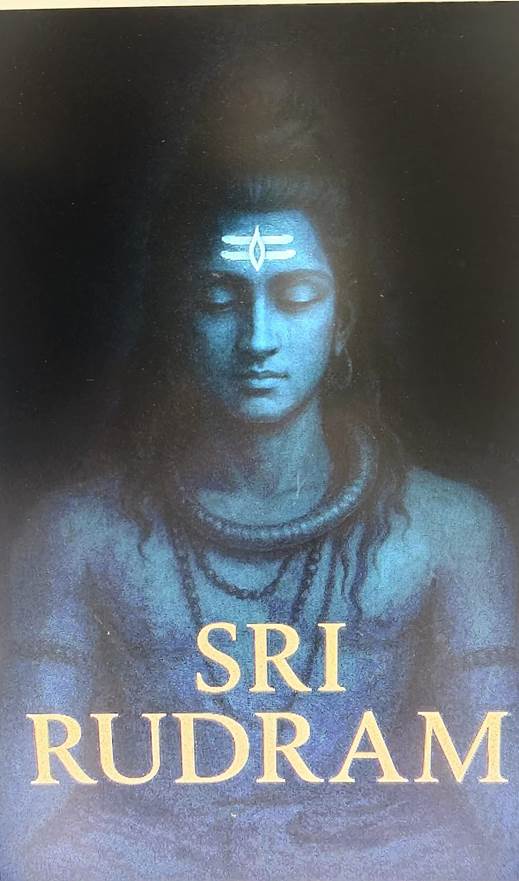
Sri Rudram
According to Hindu mythology, the cycle of creation, preservation & destruction are performed by the 'Trimurtis' Brahma, Vishnu & Rudra. The name 'Rudra' here is used to represent the fierce nature of Lord Shiva and his vital role in the cycle of life.
The Mantras or Hymns in Sri Rudram is said to bring peace and enlightenment to the reader. The source of the Panchakshari Mantra - 'Om Namah Shivaya', and the Mrityunjaya Mantra are the Sri Rudram.
Origins
Sri Rudram is found in the Krishna Yajurveda, specifically in the Taittiriya Samhita, book 4, chapters 5 to 7. It is composed in two main parts:
1. Namakam (11 Anuvākas or sections)-
The portion with repeated use of the word "Namah" (salutations), used to praise Rudra in his many forms throughout the universe. (humans, animals, nature, weapons, professions, etc.)
2. Chamakam (11 Anuvākas or sections)
The portion with repeated use of the word "Cha me" (and to me), in which the devotee asks for various spiritual and material blessings.
Together, they form a deeply devotional and philosophical hymn that simultaneously praises the divine, asks for forgiveness, and requests divine blessings.
Spiritual and Philosophical Significance
1. Universal Vision of Divinity: Rudra is seen not only in temples but in all of nature and society as the farmer, the doctor, the thief, the soldier, the priest, the wind, the water, and more. It expresses a vision of the divine immanent in all things.
2. Destruction as Renewal: Rudra is fierce, yes, but his fury destroys evil, ego, and ignorance paving the way for healing and transformation.
3. Path to Peace: Although it begins by acknowledging Rudra's wrath, the hymn gradually becomes a prayer for grace, peace, and inner balance.
4. Mantra of Healing and Protection: It is traditionally believed that chanting Sri Rudram brings spiritual purification, health, peace of mind, and divine protection. It is used in Vedic rituals like the Rudra Abhishekam and the Maha Rudra Yagna.
NAMAKAM
Anuvaka 1
In the first Anuvaka, we visualize Rudra in his fierce form-armed with bow and arrows, ready to strike. Acknowledging his power, we humbly bow and plead with him to lower his weapons. We pray for his wrath to turn into compassion, asking him to protect and bless us instead of punishing us.
Opening
(1-१)
Sanskrit:
श्री गुरुभ्योनमः । हरिः ॐ ।
Transliteration:
śrī gurubhyo namaḥ | hari ḥoṁ |
Word-by-Word Meaning:
● śrī - sacred, auspicious, or a respectful prefix
● Gurubhyo - to the gurus (spiritual teachers)
● nama ḥ- salutations, obeisance
● hari ḥ- Lord Hari (another name for Vishnu, the remover of sins)
● oṁ (ओ३म्) - the sacred primordial syllable, symbol of the ultimate reality
Poetic Meaning:
Salutations to the revered and auspicious Gurus. May the divine presence of Hari guide this sacred act. Let the supreme sound "Om" sanctify and initiate all that follows.
(2-२)
Sanskrit:
ॐ गणानां त्वा गणपति हवामहे
कविं कवीनामुपमश्रवस्तमम् ।
ज्येष्ठराजं ब्रह्मणां ब्रह्मणस्पत
आ नः शृण्वन्नूतिभिः सीद सादनम् ॥
Transliteration:
om gaņānăm tvā gan apati m havāmahe
kavi ṁ kavīnām upamaśravastamam
jyest harāja m brahmaņam brahma ņ aspata
ā na ḥ ś ẹn van ūtibhiḥ sīda sādanam
Word-by-Word Meaning:
● gan ānām- of the groups (of beings or divine hosts)
● tvā - you
● ga ṇ apati ṁ - the leader of the hosts (Gan apati)
● havāmahe - we invoke or call upon
● kavi m̀-the seer or wise one
● kavīnām - among the wise
● upamaśravastamam - the most praised or renowned
● jyeşt harājam - the foremost king or elder ruler
● brahma n ăm- among mantras or sacred knowledge
● brahma n aspate - O Lord of sacred wisdom (Br haspati or Gan apati)
● ā -toward
● na ḥ-us
● śṛṇ van - hearing (our prayers)
● sīda-be seated
● sādanam – on the seat (of the offering or sacred place)
Poetic Meaning:
Oṁ. We invoke You, O Gaṇapati, the Lord of the hosts and protector of all divine groups. You are the seer among seers, the most renowned among the wise, the most exalted among those who possess sacred knowledge. You are the king of sacred wisdom. O Brahman aspati, hear our prayers and come to sit among us with your blessings.
(3-३)
Sanskrit:
॥ ॐ नमो भगवते रुद्राय ॥
Transliteration:
Om namo bhagavate rudrāya
Word-by-word meaning:
● Om-Sacred syllable
● Namo-Salutations
● Bhagavate - To the Lord (who possesses all divine qualities)
● Rudrāya Shiva To Rudra, the fierce form of
Poetic meaning:
Salutations to Rudra, the fierce and compassionate deity, who holds the power of destruction and transformation in the universe.
Anuvaka 1 - Sloka 1
(1.1 - १.१)
Sanskrit:
नमस्ते रुद्र मन्यव उतोत इषवे नमः ।
अस्तु धन्वने बाहुभ्यामुत ते नमः ॥
Transliteration:
Namaste rudra manyava utota işave nama ḥ
Namaste astu dhanvane bāhubhyām uta te nama ḥ
Word-by-word meaning:
● Namaste- Salutations to you
● Rudra - O Rudra
● Manyava - O wrathful one
● Uta uta - And again
● Işave To the arrow
● Namah Salutations
● Astu-Let it be
● Dhanvane - To the bow
● Bahubhyām - To both arms
● Uta-And
● Te-Your
● Namah Salutations
Poetic meaning:
O Rudra, salutations to your fierce anger, your arrow, your bow, and your powerful arms. May your wrath turn away from us.
Anuvaka 1 - Sloka 2
(1.2 - १.२)
Sanskrit:
यात इषुः शिवतमाः शियं बभूव ते धनुः ।
शिवा शरख्या या तय तया नो रुद्र मृडय ॥
Transliteration:
Yāta ișu ḥ śivatamă ḥ śiva ṁ babhūva te dhanu ḥ
śivā śaravyā yā tava tayā no rudra m ṛḍ aya
Word-by-word meaning:
● Yāta- Released
● ișu ḥ - Arrow
● Śivatamā ḥ - Most auspicious
● S̀iva ṁ - Auspiciousness
● Babhūva - Has become
● Te- Your
● Dhanu ḥ- Bow
● Śiva - Auspicious
● Śaravya - With the arrow
● Ya- Which
● Tava- Your
● Tayā- With that
● Na ḥ - Us
● Rudra- O Rudra
● Mṛḍ aya - Make us happy, bless us
Poetic meaning:
May the arrows and the bow you wield, which are full of auspiciousness, become a source of peace. Use them to shower compassion and mercy upon us, O Rudra.
Anuvaka 1 - Sloka 3
(1.3 - १.३)
Sanskrit:
या ते रुद्र शिवा तनू रघोराऽपापकाशिनी ।
तया नस्तनुवा शन्तमया गिरिशंताभिचाकशी ॥
Transliteration:
Yā te rudra śivā tanú raghora'pāpakāśinī
Tayā nas tanuvā śantamaya giriśanta abhichākaśīhi
Word-by-word meaning:
● Yā-Which
● Te - Your
● Rudra-O Rudra
● śivā Auspicious
● Tanú-Form, body
● Raghora' - Less terrifying
● Apāpakāśinī - Destroyer of sins
● Tayā- With that
● Na ḥ - Us
● Tanuvā-With the body
● Śantamayā - Peaceful
● Giriśanta-Lord of the mountains
● Abhichākaśīhi - Shine upon us, appear to us
Poetic meaning:
O Rudra, whose form can be fierce or kind, manifest your gentle, sin-destroying form and grace us with your peaceful presence.
Anuvaka 1 - Sloka 4
(1.4 - १.४)
Sanskrit:
यामिषु गिरिशंत हस्ते बिभर्घ्यस्तवे।
शियां गिरित्र तां कुरु मा हिंसीः पुरुषं जगत् ॥
Transliteration:
Yamiṣu ṁ giris̀anta haste bibharṣy astave
S̀ivă ṁ giritra tă ṁ kuru mā hi m sī ḥ puruṣa ṁ jagat
Word-by-word meaning:
● Yamișu - That arrow
● Giris̀anta - O Lord of the mountains
● Haste - In your hand
● Bibharși - You hold
● Astave - For shooting
● Šivă ṁ - Auspicious
● Giritra-O Lord of mountains
● tă ṁ kuru - Make that (arrow)
● mā hi m sī ḥ - Do not harm
● puruṣa ṁ - Any person
● Jagat-In the world
Poetic meaning:
O Lord of the mountains, make the arrows in your hand a source of auspiciousness. Do not harm the people of the world.
Anuvaka 1 - Sloka 5
(1.5 - १.५)
Sanskrit:
शिवेन वचसा त्या गिरिशाच्छा बदामर्सा ।
यथा नः सर्वमिज्जगदयक्ष्मं सुमना असत् ॥
Transliteration:
Śivena vacasā tvā giriśācchā vadāmasi
Yathā na ḥ sarvam ijjagadayakşma ṁ sumanā asat
Word-by-word meaning:
● Śivena - Auspicious
● Vacasā-Words/speech
● Tvā - You
● Giriśā O Lord of the mountains
● Acchā-Clearly, directly
● Vadāmasi - We address/speak to
● Yathā-So that
● Na ḥ-For us
● Sarvam-All
● Ij-jagat-This moving world
● Ayakşma-Free from disease
● Sumană ḥ - Cheerful-minded
● Asat-May it be
Poetic meaning:
O Lord of the mountains, we speak to you with auspicious words. May the entire living world be free of disease and filled with peace and joy through your grace.
Anuvaka 1 - Sloka 6
(1.6 - १.६)
Sanskrit:
अध्यवोचदर्धा वक्ता प्रथमोदैव्योभिषक् ।
अहीश्च सर्वाञ्जम्भयन्त्सर्याश्च यातुधान्यः ॥
Transliteration:
Adhyavocad adhi vaktā prathamo daivyo bhiṣak
Ahīś ca sarvān jambhayant sarvāś ca yātudhānya ḥ
Word-by-word meaning:
● Adhyavocad - Spoke forth
● Adhi - Upon
● Vaktā - Speaker
● Prathama ḥ- First
● Daivya ḥ- Divine
● Bhiṣak - Physician/healer
● Ahīn - Serpents
● Ca-And
● Sarvān - All
● Jambhayant - Causes to be destroyed
● Sarvān-All
● Yatudhānya ḥ - Demons, harmful beings
Poetic meaning:
He, the first divine healer, spoke sacred words. He destroys all poisons and evil beings, protecting us from both internal and external harms.
Anuvaka 1 - Sloka 7
(1.7 - १.७)
Sanskrit:
असौ यस्ताम्रो अरुण उत बभ्रुः सुमंगलः ।
ये चेमां रुद्रा अभितो दिक्षु श्रिताः सहस्त्रशोऽवैषां हेड ईमहे ॥
Transliteration:
Asau ya ḥ tāmro aru ṇ a uta babhru ḥ suma ṅ gala ḥ
Ye ca imā ṁ rudrā abhito dikșu śritā ḥ sahasraśo'vaişā ṁ he ḍ a īmahe
Word-by-word meaning:
● Asau-That
● Ya ḥ-Who
● Tāmra ḥ-Red
● Aru ṇ a ḥ-Reddish-brown
● Uta-And
● Babhru ḥ - Tawny-colored
● Suma ṅ gala ḥ - Very auspicious
● Ye-Who
● Ca-And
● Imām-This (earth)
● Rudrāa ḥ-Rudras
● Abhita ḥ-All around
● Dikṣu - In directions
● S̀ritā ḥ - Reside
● Sahasraśa ḥ- In thousands
● Avaiṣām - Of those
● He ḍ a ḥ- Offense
● Īmahe -We seek to avoid
Poetic meaning:
We salute that Rudra who glows red, tawny, and is a sign of great auspiciousness. To the thousands of Rudras dwelling in all directions of the world, we offer reverence and beg for forgiveness of any offense.
Anuvaka 1 - Sloka 8
(1.8 - १.८)
Sanskrit:
असौ योऽवसर्पर्ता नीलग्रीवो विलोहितः ।
उतेनं गोपा अदृशन्नदृशन्नुदहार्यः ।
उतेनं विश्वा भूताना स दृष्टो मृडयार्ता नः ॥
Transliteration:
Asau yo' vasarpati nilagrīvo vilohita ḥ
Utainam gopā ad ṛ śan ad ṛ śan udahārya ḥ
Utainam viśvā bhūtāni sa d ṛ ṣ ṭ om ṛḍ ayāti na ḥ
Word-by-word meaning:
● Asau- That one
● Ya ḥ - Who
● Avasarpati - Moves down (descends)
● Nīlagrīva ḥ- Blue-necked
● Vilohita ḥ _Very red
● Uta-And
● Enam-Him
● Gopā ḥ Cowherds
● Ad ṛ s̀an - Saw
● Udahārya ḥ- Water-carriers
● Viśvā - All
● Bhūtāni - Beings
● Sa ḥ-He
● D ṛ ṣ ṭ a ḥ- When seen
● Mṛḍ ayātī- Shows mercy
● Na ḥ - Us
Poetic meaning:
That Rudra with the blue neck and red form who descends before our eyes is seen even by cowherds and water-bearers. All beings behold him, and having seen him, he grants us his compassion.
Anuvaka 1 - Sloka 9
(1.9 - १.९)
Sanskrit:
नमो अस्तु नीलग्रीवाय सहस्राक्षाय मीदुषे।
अथो ये अस्य सत्वानोऽहं तेभ्योऽकरण्नमः ॥
Transliteration:
Namō astu nīlagrīvāya sahasrākṣāya mī ḍ huṣe
Athō ye asya satvāna ḥ aha ṁ tebhyo akaran nama ḥ
Word-by-word meaning:
● Namo astu-Salutations be
● Nīlagrīvāya - To the blue-throated one
● Sahasrākṣāya - To the thousand-eyed
● Mī ḍ huṣe - To the giver of rain, prosperity
● Athō-Also
● Ye-Who
● Asya-Of him
● Satvāna ḥ- Beings, forms
● Aha ṁ -I
● Tebhya ḥ -To them
● Akaram nama ḥ- Offer salutations
Poetic meaning:
Salutations to the blue-throated, thousand-eyed Rudra who bestows blessings. I also bow to all his many manifestations and forms.
Anuvaka 1 - Sloka 10
(1.10 - १.१०)
Sanskrit:
प्रपुंच धन्वनस्त्यमुभयोरार्बियोज्यम् ।
याश्च ते हस्त इषयः परा ता भगवो वप ॥
Transliteration:
Pramuñca dhanvanas tvam ubhayor ārtniyor jyām
Yāś ca te hasta iṣava ḥ parā tā bhagavo vapa
Word-by-word meaning:
● Pramuñca - Release
● Dhanvana ḥ- Of the bow
● Tvam - You
● Ubhayo ḥ- Of both ends
● Ārtniyo ḥ-Drawn (bowstring ends)
● Jyām-Bowstring
● Yā ḥ - Which
● Ca-And
● Te - Your
● Hasta ḥ-Hand
● Iṣava h-Arrows
● Parā - Away
● Tā ḥ - Them
● Bhagava ḥ- O Lord
● Vapa-Throw down
Poetic meaning:
O Lord, loosen the bowstring from your drawn bow. Cast away the arrows in your hand. We seek your peace, not your wrath.
Anuvaka 1 - Sloka 11
(1.11 - १.११)
Sanskrit:
अवतत्य धनुस्त्व सहस्राक्ष शतेषुधे।
निशीर्य शल्यानां मुखा शिवो नः सुमना भव ॥
Transliteration:
Avatatya dhanu ḥ tvam sahasrākṣa śateşudhe
Niśīrya śalyānā ṁ mukhā śivo na ḥ sumanā bhava
Word-by-word meaning:
● Avatatya-Lowering
● Dhanu ḥ -Bow
● Tvam - You
● sahasrākṣa - O thousand-eyed
● Śateṣudhe - Possessor of a hundred arrows
● Niśīrya-Scatter away
● Śalyānām - Of the darts
● Mukhā ḥ - Points
● Śiva ḥ-Auspicious one
● Na ḥ- For us.
● Sumanā ḥ - Kind-hearted
● Bhava - Become
Poetic meaning:
O Rudra, the thousand-eyed archer, lower your bow and scatter your darts. Become kind and gentle toward us.
Anuvaka 1 - Sloka 12
(1.12 - १.१२)
Sanskrit:
विज्यं धनुः कपर्दिनो विशल्यो बाणया उत ।
अनेशन्नस्येषव आभुरस्य निषङ्गथिः ॥
Transliteration:
Vijya ṁ dhanu ḥ kapardino vīśalyo bā ņ avā uta
Aneśan asya iṣava abhurasya niṣa ṅ gathi ḥ
Word-by-word meaning:
● Vijyam-Tightly strung
● Dhanu ḥ - Bow
● Kapardino - Of the matted-haired one
● Vīśalya ḥ - Without arrows
● Bā ņ avā ḥ - Quiver of arrows
● Uta-And
● Aneśan - Unmastered, uncontrolled
● Asya - His
● Iṣava ḥ- Arrows
● Ābhurasya- Quiver
● Niṣa ṅ gathi ḥ - Sword sheath
Poetic meaning:
May the bow of the matted-haired Rudra remain unstrung and free of arrows. May the weapons in his quiver and sheath not be directed toward us.
Anuvaka 1 - Sloka 13
(1.13 - १.१३)
Sanskrit:
या ते हेतिर्मीढुष्टम हस्ते बभूव ते धनुः ।
तया अस्मान् विश्वतस्त्वमयक्ष्मया परिभुज ॥
Transliteration:
Yā te hetir mī ḍ huṣ ṭ ama haste babhūva te dhanu ḥ
Tayā asmān viśvatas tvam ayakṣmayā paribhuja
Word-by-word meaning:
● Yā - Which
● Te-Your
● Heti ḥ - Weapon
● Mī ḍ huṣ ṭ ama - Most gracious one
● Haste-In hand
● Babhūva - Exists
● Dhanu ḥ - Bow
● Tayā - With that
● Asmān-Us
● Viśvata ḥ- From all directions
● Tvam-You
● Ayakṣmayā - Free from disease
● Paribhuja - Protect, embrace
Poetic meaning:
O gracious Lord, with that weapon in your hand, protect us from every side, shielding us from all harm and disease.
Anuvaka 1 - Sloka 14
(1.14 - १.१४)
Sanskrit:
नमस्ते अस्त्वायुधायानातताय धृष्णये।
उभाभ्यामुत ते नमो बाहुभ्यां तव धन्यने ॥
Transliteration:
Namaste astu āyudhāya anātatāya dh r ṣ ņ ave
Ubhābhyām uta te namo bāhubhyā m tava dhanvane
Word-by-word meaning:
● Namaste astu - Salutations be
● Āyudhaya - To the weapon
● Anātatāya - To the unstrung (peaceful) one
● Dh r ṣ ņ ave - The bold, powerful one
● Ubhābhyām - To both
● Uta - Also
● Te-Your
● Namo - Salutations
● Bāhubhyām - To the arms
● Tava - Your
● Dhanvane-To the bow
Poetic meaning:
Salutations to your weapon, whether strung or unstrung, to your mighty arms, and to your bow-O powerful one!
Anuvaka 1 - Sloka 15
(1.15 - १.१५)
Sanskrit:
परिते धन्वनो हेतिरस्मान् गुणक्तु विश्वतः ।
अथो य इषुधिस्तवारे अस्मन्निधेहितम् ॥
Transliteration:
Pari te dhanvano hetir asmān v ṛṇ aktu viśvata ḥ
Athō ya iṣudhi ḥ tavāre asmān nidhehi tam
Word-by-word meaning:
● Pari - Around
● Te-Your
● Dhanvana ḥ- Of the bow
● Heti ḥ - Weapon
● Asmān-Us
● V ṛṇ aktu-Cover, shield
● Viśvata ḥ- On all sides
● Athō-Therefore
● Ya ḥ- Which
● Iṣudhi ḥ - Quiver
● Tava - Your
● Are-Far away
● Asmān-Us
● Nidhehi-Place
● Tam-That
Poetic meaning:
May your weapon protect us from all sides, and may you set your quiver far away from us, so that we remain safe and blessed.
NAMAKAM
Anuvaka 2
In this Anuvaka, Rudra is invoked not just as a fearsome god, but as the cosmic ruler of all domains-of nature, humanity, warfare, agriculture, trade, medicine, and more. We offer salutations to his presence in every force and form-visible and hidden-recognizing that his divinity pervades every aspect of the world and our lives.
Anuvaka 2 - Sloka 1
(2.1 - २.१)
Sanskrit:
नमस्ते अस्तु भगवन् विश्वेश्वराय महादेवाय
त्र्यम्बकाय त्रिपुरान्तकाय त्रिकाग्निकालाय
कालाग्निरुद्राय नीलकण्ठाय मृत्युंजयाय
सर्वेश्वराय सदाशिवाय श्रीमन्महादेवाय नमः ॥
Transliteration:
Namaste astu bhagavan viśveśvarāya mahādevāya
Tryambakāya Tripurāntakāya trikāgnikālāya
kālāgni-rudrāyaNīlaka ṇṭ hāya m ṛ tyuñjayāya
Sarveśvarāya Sadāśivāya śrīman-mahādevāya nama ḥ
Word-by-word meaning:
● Namaste astu - Salutations be
● Bhagavan - O Lord
● Viśveśvarāya - Lord of the universe
● Mahādevāya - Great God
● Tryambakāya - Three-eyed one
● Tripurāntakāya (three cities of evil) Destroyer of Tripura
● Trikāgni-kālāya - Master of the three fires and time
● Kālāgni-rudrāya Rudra as the fire of time/death
● Nīlaka ṇṭ hāya - Blue-throated one
● m ṛ tyuñjayāya - Conqueror of death
● Sarveśvarāya - Lord of all
● Sadāśivāya - Ever-auspicious one
● Śrīman-mahādevāya - Resplendent Great Lord
● Nama ḥ -Salutations
Poetic meaning:
Salutations to you, O glorious Lord of the Universe, the great and mighty Mahadeva, the three-eyed one, the destroyer of evil Tripura, master of time and fire, the blue-throated one, the conqueror of death, the Supreme Lord of all. You are the eternally auspicious and glorious Mahadeva - to you, we bow.
Anuvaka 2 - Sloka 2
(2.2 - २.२)
Sanskrit:
नमो हिरण्यचाहवे सेनान्ये दिशां च पतये नमो नमः
वृक्षेभ्यो हरिकेशेभ्यः पशूनां पतये नमो नमः
सस्पिञ्चराय त्विषीमते पथीनां पतये नमो नमः
बभ्लुशाय विव्याधिने अन्नानां पतये नमो नमः
हरिकेशाय उपवीतिने पुष्टानां पतये नमो नमः
भवस्य हेत्यै जगतां पतये नमो नमः
रुद्रायाततायिने क्षेत्राणां पतये नमो नमः
सूतायाहन्त्याय वनानां पतये नमो नमः
Transliteration:
Namo hira ņ ya-bāhave senānye diśā ṁ ca pataye namo nama ḥ
V ṛ kṣebhyo harikeśebhyaḥ paśūnā ṁ pataye namo nama ḥ
Saspin̄carāya tviṣīmate pathinā ṁ pataye namo nama ḥ
Babhluśāya vivyādhinne annānā ṁ pataye namo nama ḥ
Harikeśāya upavītine puṣț ānā ṁ pataye namo nama ḥ
Bhavasya hetyai jagatā ṁ pataye namo nama ḥ
Rudrāyātatāvine kșetrā ņ a ṁ pataye namo nama ḥ
Sūtāyāhantyāya vanānā ṁ pataye namo nama ḥ
Word-by-word meaning:
● Namo hiran ya-bāhave Salutations to the golden-armed one
● Senānye- Commander of armies
● Diśā m ca pataye - Lord of all directions
● V ṛ kṣebhyo harikeśebhyaḥ - with green locks (foliage) To trees
● Paśūnā ṁ pataye - Lord of all creatures
● Saspiñcarāya tviṣimate - Bright-hued and radiant one
● Pathīnā ṁ pataye - Lord of pathways
● Babhluśāya vivyādhinne - To the tawny-haired one who afflicts
● Annānā ṁ pataye - Lord of food and sustenance
● Harikeśāya upavītine - Green-haired, sacred-thread-wearing one
● puṣț ānā ṁ pataye - Lord of the nourished
● Bhavasya hetyai - The weapon of Bhava (Rudra)
● Jagatā ṁ pataye - Lord of the world
● Rudrāya ātatāvine- Rudra, the archer with stretched bow
● Kṣetrā ņām pataye - Lord of farmlands
● Sūtāya ahantyaya - To the charioteer and destroyer
● Vanānā m pataye - Lord of forests
Poetic Meaning:
Salutations to Rudra, the golden-armed commander of the cosmic forces, the master of directions, nature, and all beings. We bow to the one who dwells in trees, travels the paths, governs food, health, and sustenance. We honor him as the wielder of weapons, protector of lands, and lord of all that grows and moves even the charioteer who roams and hunts, o lord of the wild.
Anuvaka 2 - Sloka 3
(2.3 - २.३)
Sanskrit:
रोहिताय स्थपतये वृक्षाणां पतये नमो नमः
मन्त्रिणे वाणिजाय कक्षाणां पतये नमो नमः
भुवंतये वारियस्कृताय औषधीना ṁपतये नमो नमः
उच्चैर्घोषाय आकन्दयते पत्तीनां पतये नमो नमः
कृत्स्नवीताय धायते सत्यनां पतये नमः
Transliteration:
Rohitāya sthapataye vṛ kṣā ņā ṁ pataye namo nama ḥ
Mantri ṇ e vā ṇ ijāya kakṣā ņā ṁ pataye namo nama ḥ
Bhuvanta ye vāri-vask ṛ tāya auṣadhīnā ṁ pataye namo nama ḥ
Uccair ghoṣāya ākrandayate pattīnā ṁ pataye namo nama ḥ
K ṛ tsna-vītāya dhāvate satvanā m pataye nama ḥ
Word-by-word meaning:
● Rohitāya sthapataye - To the red-hued architect
● Vṛ kṣā ņā ṁ pataye - Lord of the trees
● Mantri ṇ e vā ṇ ijāya - To the counselor and merchant
● kakṣā ņā ṁ pataye- sanctums or forest edges Lord of inner
● Bhuvanta ye vāri-vask ṛ tāya - Earth-dweller and water-creator
● Auṣadhīnā ṁ pataye - Lord of medicinal herbs
● Uccair ghoṣāya ākrandayate- roaring, war-crying one Loud-
● Pattīnā ṁ pataye - Lord of foot soldiers
● K ṛ tsna-vītāya dhāvate -All-pervading and swiftly moving
● Satvanā m pataye - Lord of all beings
Poetic Meaning:
We bow to Rudra, the red-hued cosmic builder and architect of trees, the strategist, the trader, and the spirit dwelling in secret groves. He is the one who shapes the earth and brings water, the healer through herbs, the war-crying leader of warriors, and the swift, all-encompassing lord of life.
NAMAKAM
Anuvaka 3
In this Anuvaka, we acknowledge Rudra's omnipresence in all beings and actions - even those considered outcasts, warriors, or forest dwellers. Whether among protectors or aggressors, day or night dwellers, in motion or at rest, Rudra resides in every aspect of life, including the hidden, wild, and fierce. We bow to this all-pervading divinity, asking for peace and alignment with his universal rhythm.
Anuvaka 3 - Sloka 1
(3.1 - ३.१)
Sanskrit:
नमः सहमानाय निव्याधिन आव्याधिनीनां पतये नमो नमः
ककुभाय निषङ्गिणे स्तेनानां पतये नमो नमः
निषङ्गिण इषुधिमते तस्कराणां पतये नमो नमः
यञ्चते परिवञ्चते स्तायूनां पतये नमो नमः
निचेरवे परिचराय आरण्यानां पतये नमो नमः
सृकाविभ्योजिघासद्भ्यो मुष्णतां पतये नमो नमः
ऽसिमद्भ्यो नक्तं चरद्भ्यः प्रकृन्तानां पतये नमो नमः
उष्णीषिणे गिरिचराय कुलुञ्चानां पतये नमो नमः
Transliteration:
Nama ḥ sahamānāya nivyādhinā āvyādhinīnā ṁ pataye namo nama ḥ
Kakubhāya niāṣan gi ņe stenānā ṁ pataye namo nama ḥ
Niṣa ṅ gi ṇa ișudhimate taskarā ṇ ā ṁ pataye namo nama ḥ
Vañcate parivañcate stayūnā ṁ pataye namo nama ḥ
Nicerave paricarāya āra ṇ yānā ṁ pataye namo nama ḥ
S ṛ kāvibhyo jighāsadbhyo muṣ ṇ atā ṁ pataye namo nama ḥ
Asimadbhyo nakta m caradbhya ḥ prakr ntānā ṁ pataye namo nama ḥ
Uṣ niṣine giricarāyakuluñcānā ṁ pataye namo nama ḥ
Word-by-word Meaning:
● Sahamānāya- to the enduring one
● Nivyādhinā - who afflicts secretly
● Āvyādhinīnā - openly of those who afflict
● Kakubhāya - to the lord of regions (directions)
● Niāṣan gi ņe -to the one with a quiver
● Stenānā ṁ - of thieves
● Ișudhimate -bearer of a quiver
● taskarā ṇ ā ṁ - of robbers
● Vañcate- to the deceiver
● Parivañcate - to the cheater
● Stayūnā ṁ - of burglars
● Nicerave- to the one who moves stealthily
● Paricarāya - to the wanderer
● Aranyānām - of the forest-dwellers
● Srkāvibhyaḥ - to those with destructive implements
● Jighāsadbhyaḥ - to those intent on seizing
● Muṣ ṇ atā ṁ - to those who steal
● Asimadbhyaḥ - to those who carry swords
● naktam caradbhyaḥ - to night wanderers
● prakṛntānām - of the killers or slashers
● Uṣ niṣine - to the one with a turban
● Giricarāya - to the one who moves in the mountains
● Kuluncānām - of the tribal or mountain people
Poetic Meaning:
We salute Rudra who afflicts both openly and secretly, who reigns over all directions, who carries a quiver and moves amongst thieves and outlaws.
We worship the lord of tricksters and wanderers, the stalker of the forests, the one who wields destructive tools and prowls in the night with sword in hand. May Rudra, the mountain-dweller with his turbaned form, protector of the wild and hidden, be kind to us.
Anuvaka 3 - Sloka 2
(3.2 - ३.२)
Sanskrit:
इषुमद्भय ओधन्याविभ्यश्च वो नमो नमः
आतन्यानेभ्यः प्रतिदधानेभ्यश्च वो नमो नमः
आयच्छद्भ्यो विसृजभ्यश्च वो नमो नमः
ऽस्यद्भ्यो विद्ध्यद्भ्यश्च वो नमो नमः
आसीनेभ्यः शयानेभ्यश्च वो नमो नमः
स्वपद्भ्यो जात्रद्भ्यश्च वो नमो नमः
स्तिष्ठयो धावद्भ्यश्च यो नमो नमः
सभाभ्यः सभापतिभ्यश्च वो नमो नमः
अश्वेभ्योऽश्वपतिभ्यश्च वो नमः
Transliteration:
iṣumadbhya o dhanvāvibhyaś ca vo namo namaḥ
ātanvānebhyaḥ pratidadhānebhyaś ca vo namo namaḥ
āyacchadbhyo visṛjadbhyaś ca vo namo namaḥ
'asyadbhyo viddhyadbhyaś ca vo namo namaḥ
āsīnebhyaḥ śayānebhyaś ca vo namo namaḥ
svapadbhyo jāgradbhyaś ca vo namo namaḥ
stisthadbhyo dhāvadbhyaś ca vo namo namah
sabhābhyaḥ sabhāpatibhyaś ca vo namo namah
aśvebhyo 'śvapatibhyaś ca vo namaḥ
Word-by-word Meaning:
● Iṣumadbhya ḥ - to those bearing arrows
● dhanvāvibhyaḥ - to those carrying bows
● ātanvänebhyaḥ - to those who string their bows
● pratidadhānebhyaḥ -unstring them to those who
● ayacchadbhyaḥ -to those drawing (the bow)
● visṛjadbhyaḥ -to those releasing (the
● arrow)
● asyadbhyaḥ – to those shooting
● viddhyadbhyaḥ – to those piercing
● āsīnebhyaḥ - to those who are seated
● śayānebhyaḥ - to those lying down
● svapadbhyaḥ - to those sleeping
● jāgradbhyaḥ - to those awake
● stisthadbhyaḥ – to those standing
● dhāvadbhyaḥ – to those running
● sabhābhyaḥ – to those in assemblies
● sabhāpatibhyaḥ assemblies to the leaders of
● aśvebhyaḥ - to horses
● aśvapatibhyaḥ - to the lords of horses
Poetic Meaning:
Salutations to all those who bear weapons-those who wield bows and arrows, who string and unstring them, who draw and release, who shoot and pierce. We honor those who sit or lie down, sleep or remain awake, stand or run, and all who gather in assemblies -both members and leaders. We bow to horses and their riders, recognizing the divine presence within every form and role.
NAMAKAM
Anuvaka 4
In Anuvaka 4, we offer salutations to Rudra in all his earthly manifestations, especially those engaged in various roles of society and warfare.
This Anuvaka recognizes divine presence in all people from warriors, charioteers, and craftsmen to hunters, guards, and even animals.
It acknowledges that Rudra pervades every profession, every community, both great and small. By bowing to these diverse forms, we show reverence to the totality of life and human activity, seeing all as sacred expressions of Rudra.
Anuvaka 4 - Sloka 1
(4.1 - ४.१)
Sanskrit:
नम आव्याधिनीभ्यो विविध्यन्तीभ्यश्च वः नमो नमः
उगणाभ्यः स्तृहतीभ्यश्च वः नमो नमः
गृत्सेभ्यो गृत्सपतिभ्यश्च वः नमो नमः
ब्रातेभ्यो व्रातपतिभ्यश्च वः नमो नमः
गणेभ्यो गणपतिभ्यश्च वः नमो नमः
विरूपेभ्यो विश्वरूपेभ्यश्च वः नमो नमः
महद्भ्यः क्षुल्लकेभ्यश्च वः नमो नमः
रथिभ्योऽरथेभ्यश्च वः नमो नमः
Transliteration:
Nama āvyādhinībhyo vividhyantībhyaś ca vah namo namaḥ
Ugaṇābhyaḥ stṛhatībhyaś ca vaḥ namo namaḥ
Gṛtsebhyō gṛtsapatibhyaś ca vaḥ namo namaḥ
Vrātebhyo vrātapatibhyaś ca vaḥ namo namaḥ
Gaṇebhyo gaṇapatibhyaś ca vaḥ namo namaḥ
Virūpebhyo viśvarūpebhyaś ca vaḥ namo namaḥ
Mahadbhyaḥ kṣullakebhyaś ca vaḥ namo namaḥ
Rathibhyo'rathebhyaś ca vaḥ namo namaḥ
Word-by-Word Meaning:
● avyādhinībhyo – to those who shoot from ambush
● vividhyantībhya - to those who pierce in various ways
● Ugaņābhyaḥ squads to small war-bands or
● strhatībhya - to those who scatter enemies
● Gṛtsebhyō - to chanters or seers
● gṛtsapatibhya - to leaders of chanters
● Vrātebhyo - to armed groups or militias
● Vrātapatibhyaś - to chiefs of such bands
● Gaṇebhyo - to hosts or gatherings
● gaṇapatibhyaś - to lords of hosts
● Virūpebhyo- to the deformed or misshapen
● Viśvarūpebhyaś - to those of all forms
● Mahadbhyaḥ - to the great ones
● Kṣullakebhyaś - insignificant ones to the small or
● Rathibhyo' -to chariot-riders
● Athebhyaś - to those without chariots
● Arathebhya -to chariots in general (alternate reading)
Poetic Meaning:
We bow to those who attack unseen, who strike with weapons swift and keen,
To warriors roaming in scattered bands, and leaders guiding with skilled hands.
To singers of hymns and seers profound, to rulers where troops abound.
To hosts that gather, form and break, and their lords who storms awake.
To forms bizarre, and forms divine, to great and small in every line..
To charioteers who race and fight, and footmen too, who guard by night.
To every shape and rank and name - our salutations just the same.
Anuvaka 4 - Sloka 2
(4.2 - ४.२)
Sanskrit:
ओरथेभ्यः रथपतिभ्यश्च वः नमो नमः
सेनाभ्यः सेनानिभ्यश्च वः नमो नमः
क्षत्तृभ्यः संग्रहीतृभ्यश्च वः नमो नमः
स्तक्षभ्यो रथकारेभ्यश्च वः नमो नमः
कुलालेभ्यः कमरिभ्यश्च वः नमो नमः
पुञ्जिष्टेभ्यो निषादेभ्यश्च वः नमो नमः
इषुकृद्भ्यः धन्यकृद्भ्यश्च वः नमो नमः
मृगयुभ्यः श्वनिभ्यश्च वः नमो नमः
श्वभ्यः श्वपतिभ्यश्च वः नमः
Transliteration:
Rathebhyaḥ Rathapatibhyaś ca vaḥ namo namaḥ
Senābhyaḥ senānibhyaś ca vaḥ namo namaḥ
Kṣattṛbhyaḥ saṅgrahītṛbhyaś ca vaḥ namo namaḥ
Stakṣabhyo rathakārebhyaś ca vaḥ namo namaḥ
Kulālebhyaḥ karmārebhyaś ca vaḥ namo namaḥ
Puñjiṣṭebhyo niṣādebhyaś ca vaḥ namo namaḥ
Iṣukṛdbhyaḥ dhanvakṛdbhyaś ca vaḥ namo namaḥ
Mṛgayubhyaḥ śvanibhyaś ca vaḥ namo namaḥh
Śvabhyaḥ śvapatibhyaś ca vaḥ namaḥ
Word-by-Word Meaning:
● Rathebhyaḥ - To charriots
● Rathapatibhya - to chariot commanders
● Senābhyaḥ - to armies
● senānibhya - to generals or commanders
● Stakṣabhyo- to chamberlains, stewards, or guards
● Saṅgrahītṛbhya - treasurers to collectors or
● Stakṣabhyo- to carpenters
● rathakārebhya - to chariot-makers
● Kulālebhyaḥ - to potters
● karmārebhya- metalworkers to blacksmiths or
● karmārebhya - to bird-catchers
● niṣādebhya -to forest-dwellers or hunters
● Iṣukrdbhyaḥ - to arrow-makers
● dhanvakṛdbhya - to bow-makers
● Mrgayubhyaḥ - to hunters
● śvanibhya - to dog-keepers
● Śvabhyaḥ - to dogs
● śvapatibhya - to masters of dogs
Poetic Meaning:
Salutations to chariot lords and leaders of war, To armies advancing from near and far. To guards and stewards holding key, To those who shape the wheels we see.
To potters, smiths with hammer's beat,
To hunters stalking forest's heat.
To arrow and to bow's design,
To those with hounds on nature's line.
To dogs and those who them command,
We bow with reverence, hand in hand.
NAMAKAM
Anuvaka 5
Anuvaka 5 of Sri Rudram is a profound celebration of the diverse and paradoxical forms of Rudra, portraying him as the all-encompassing force behind creation, destruction, protection, and transformation. This section presents a series of paired epithets-each pair highlighting contrasting yet complementary aspects of Rudra's personality.
Anuvaka 5 reminds the devotee that no form or state of existence is outside Rudra. He is beyond categorization, dwelling equally in extremes and balances. By invoking him in all his names and forms, the chanter seeks not just protection and blessings but also an understanding of the non-dual, all-encompassing nature of the Divine.
Anuvaka 5 - Sloka 1
(5.1 - ५.१)
Sanskrit:
नमो भवाय च रुद्राय च नमः शर्वाय च पशुपतये च
नमो नीलग्रीवाय च शितिकण्ठाय च
नमः कपर्दिने च व्युप्तकेशाय च न
मः सहस्राक्षाय च शतधन्वने च
नमो गिरिशाय च शिपिविष्टाय च
नमो मीढुष्टमाय च इषुमते च
नमः ह्रस्वाय च वामनाय च
नमो बृहते च वरिष्ठाय च
नमो वृद्धाय च संवृद्ध्वने च ॥
Transliteration:
Namo bhavāya ca rudrāya ca namaḥ śarvāya ca paśupataye ca
Namo nīlagrīvāya ca śitika ṇṭ hãya ca
Namah kapardine ca vyuptakeśāya ca
Nama ḥ sahasrākṣāya ca śatadhanvane ca
Namo giriśāya ca śipiviṣ ṭ āya ca
Namo mi ḍ huṣ ṭ amāya ca ișumate ca
Nama ḥ hrasvāya ca vāmanāya ca
Namo b ṛ hate ca variṣ ṭ hāya ca
Namo v ṛ ddhāya ca sa ṁ v ṛ ddhvane ca
Word-by-word Meaning:
● bhavāya, rudrāya - to Rudra as the creator and as the fierce destroyer
● śarvāya, paśupataye -to the slayer and lord of all beings
● nīlagrīvāya, śitika ņt hāya – to the blue-necked, fair-throated one
● kapardine, vyuptakeśāya - to the matted-haired and clean-shaven one
● sahasrākṣāya, śatadhanvane to the thousand-eyed, wielder of hundreds of weapons
● giriśāya, śipiviṣ ṭ āya -to the lord of mountains, the pervading brilliance
● mì d huṣ ṭ amāya, işumate to the most generous, the archer
● hrasvāya, vāmanaya - to the short and the dwarf form
● b ṛ hate, variṣ ṭ hāya - to the vast and the most excellent
● v ṛ ddhāya, sa ṁ v ṛ ddhvane - to the aged and the ever-advancing one
Poetic Meaning:
We bow to Rudra in all his contrasting forms: as the creator and destroyer, the gentle and the fierce, the adorned and the ascetic. We salute his cosmic presence as both mighty and humble, visible in the highest peaks and smallest forms. From the matted sage to the armed protector, we honor every shade of the divine from brilliance to restraint, from vastness to maturity.
Anuvaka 5 - Sloka 2
(5.1 - ५.२)
Sanskrit:
नमः आशये च आजिराय च
नमो अप्रियाय च प्रथमाय च
नमः शीघ्रियाय च शीभ्याय च
नमः स्रोतस्याय च द्वीप्याय च ॥
नमः ऊर्याय च आवस्यन्याय च
Transliteration:
Namo agriyāya ca prathamaya ca
Nama ḥ āśave ca ājirāya ca
Namaḥ śīghriyāya ca śībhyāya ca
Namaḥ ūrmyāya ca āvasvanyāya ca
Nama ḥ srotasyāya ca dvīpyāya ca
Word-by-word Meaning:
● agriyāya, prathamāya- to the foremost and the first
● āśave, ājirāya-to the swift and the agile
● śīghriyāya, šībhyāya - to the fast and the rapid
● ūrmyāya, āvasvanyāya- to the wave and the flowing one
● srotasyāya, dvīpyāya- to the current and the island-dweller
Poetic Meaning:
We honor Rudra as the swift and primal force, the first among all beings and the one who moves with unmatched speed. He flows as waves and currents through the rivers and seas, residing even on remote islands. In his form as motion and momentum, he is both the traveler and the terrain-fluid, powerful, and ever-advancing.
NAMAKAM
Anuvaka 6
Anuvaka 6 praises the all-encompassing nature of Rudra, saluting Him as the embodiment of every stage, place, and role in existence-from the highest to the lowest, the first to the last, the visible to the hidden. It recognizes Rudra as present in time (past, present, future), space (forests, fields, thresholds), and function (warrior, protector, listener, and destroyer). The hymn highlights His dynamic presence in both material and spiritual realms, honoring Him as the commander of forces, the wielder of armor and weapons, and the lord of sacred sound and fame.
This Anuvaka is a reverent acknowledgment that no aspect of life-however grand or humble is beyond Rudra's domain.
Anuvaka 6 - Sloka 1
(6.1 - ६.१)
Sanskrit Verse:
नमोज्येष्ठाय च कनिष्ठाय च
नमः पूर्वजाय चापरजाय च
नमोमध्यमाय चापगल्भाय च
नमोजघन्याय च बुध्जियाय च
नमः सोभ्याय च प्रतिसर्याय च
नमोयाप्याय च क्षेम्याय च
नम उर्वर्याय च खल्याय च
नमः श्लोक्याय चावसान्याय च
नमोवन्याय च कक्ष्याय च
नमः श्रवाय च प्रतिश्रवाय च
Transliteration:
namo jyeṣ ṭ hāya ca kaniṣ ṭ hāya ca
nama ḥ pūrvajāya cāparajāya ca
namo madhyamāya cāpagalbāya ca
namo jaghanyāya ca budhniyāya ca
nama ḥ sobhyāya ca pratisaryāya ca
namo yāmyāya ca kṣemyāya ca
nama urvaryāya ca khalyāya ca
nama ḥ ślokyāya cāvasānyāya ca
namo vanyāya ca kakṣyāya ca
namaḥ śravāya ca pratiśravāya ca
Word-by-Word Meaning:
● jyeṣ ṭ hāya - to the eldest
● kaniṣ ṭ hāya - to the youngest
● pūrvajāya - to the one born before
● āparajāya- to the one born after
● madhyamāya - to the one in the middle
● āpagalbāya - to the immature, unformed
● jaghanyāya - to the lowest
● budhniyāya- to the one at the base or root
● sobhyāya-to the one who moves gracefully or valiantly
● pratisaryāya- to the one who retreats or responds
● yāmyāya- to the one who leads to the south (death)
● kṣemyāya- to the one who brings safety
● urvaryāya - to the one in fertile lands
● khalyāya -to the one in dry lands or threshing floors
● ślokyaya -to the one worthy of praise
● āvasānyāya -to the one who is the end or conclusion
● vanyaya- to the one dwelling in forests
● kakşyaya-to the one in forest fringes or groves
● śravaya - to the one who hears
● pratiśravāya - to the one who echoes or responds
Poetic Meaning:
We bow to Him who is the eldest and the youngest,
the firstborn and the last to be born,
the one in the middle and the immature,
the lowliest and the one who lies at the root.
We offer salutations to Him who strides boldly and who turns back,
who rules over the southern realms and grants peace,
who dwells in fertile fields and on the threshing floors,
who is praised in noble verses and who marks the end of all things,
who lives in forests and their edges,
who hears all and echoes every cry.
Anuvaka 6 - Sloka 2
(6.2 - ६.२)
Sanskrit Verse:
नम आशुषेणाय चाशुरथाय च
नमः शूराय चावभिन्दते च
नमोवर्मिणे च वरूथिने च
नमोबिल्मिने च कवचिने च
नमः श्रुताय च श्रुतसेनाय च
Transliteration:
nama āśuṣeṇāya cāśurathāya ca
namaḥ śūrāya cavabhindate ca
namo varmine ca varūthine ca
namo bilmīne ca kavacine ca
namaḥ śrutāya ca śrutasenāya ca
Word-by-Word Meaning:
● āśușe n āya - to the one with swift armies
● āśurathāya - to the one with swift chariots
● śūrāya- to the heroic one
● āvabhindate-through to the one who breaks
● varmi ne - to the armored one
● varūthine- to the one with protective> coverings
● bilmine -to the one with a strong enclosure
● Kavacine - to the one with a shield
● śrutaya - to the one who is famed or heard of
● śrutasenāya-to the one leading renowned armies
Poetic Meaning:
We bow to the Lord of swift battalions and lightning chariots, the heroic one who breaks through the ranks of foes, who is shielded in armor and encircled in defense, who carries strong enclosures and wields a powerful shield.
We salute the one who is renowned, and who commands armies that are celebrated and revered.
NAMAKAM
Anuvaka 7
In this Anuvaka, we honor Rudra's presence in all natural and elemental forms. He is praised as the powerful force manifesting in sounds, weapons, and battle prowess, as well as in every terrain-whether water, land, rocks, or marshes. Rudra is recognized as the divine power governing the cycles of nature, from rain and drought to storms and calmness, residing in wells, clouds, lightning, and the very homes we dwell in. This hymn acknowledges his omnipresence and omnipotence in both the fierce and gentle aspects of the natural world.
Anuvaka 7 - Sloka 1
(7.1 - ७.१)
Sanskrit:
नमो दुन्दुभ्याय चाहनन्याय च
नमो धृष्णवे च प्रमृशाय च
नमो दूताय च प्रहिताय च
नमो निषङ्गिणे चेषुधिमते च
नमः तीक्ष्णेषवे चायुधिने च
नमः स्वायुधाय च सुधन्वने च
नमः सुत्याय च पथ्याय च
नमः काट्याय च नीप्याय च
नमः सूद्याय च सरस्याय च
नमो नाद्याय च वैशन्ताय च
Transliteration:
Namo dundubhyāya cāhananyāya ca
Namo dh ṛ ṣ ņ ave ca pram ṛ śāya ca
Namo dūtāya ca prahitāya ca
Namo niṣa ṅ gi ṇ e ceṣudhimate ca
Namaḥ tīks ṇ eșave cāyudhine ca
Nama ḥ svāyudhāya ca sudhanvane ca
Nama ḥ srutyāya ca pathyāya ca
Nama ḥ kā tyāya ca nīpyāya ca
Nama ḥ sūdyāya ca sarasyāya ca
Namo nādyāya ca vaiśantāya ca
Word-by-Word Meaning:
● dundubhyāya - to the drum
● āhananyaya- to the one who strikes (instruments)
● dhr șnave - to the bold one
● pram śāya -to the one who touches or examines
● dūtāya -to the messenger
● prahitaya - to the one who is dispatched or sent
●
● nisa n gine -to the one with a quiver
● eșudhimate - to the intelligent archer
● tīks ņ eșave - to the one with sharp arrows
● ayudhine - to the bearer of weapons
● svāyudhāya- to the one with his own weapon
● sudhanvane - to the one with a good bow
● Srutyaya- to the path in water (navigable stream)
● pathyaya -to the path on land
● kat yaya -to the one of rocky terrain
● nipyaya -to the one in marshy land
● sūdyaya -to the one in flowing streams
● sarasyaya-to the one in lakes
● nādyāya to the roaring one
● vaiśantāya - to the tranquil one
Poetic Meaning:
We bow to the one who is present in the sound of drums and the act of striking;
To the brave and discerning one, the divine messenger and envoy;
To the wielder of quivers and the master of archery, To the one who bears sharp arrows, mighty weapons, and a noble bow;
To the one who dwells along watery and earthly paths, in rocks and marshes, In rivers and lakes, as both the thunderous roar and the calm silence of nature.
Anuvaka 7 - Sloka 2
(7.2 - ७. २)
Sanskrit:
नमः कूप्याय चावट्याय च
नमो वर्ष्याय चावर्ष्याय च
नमो मेध्याय च विद्युत्याय च
नम ईघ्रियाय चातप्याय च
नमो वात्याय च रेष्मियाय च
नमो वास्तव्याय च वास्तुपाय च
Transliteration:
Nama ḥ kūpyāya cāva ț yāya ca
Namo varṣyāya cāvarṣyāya ca
Namo meghyāya ca vidyutyāya ca
Nama īghriyāya cātapyāya ca
Namo vātyāya ca reṣmiyāya ca
Namo vāstavyāya ca vāstupāya ca
Word-by-Word Meaning:
● kūpyāya - to the one in wells
● āvat yaya-to the one in pits or cavities
● varsyaya- to the one in rain
● avarṣyaya - to the one in drought
● meghyaya-to the one in clouds
● vidyutyāya - to the one in lightning
● Īghriyaya - to the one in heat
● atapyāya-to the one in intense sun
● vātyāya - to the one in storms
● reṣmiyāya - to the one in dew or mist
● vāstavyāya - to the resident or indweller
● vāstupāya - to the protector of dwellings
Poetic Meaning:
We bow to the one who dwells in wells and hollows, To the lord of rain and drought alike, of clouds and lightning;
To the power behind heat and blazing sunlight, To the force in storms and the calm of morning dew; To the indweller of all homes and the silent guardian of every abode.
NAMAKAM
Anuvaka 8
This Anuvaka venerates Rudra in his many diverse forms, emphasizing both his fierce and auspicious aspects. It highlights his role as the powerful destroyer of enemies and protector of living beings, ranging from wild animals to trees, as well as his identity as the lord of illusion and auspiciousness (Shiva). Additionally, it recognizes Rudra as the purifier and sanctifier of natural elements, especially water bodies-rivers, fords, springs, and sacred pilgrimage sites-underscoring his intimate connection with nature's life-givingforces and his role in cleansing and safeguarding the environment. Together, these verses portray Rudra as a multifaceted deity who is at once terrifying and benevolent, a divine force of destruction, protection, purification, and auspicious transformation.
The Panchakshari mantra viz. "Nama Shivaaya" occurs for the first time in Vedas in this anuvaaka.
Anuvaka 8 Sloka 1
(Contains the Panchakshari - "Nama Shivaaya")
(8.1 - ८.१)
Sanskrit:
नमः सोमाय च रुद्राय च नमस्तानाय चारुणाय च
नमः शङ्गाय च पशुपतयेच नम उग्राय च भीमाय च
नमोअग्रेयधाय च दूरेवधाय च
नमोहन्त्रेच हनीयसेच नमोवृक्षेभ्योहरिकेशेभ्यो
नमस्ताराय नमः शम्भवेच मयोभवेच
नमः शंकराय च मयस्कराय च
नमः शिवाय च शिवतराय च
Transliteration:
namaḥ somāya ca rudrāya ca namastāmrāya caru ņ āya ca
nama ḥ śa n gāya ca paśupataye ca nama ugra ḥ ca bhīmāya ca
namovegrave dhāya ca dūrevadāhāya ca
namohantre ca haniyase ca namo v ṛ kṣebhyo harikeśebhyo
namastārāya namaḥ śambhave ca mayobhave ca
namaḥ śa ń karāya ca mayaskarāya ca
nama ḥ śivāya ca śivatarāya ca
Word by Word Meaning:
● namaḥ- salutations
● somāya- to Soma (the moon god, also symbolic of nectar/ambrosia)
● Ca-and
● rudrāya-to Rudra
● tāmrāya- copper-colored (refers to a form of Rudra)
● cāru ņ āya -reddish or beautiful (another form of Rudra)
● śa ń gāya- to the wielder of a staff or weapon
● paśupataye -to the lord of animals (Pashupati)
● ugra ḥ - fierce
● bhīmāya - terrible or formidable
● agrēvadhāya - one who kills the foremost (chief enemies)
● dūrevadāhāya -from afar one who kills enemies
● hantre-the destroyer
● hanīyase -the disabler, remover
● v ṛ kṣebhyo ḥ - to the trees
● harikeśebhyaḥ -to the deer-haired (a name for Rudra, referring to his hair like a deer's)
● tārāya - the savior or protector
● śambhave -the beneficent, auspicious
● mayobhave-the lord of illusion (maya)
● śa n karāya - the auspicious one
● mayaskarāya - the doer of maya (illusion)
● śivāya-Shiva, the auspicious
● śivataraya-the most auspicious
Poetic Meaning:
We bow to Rudra in all his forms- the moon-like, the reddish, and the copper-hued, the bearer of weapons and the lord of all creatures. We honor his fierce and terrifying aspects as the mighty destroyer of enemies, both near and far. We salute him as the protector of trees and wild creatures, the auspicious benefactor and the lord of illusion. To the great auspicious Shiva, we offer our reverence.
Anuvaka 8 - Sloka 2
(8.2 - ८. २)
Sanskrit:
नमस्तीर्ध्याय च कूल्याय च
नमः पार्याय च आवार्याय च
नमः प्रतरणाय च उत्तरणाय च
नम आतार्याय चालाद्याय च
नमः शष्प्याय च फेन्याय च
नमः सिकत्याय च प्रवाह्याय च
Transliteration:
namastīrthyāya ca kūlyāya ca
namaḥ pāryāya cāvāryāya ca
namaḥ pratar ņ āya ca uttar ņ āya ca
nama nātāryāya cālādhyāya ca
nama ḥ śaṣpyāya ca phenyāya ca nama h
sikatyāya ca pravāhyāya ca
Word by Word Meaning:
● Nama ḥ- salutations
● tīrthyaya - to the one who sanctifies places of pilgrimage
● kūlyāya -to the one who sanctifies the river banks or shores
● pāryāya- to the one who sanctifies crossing places
● avāryāya -to the one who sanctifies the waters
● pratar ņ aya - to the one who sanctifies crossing over (fords)
● uttaran āya - to the one who sanctifies the act of crossing
● Atāryāya - to the one who sanctifies the lowering or descending
● cālādhyāya - to the one who sanctifies the movement or walking
● śaspyāya -to the one who sanctifies the water bubbling or springing
● Phenyāya - to the one who sanctifies the foaming waters
● sikatyaya - to the one who sanctifies the sprinkling or spraying
● pravāhyaya - to the one who sanctifies the flowing of water
Poetic Meaning:
We offer salutations to Rudra as the purifier of sacred waters and pilgrimage sites-the banks, the fords, and the rivers. He sanctifies the movements across streams and the flowing, foaming, and sprinkling of water. In all these forms, he blesses and purifies, guiding safe passage through nature's waters.
NAMAKAM
Anuvaka 9
Anuvaka 9 emphasizes Lord Rudra's omnipresence in the domestic, wild, sacred, and even decayed aspects of existence.
This Anuvaka paints Rudra as the cosmic force dwelling in both creation and destruction, in prosperity and ruin, in joy and pain. It reminds us that divinity pervades not only the pure and exalted, but also the hidden, harsh, and even afflicted corners of existence. In doing so, it continues the Sri Rudram's deep affirmation of non-dualism and divine immanence.
Anuvaka 9 - Sloka 1
(9.1 - ९.१)
Sanskrit:
नम इरिण्याय च प्रपथ्याय च
नमः किशिलाय च क्षयणाय च
नमः कपर्दिनेच पुलस्तयेच
नमोगोष्ट्याय च गृह्याय च
नमस्तल्प्याय च गेह्याय च
नमः काट्याय च गह्वरेष्ठाय च
नमोहृदय्याय च निवेष्प्याय च
नमः पा सव्याय च रजस्याय च
नमः शुष्क्याय च हरित्याय च
नमोलोप्याय चोलप्याय च
Transliteration:
nama iri ņ yāya ca prapathyāya ca
namaḥ kiśilāya ca kşaya ņ āya ca
namaḥ kapardinēca pulastayēca
namōgöṣ ṭhyāya ca gṛ hyāya ca
namastalpyāya ca gēhyāya ca
namaḥ kā tyāya ca gahvarēs ṭhāya ca
namaḥ ṛ dayyāya ca niveṣpyāya ca
namaḥ pāṃ savyāya ca rajasyaāya ca
nama ḥ śuṣkyāya ca harityāya ca
namōlōpyāya colapyāya ca
Word-by-Word Meaning:
● nama - Salutation/bow to
● iri ņ yāya - The destroyer or one who causes scarcity
● prapathyāya- The one who is at the beginning of the path, the guide
● kiśilāya -The one who destroys or devours
● kṣayan āya- The destroyer, one who causes decay or loss
● kapardinē -One with matted hair (a form of Shiva/Rudra)
● pulastayē - The purifier or cleanser
● gōs ṭhyāya - The one in the cattle pen, protector of cattle
● gṛ hyāya - The one who takes or holds
● talpyāya -The one who warms or satisfies
● gehyāya - The one who is to be taken or received
● kā tyāya - The fierce one
● gahvarēs t hāya - The chief of the caves or secret places
● hṛ dayyāya - The one related to the heart
● nivespyāya- The one who dwells or resides
● pām savyāya - The muddy or earthy one
● rajasyaāya - The dusty one
● śuṣkyāya - The dry one
● harityaya -The green or flourishing one
● olōpyaya- The one who perishes or disappears
● ulapyāya - The one who is destroyed or lost
Poetic Meaning:
We bow to Rudra as the one who controls scarcity and guides the way; the destroyer who causes decay but also the purifier and protector of cattle. He is the fierce lord dwelling in secret
places and the heart itself, present in the muddy and dusty, dry and flourishing forms of nature. We honor him as the force behind creation, destruction, and all the transformations of the world.
Anuvaka 9 - Sloka 2
(9.2 - ९. २)
Sanskrit:
नम ऊर्ध्याय च सूर्याय च
नमः पर्याय च पर्णशद्याय च
नमोऽपगुरमाणाय चाभिघ्नतेच
नम आख्खिदतेच प्रख्खिदतेच
नमोवः किरिकेभ्योदेवाना हृदयेभ्यो
नमोविक्षीणकेभ्योनमोविचिन्वत्केभ्यो
नम आनिर्हतेभ्योनम आमीवत्केभ्यः
Transliteration:
nama ūrvyāya ca sūrmyāya ca
nama ḥ par ņ yāya ca par ņ aśadyāya ca
namo'paguramā ņ āya cābhighnateca
nama ākkhidateca prakkhidateca
namova ḥ kirikebhyōdēvānā hṛ dayēbhyō
namovikṣi ņ akebhyonamovicinvatkebhyō
nama ānirhatebhyonama āmīvatkebhyaḥ
Word-by-Word Meaning:
● nama-Salutation/bow to
● ūrvyāya -The overflowing or abundant one
● sūrmyaya -The shining or luminous one
● par ņ yāya - The leafy or covered one
● par ņ aśadyāya- The one with fallen leaves
● paguramā ņ āya -The moving forward one, the advancing
● abhighnateca - The one who strikes or pierces
● ākkhidateca - The one who destroys or breaks
● prakkhidateca The one who shatters or scatters
● kirikebhyaḥ - From the ants or small creatures
● dēvānā - Of the gods
● ḥṛ dayēbhyaḥ - From the hearts
● vikṣi ņ akebhya ḥ- From the weakened or destroyed
● vicinvatkebhya ḥ- From the seekers or those searching
● anirhatebhya ḥ- From the slain or struck down
● āmīvatkebhya ḥ -From those oppressed or afflicted
Poetic Meaning:
We bow to Rudra as the overflowing, shining presence who manifests in the leafy and the bare; the advancing force that strikes, destroys, and scatters. We honor him as the power present in the smallest creatures, the hearts of gods, the weakened, the seekers, and those who suffer-acknowledging his all-encompassing reach and influence over life and death, destruction and renewal.
Namkam
Anuvaka 10
Anuvaka 10 is a powerful hymn invoking Rudra in his fierce, protective, and destructive aspects. It recognizes Rudra as the formidable force that can destroy enemies and protect devotees. The verses ask Rudra to be a compassionate healer, a fierce warrior who wards off dangers and calamities, and the protector who ensures the wellbeing and prosperity of people and communities.
Rudra is addressed as the lord of weapons, the destroyer of disease and misfortune, and the mighty guardian who defends his followers from harm. The hymn also emphasizes Rudra's terrifying form with numerous arms and faces, symbolizing his immense power to overcome evil forces.
Despite this fearsome aspect, the devotees seek his blessings for protection, longevity, and peace.
In essence, this Anuvaka beautifully balances the terrifying and benevolent qualities of Rudra, highlighting his role as both destroyer and healer a divine force essential for cosmic order and personal welfare.
Anuvaka 10 - Sloka 1
(10.1 - १०.१)
Sanskrit:
द्रापे अन्धसस् पते दरिद्रन्नीललोहित ।
एषां पुरुषाणामेषां पशूनां मा भेमी रोमो एषां किंचनाममत् ॥
Transliteration:
drāpe andhasas pate daridra-nīla-lohita
eșā ṁ puruṣā ņ ām eșā ṁ paśūnām mā bher mā romo eṣā ṁ kiñcanām amat
Word-by-word meaning:
● drāpe - O destroyer
● andhasas - of ignorance/darkness
● pate-lord
● daridra-compassionate one
● nila-lohita -blue and red (complexioned) one
● eșā ṁ - of these
● puruṣā ņ ām - men
● paśūnām - animals
● mā- do not
● bher-frighten
● romo - even a hair
● kiñcanām - anything at all
● amat-injure/harm
Poetic Meaning:
O Lord, the destroyer of ignorance, the blue-red hued, compassionate Rudra-do not harm these men, nor these animals. Let not even a single hair of theirs be disturbed. Let nothing of theirs come to harm.
Anuvaka 10 - Sloka 2
(10.2 - १०. २)
Sanskrit Verse:
या ते रुद्र शिवा तनूः शिवा विश्वाह भेषजी ।
शिवा रुद्रस्य भेषजी तया नो मृड जीवसे ॥
Transliteration:
yā te rudra śivā tanū ḥ śivā viśvāha bheșajī
śivā rudrasya bheșaji tayā no m ṛḍ a jīvase
Word-by-word meaning:
● yā - which
● te-your
● rudra- O Rudra
● śivā auspicious
● tanū ḥ- form
● viśvāha-all-pervading
● bheșaji-healing
● rudrasya - of Rudra
● tayā- with that
● no-us
● mṛḍ a - bless
● jīvase- for long life
Poetic meaning:
O Rudra, may your form that is auspicious and healing, which cures all beings, bring us well-being and protect our lives. Let that benevolent form of yours bless us with vitality and long life.
Anuvaka 10 - Sloka 3
(10.3 - १०.३)
Sanskrit Verse:
इमा रुद्राय तवसे कपर्दिने क्षयद्वीराय प्रभरामहे मतिम् ।
यथा नः शमसद् द्विपदे चतुष्पदे विश्वं पुष्टं प्रामे आस्मिन्ननातुरम् ॥
Transliteration:
imā rudrāya tavase kapardine
kṣayadvīrāya prabharāmahe matim
yathā na ḥ śamasad dvipade catuspade
viśva m puṣ tam grāme āsmin anāturam
Word-by-word meaning:
● imā-this
● rudrāya- to Rudra
● tavase- powerful
● kapardine- with matted hair
● kṣayadvīrāya -slayer of the valiant
● prabharāmahe -we dedicate
● matim -our thought/devotion
● yathā -so that
● na ḥ-our
● śamasat-may dwell in peace
● dvipade-two-footed (humans)
● catuspade-four-footed (animals)
● viśvam - all
● pus ṭ am-nourished
● grāme- in the settlement
● asmin-this
● anaturam-free from affliction
Poetic meaning:
We direct our prayers to the mighty Rudra, the Kapardin with matted locks, the destroyer of the strong. May he grant peace and well-being to all beings-both humans and animals-so that our entire community remains nourished, healthy, and free from suffering.
Anuvaka 10 - Sloka 4
(10.4 - १०.४)
Sanskrit Verse:
मृडा नो रुद्रोत नो मयस्कृधि क्षयद्वीराय नमसा विधेम ते।
यच्छं च योश्च मनुरायजे पिता तदश्श्याम तव रुद्र प्रणीताौ ॥
Transliteration:
m ṛḍ ā no rudra ota no mayask ṛ dhi
kṣayadvīrāya namasă vidhema te
yaccha ṁ ca yośca manur āyaje pitā
tadaśyāma tava rudra pra ņ ītau
Word-by-word meaning:
● m ṛḍ ā - be gracious
● no-to us
● rudra -O Rudra
● ota-and
● no-to us
● mayask ṛ dhi- make us happy
● kṣayadvīrāya- to the destroyer of heroes
● namasa - with reverence
● vidhema- we offer
● te-to you
● yaccham-that which is auspicious
● ca-and
● yah-what
● ca and
● manu ḥ -Manu (the progenitor)
● ayaje-worshipped
● pitā -our father
● tat-that
● aśyāma- may we obtain
● tava-your
● rudra- O Rudra
● pra ņ ītau-under guidance
Poetic meaning:
Be gracious to us, O Rudra, and make us happy. To you, the destroyer of the valiant, we offer our reverence. May we obtain that same grace and blessing which our forefather Manu and our ancestors once worshipped and received through your divine guidance.
Anuvaka 10 - Sloka 5
(10.5 - १०.५)
Sanskrit Verse:
मा नो महान्तमुत मा नो अर्भकं मा न उक्षन्तमुत मा न उक्षितम्।
मा नो वधीः पितरं मोत मातरं प्रियामा नस्तनुवो रुद्र रीरिषः ॥
Transliteration:
mā no mahāntam uta mā no arbhaka ṁ
mā na ukṣantam uta mā na ukṣitam
mā no vadhī ḥ pitaram mota mātara ṁ
priyāmā nas tanuvo rudra rīriṣa ḥ
Word-by-word meaning:
● mā -do not
● na ḥ- us
● mahāntam- the elder
● uta-and
● arbhakam-the child
● ukṣantam-the young man (vigorous, able to procreate)
● ukṣitam-the maturing youth
● vadhī ḥ-kill
● pitaram -father
● mataram-mother
● priyāmā -beloved
● na ḥ- our
● tanuva ḥ-bodies (selves)
● rudra- O Rudra
● rīriṣa ḥ- desire to harm
Poetic meaning:
O Rudra, do not harm our elders nor our children. Do not destroy the young men full of vigor, nor those maturing in strength. Spare our father and mother. May you never desire to injure our dear selves and beloved ones.
Anuvaka 10 - Sloka 6
(10.6 - १०.६)
Sanskrit Verse:
मानस् तोके तनये मा न आयुषि मा नो गोषु मा नो अश्वेषु रीरिषः।
वीरान् मा नो रुदर भामितोऽवधीर्हविष्मन्तो नमसा विधेम ते ॥
Transliteration:
mā nas toke tanaye mā na āyuṣi
mā no goșu mã no aśveșu rīriṣa ḥ
vīrān mā no rudra bhāmita ḥ avadhi ḥ
haviṣmanto namasā vidhema te
Word-by-word meaning:
● mā- do not
● na ḥ- us
● toke - in our children
● tanaye - in our sons
● āyuși -in lifespan (our lives)
● goșu in our cows
● aśveșu- in our horses
● ririșa h desire to harm
● vīrān- the brave men
● rudra- O Rudra
● bhāmita ḥ - furious one
● avadhi ḥ- kill
● haviṣmanta ḥ- oblations those offering
● namasā- with reverence
● vidhema - we worship
● te-you
Poetic meaning:
O Rudra, do not harm our children, our sons, or our lives. Do not destroy our cattle or horses. Do not strike down our brave men, O fierce one. We, the sacrificers, bow to you in devotion.
Anuvaka 10 - Sloka 7
(10.7 - १०.७)
Sanskrit Verse:
आरात्ते गोधुन उत पूरुषघ्ने क्षयद्वीराय सुम्नमस्मे ते अस्तु।
रक्षा च नो अर्धा च देव बूहि यथा च नः शर्म यच्छ द्विबर्हाः ॥
Transliteration:
ārāt te goghna uta pūruṣaghne
kṣayadvīrāya sumnam asme te astu
rakṣā ca no adhi ca deva brūhi
yathā ca na ḥ śarma yaccha dvibarhā h
Word-by-word meaning:
● ārāt - from afar
● te-your
● goghna-killer of cows
● uta-and
● pūruṣaghne - killer of men
● kṣayadvīrāya - destroyer of heroes
● sumnam- favor
● asme-to us
● te - your
● astu -let it be
● rakṣā- protection
● ca-and
● na ḥ-for us
● adhi- over
● deva- O divine one
● brūhi-speak (bestow)
● yathā - so that
● ca-and
● na ḥ- to us
● śarma -peace, happiness
● yaccha-grant
● dvibarhāḥ - O wielder of mighty weapons (or with two-fold shelter)
Poetic meaning:
O slayer of cows and men, O destroyer of warriors, may your grace be upon us from afar. Protect us and grant us peace, O Lord-speak blessings over us and shelter us with your mighty arms.
Anuvaka 10 - Sloka 8
(10.8 - १०.८)
Sanskrit Verse:
स्तुहर्हा श्रुतं गर्तसदं युवानं मृगं न भीममुपहलुमुप्रम्।
मृडा जरित्रे रुद्र स्तवानो अन्यन्ते अस्मन्निवपन्तु सेनाः ॥
Transliteration:
stuhi śruta ṁ gartasada ṁ yuvāna ṁ
mṛ gam na bhīmam upahatnum ugram
mṛḍ ā jaritre rudra stavāno
anyante asmān nivapantu senā ḥ
Word-by-word meaning:
stuhi - praise
śruta ṁ-the famed one
gartasadam - dweller of caves (or deep places)
yuvāna ṁ -youthful
mṛ gam-beast
na-like
bhīmam-terrifying
upahatnum - hard to overcome
ugram -fierce
mṛḍ ā-have mercy
jaritre -upon the singer (worshiper)
rudra -O Rudra
stavāna ḥ- the one who praises
anyante -let others
asmān -us
nivapantu - let them turn away / fall off
senā ḥ -armies
Poetic meaning:
Praise the well-known, youthful Rudra who dwells in hidden depths-like a fierce beast, fearsome and undefeatable. Have mercy on your devotee who offers this hymn; may hostile forces turn away and not trouble us.
Anuvaka 10 - Sloka 9
(10.9 - १०.९)
Sanskrit Verse:
परिणोरुद्रस्य हेतिर्वृणक्तु पररी त्वेषस्य दुर्मतिरघायोः ।
अव स्थिरा मघवद्भ्यस्तनुष्व मीद्वस्तोकाय तनयाय मृडय ॥
Transliteration:
pari ṇ orudrasya hetir v ṛṇ aktu
pari tveṣasya durmatir aghāyo ḥ
ava sthirā maghavad bhyastanuṣva
mī ḍ hvastokāya tanayāya m ṛḍ aya
Word-by-word meaning:
● pari n -o around
● rudrasya -of Rudra
● hetih -cause/reason
● v ṛṇ aktu - may it select / choose
● pari-around / surrounding
● tveṣasya -of hostile desire / anger
● durmatih-evil-mindedness
● aghāyo ḥ - of sins/bad deeds
● ava -down/away
● sthirā-steady / firm
● maghavat- to the generous one
● bhyastanusva - O protector
● mid hva - O restrainer
● stokaya -for the child (offspring)
● tanayāya-for the son
● m ṛḍ aya- show mercy
Poetic meaning:
May the cause of Rudra's power choose to remove the surrounding hostile anger and evil intentions. O steadfast protector and generous one, restrain and show mercy to your offspring, the son, protecting him from harm.
Anuvaka 10 - Sloka 10
(10.10 - १०. १०)
Sanskrit Verse:
मीढुष्टम शिवतम शिवोनः सुमना भव ।
परमेनुकृक्ष आयुधं निधाय कृत्तिं वसान आचर पिनाकं विभ्रदागहर्हा ॥
Transliteration:
mī d huṣ ṭ am śivatama śivona ḥ sumanā bhava
paramev ṛ kṣa āyudha m̀ nidhāya kṛtti ṁ vasāna
ācara pināka m̀ vibhradāgahi
Word-by-word meaning:
● mī d huṣ ṭ am- the one who shows mercy
● śivatama-most auspicious
● śivona ḥ- of Shiva
● sumanā - with good mind
● bhava-be (imperative)
● parama supreme
● ev ṛ kṣa- tree
● ayudham-weapon
● nidhāya-having placed
● kṛtti ṁ -strength/power
● vasana- wearing / adorned with
● ācara- wield / hold
● pinākam - the Pināka (bow of Shiva)
● vibhradāgahi-strike down/destroy
Poetic meaning:
Be most merciful and auspicious like Shiva himself, with a good mind. Having placed the supreme weapon and adorned with strength, wield the Pinäka bow and strike down the foes.
Anuvaka 10 - Sloka 11
(10.11 - १०.११)
Sanskrit Verse:
विकिरिद विलोहित नमस्तेअस्तुभगवः ।
यास्तेसहस्रहेतयोऽन्यमस्मन्निवपन्तुताः ॥
Transliteration:
vikirida vilohita namaste astubhagava ḥ
yāstesahasrahetayo'nyamasmannivapantutā ḥ
Word-by-word meaning:
● vikirida - spreading, shining
● vilohita-red-colored
● namaste- salutations to you
● astubhaga ḥ- with a beautiful form or voice (Astubh meter reference)
● yāste- which those
● sahasrahetaya ḥ- ones thousand-armed
● anyam -other
● asman- us
● ivapantută ḥ- attack, strike down
Poetic meaning:
Salutations to the shining, red-colored one with a beautiful form, who, like the thousand-armed beings, strikes down all others who attack us.
Anuvaka 10 - Sloka 12
(10.12 - १०.१ २)
Sanskrit Verse:
स॒हस्रा॑णि सहस्र॒धा बा॑हुवोस्तवं हे॒तय॑: ।
तासा॒मीशा॑नो भगवः परा॒चीना॒ मुखा॑ कृधि ॥
Transliteration:
sahasrā ņ i sahasradhā bāhuvostava hetaya ḥ
tāsāmīśānobhagava ḥ parācīnā mukhā kṛ dhi
Word-by-word meaning:
● sahasrā ņi- thousands
● sahasradha- by thousands
● bahuva h-arms
● tava - your
● hetaya ḥ- causes, weapons
● tāsām -of those
● īśāna h-lord, ruler
● abhagavah -O divine one
● parācīnā- from the front
● mukhā faces, mouths
● kṛ dhi-do, perform, create
Poetic meaning:
O divine lord, whose thousands of arms wield thousands of weapons, may you protect us by facing the enemies head-on and defeating them with your mighty power.
NAMAKAM
Anuvaka 11
Anuvaka 11 expands the scope of Rudra's presence to a cosmic scale. It describes Rudra as existing in countless forms across the earth, sky, and heavens, wielding immense power and manifesting in natural forces like wind and rain. He is present in forests, sacred places, roads, and even within food and drink. These verses reflect both awe and reverence, invoking Rudra's mercy by requesting that his mighty weapons be kept at a distance. It also appeals for protection from enemies and negativity, surrendering those forces to Rudra's wrath. Overall, this Anuvaka portrays Rudra as omnipresent, fearsome, yet approachable through humility and devotion.
Anuvaka 11 - Sloka 1
(11.1 - ११.१)
Sanskrit Verse:
सहस्रा॑णि सहस्रशो येरु॒द्रा अधि भूम्या॑म् ।
तेषागं॑ सहस्र योज॒नेऽव॒ धन्वा॑नि तन्मसि ॥
Transliteration:
sahasrā ņ i sahasraśo ye rudrā adhi bhūmyäm
teșă ṁ sahasrayojane avadhanväni tanmasi
Word-by-word Meaning:
● sahasra ni - thousands
● sahasraśa h- in thousands
● ye - who
● rudrāḥ - Rudras
● adhi bhūmyām – upon the earth
● teṣām - their
● sahasrayojane - at a thousand yojanas (great distance)
● avadhanvāni - may their weapons
● tanmasi - be laid down or removed
Poetic Meaning:
We salute the thousands upon thousands of Rudras who roam the earth. May their weapons be placed far away, at a thousand yojanas, and not directed at us.
Anuvaka 11 - Sloka 2
(11.2 - ११. २)
Sanskrit Verse:
अ॒स्मिन्म॑ह॒त्य॑ण॒वे॑ ॑ ऽतरि॑क्षे भ॒वा अधि॑ ॥
Transliteration:
asmin mahaty ar ṇ ave antarikshe bhavādhi
Word-by-word Meaning:
● asmin- in this
● mahaty - great
● ar ṇ ave-ocean
● antarikshe - in the sky/atmosphere
● bhava-dwell
● adhi - above/upon
Poetic Meaning:
Dwell above us in the vast ocean of the atmosphere, O Rudra, in your mighty and sublime presence.
Anuvaka 11 - Sloka 3
(11.3 - ११. ३)
Sanskrit Verse:
नीलग्रीवाः शितिकण्ठाः शी अधः क्षमाचराः ॥
Transliteration:
nīlagrīvā ḥ śitika ņț hãḥ śarvā ḥ adha ḥ kşamācarā ḥ
Word-by-word Meaning:
● nīlagrīvā ḥ - blue-throated ones
● śitika ņt hã h-fair/thin-necked ones
● sarvāḥ - destroyers
● adhah below
● kşamācarāḥ - those who move on the earth
Poetic Meaning:
The blue-throated, pale-necked Rudras who walk upon the earth-those fierce destroyers-we offer our salutations.
Anuvaka 11 - Sloka 4
(11.4 - ११. ४)
Sanskrit Verse:
नीलग्रीवाः शितिकण्ठा दिवा रुद्रा उपश्रिताः ॥
Transliteration:
nīlagrīvāḥ śitika ņț hā divā rudrā upaśritā ḥ
Word-by-word Meaning:
● nīlagrīvā ḥ - blue-throated ones
● śitika ņt hã ḥ - fair/thin-necked ones
● diva in the heavens
● rudrāḥ - Rudras
● upaśritāḥ - residing/abiding
Poetic Meaning:
We bow to the blue-throated and pale-necked Rudras who reside in the heavens above.
Anuvaka 11 - Sloka 5
(11.5 - ११. ५)
Sanskrit Verse:
ये वृक्षेषु सस्पिंजरा नीलग्रीवा विलोहिताः ॥
Transliteration:
ye v ṛ kṣeṣu sa-spi ṁ jarā nīlagrīvā vilohitā ḥ
Word-by-word Meaning:
● ye - those who
● v ṛ kṣeṣu - in the trees
● sa-spi m jarā ḥ - with reddish-brown hue
● nīlagrīvā ḥ - blue-throated
● vilohitāḥ - very red or fiery
Poetic Meaning:
Salutations to the Rudras with blue throats and flaming red forms who dwell within the trees.
Anuvaka 11 - Sloka 6
(11.6 - ११.६)
Sanskrit Verse:
ये भूतानामधिपतयो विशिखासः कपर्दिनः ॥
Transliteration:
ye bhūtānām adhipatayaḥ viśikhāsa h kapardina ḥ
Word-by-word Meaning:
● ye-those who
● bhūtānām - of beings
● adhipataya ḥ -are the lords
● viśikhāsa ḥ - with arrows prepared
● kapardina ḥ - matted-haired ones
Poetic Meaning:
We revere the Rudras who are lords of all beings, with arrows ready and wearing matted locks.
Anuvaka 11 - Sloka 7
(11.7 - ११. ७)
Sanskrit Verse:
ये अन्नेषु विविध्यन्र्ता पात्रेषु पिबतो जनान् ॥
Transliteration:
ye anneșu vividhyanti pātreșu pibato janān
Word-by-word Meaning:
● ye - those who
● annesu-in food
● vividhyanti - strike
● pātresu- in vessels
● pibata h - drinking
● janān - people
Poetic Meaning:
We salute those Rudras who strike people as they eat or drink, unseen yet potent.
Anuvaka 11 - Sloka 8
(11.8 - ११.८)
Sanskrit Verse:
ये पथां पर्था रक्षय ऐलबृदा यव्युधः ॥
Transliteration:
ye pathā ṁ pathi rakşaya ailab r dā yavyudha ḥ
Word-by-word Meaning:
● ye - who
● pathā ṁ pathi - on the roads or paths
● rakşaya ḥ - protect
● ailab y dã ḥ - givers of strength/food
● yavyudha ḥ - wielding strong weapons
Poetic Meaning:
Salutations to those Rudras who guard the roads, providing strength and bearing powerful weapons.
Anuvaka 11 - Sloka 9
(11.9 - ११. ९)
Sanskrit Verse:
ये तीर्थाना प्रचरन्तर्ता सृकावन्तो निषङ्गिणः ॥
Transliteration:
ye tīrthāni pracaranti sṛ kāvanto niṣan giṇaḥ
Word-by-word Meaning:
● yethose- who
● tīrthāni - sacred waters or fords
● pracaranti - roam about
● sr kāvanta h - bearing quivers
● niṣan ginah armed with swords or weapons
Poetic Meaning:
We bow to the Rudras who roam sacred places, armed with weapons and quivers.
Anuvaka 11 - Sloka 10
(11.10 - ११.१०)
Sanskrit Verse:
य ए॒ता व॑न्तश्च भूया॑ग्सश्च दिशो॑ रु॒द्रा वि॑त स्थि॒रे ।
तेषा॑गं॒ सहस्रयोज॒नेऽव॒ धन्वा॑नि तन्मसि ॥
Transliteration:
ye etāvantaś ca bhūyāsaś ca diśo rudrā vitasthire
teṣā ṁ sahasrayojane avadhanväni tanmasi
Word-by-word Meaning:
● ye-those who
● etāvantah ca bhūyāsa h ca - are this many and more
● diśaḥ -in all directions
● rudrāḥ - Rudras
● vitasthire- are spread out
● teșām - their
● sahasrayojane - at a thousand yojanas
● avadhanväni - may the weapons
● tanmasi-be set aside
Poetic Meaning:
To all the Rudras spread in every direction, in numbers vast and immeasurable-we pray that their weapons be laid far away from us.
Anuvaka 11 - Sloka 11
(11.11 - ११.११)
Sanskrit Verse:
नमो रुद्रेभ्यो ये पृथिव्यां ये अन्तरिक्षे ये दिवि
येषामन्नं वातो वर्षमिषवः
तेभ्यो दश प्राचीर्दश दक्षिणा
दश प्रतीचीर्दशोदीचीर्दशोर्ध्वाः
तेभ्यो नमः
ते नो मृडयन्तु
ते यं द्विष्मो यश्च नो द्वेष्टि तं वो जंभे दधामि॥
Transliteration:
namo rudrebhyo ye pṛthivyā m ye
antarikshe ye divi
yeṣām anna ṁ vāto varşam işava ḥ
tebhyo daśa prācī ḥ daśa dakși ņā ḥ
daśa pratīcī ḥ daśa udīcī ḥ daśa ūrdhvā ḥ
tebhyo nama ḥ
te no m rd ayantu
te ya m dvişmo yaś ca no dveṣ ț i
tam vah jambhe dadhāmi
Word-by-word Meaning:
● namo-salutation
● rudrebhya ṣ - to the Rudras
● ye - who
● pṛthivyām - on earth
● antarikshe - in the sky
● divi-in the heavens
● yeṣām-whose
● annam-food
● vāta h-wind
● varşam - rain
● iṣava harrows
● daśa - ten
● prācī ḥ, dakșiņāḥ, pratīcī ḥ, udīcī ḥ, ūrdhvā ḥ - east, south, west, north, upward
● tebhyaḥ nama h salutations to them
● te no m rd ayantu - may they bless us
● ya m dvişma h whom we hate
● yah ca no dves ț i - who hates us
● tam vah jambhe dadhāmi;I cast him into your wrath
Poetic Meaning:
We offer salutations to Rudras dwelling in earth, sky, and heaven, whose essence is in food, wind, and rain, and whose arrows surround us in all ten directions. May they be kind to us, and to those we despise or who despise us-may they be surrendered to Rudra's power.
NAMAKAM
Conclusion
The concluding verses of Sri Rudram form a powerful invocation for divine protection, healing, and liberation. They express deep reverence for Lord Rudra as the healer of the universe, the wielder of cosmic energy, and the liberator from the bondage of death. These shlokas recognize Rudra's presence in all elements-fire, water, plants, and space-and seek his blessings to dissolve the nooses of mortality. The verses blend Vedic devotion and yogic insight, affirming the sanctity of one's own actions (like the healing hand), the transformative power of sacrifice, and the ultimate unity of Rudra with Vishnu. They conclude with prayers for peace and immortality, invoking harmony in all realms-physical, mental, and spiritual.
Conclusion - Sloka 1
Mahām ṛtyuñjaya Mantra (1-१)
Sanskrit Verse:
त्र्यम्बकं यजामहे सुगन्धिं पुष्टिवर्धनम्।
उर्वारुकमिव बन्धनान् मृत्योर्मुक्षीय माऽमृतात् ॥
Transliteration:
Tryambaka ṁ yajāmahe sugandhi ṁ puṣ ṭ ivardhanam
Urvārukamiva bandhanān mṛ tyor mukṣīya mã̍m ṛ tāt
Word-by-word Meaning:
● Tryambakam (Shiva)- The three-eyed One
● Yajāmahe - We worship
● Sugandhim- Fragrant (symbolizing divine qualities)
● Puş ţi-vardhanam - Enhancer of well-being and nourishment
● Urvārukam-iva Like a cucumber (that naturally detaches when ripe)
● Bandhanat - From bondage
● Mr tyoḥ - From death
● Mukṣīya - May I be liberated
● Mã am r tăt - Not from immortality
Poetic Meaning:
We worship the fragrant, nourishing three-eyed Lord who releases beings from death like a cucumber from its stem-may we not be parted from immortality.
Conclusion - Sloka 2
All-pervading Rudra
(2-२)
Sanskrit Verse:
यो रुद्रो अग्नौ यो अप्सु य ओषधीषु।
यो रुद्रो विश्वा भुवना अविवेश तस्मै रुद्राय नमोऽस्तु ॥
Transliteration:
Yo rudro agnau yo apsu yo oṣadhīṣu
Yo rudro viśvā bhuvanā'viveśa Tasmai rudrāya namo'stu
Word-by-word meaning:
● Yah-Who
● Rudrah - Rudra
● Agnau-In fire
● Apsu-In waters
● Oṣadhīṣu - In plants/herbs
● Viśvā bhuvana - All the worlds
● Aviveśa - Has entered
● Tasmai-To Him
● Namo astu - Salutations be
Poetic meaning:
To that Rudra who resides in fire, water, herbs, and who has entered all the worlds-we offer our salutations.
Conclusion - Sloka 3
Praise of Rudra the Archer
(3-३)
Sanskrit Verse:
तम् उष्टुहर्हा यः स्विषुः सुधन्वा यो विश्वस्य क्षयता भेषजस्य।
यक्ष्वा महे सौमनसाय रुद्रं नमोभिर्देवमसुरं दुवस्य ॥
Transliteration:
Tam ustuhi yaḥ svisuḥ sudhanvā yo viśvasya kşayati bheșajasya I
Yakṣvāmahe saumanasāya rudram Namobhir devamasuram duvasya ||
Word-by-word meaning:
● Tam ustuhi - Praise Him
● Yah - Who
● Svisuh - Sharp arrowed
● Sudhanvā - With a good bow
● Yo - Who
● Viśvasya - Of all
● Kşayati - Is the master
● Bhesajasya - Of medicines
● Yakṣvāmahe - We invoke
● Saumanasaya - For our well-being
● Rudram - Rudra
● Namobhiḥ - With salutations
● Devam-Divine
● Asuram - Powerful being
● Duvasya - Glorify
Poetic meaning:
Praise the divine Rudra, the archer with a noble bow, master of all healing. We invoke Him with reverence for peace and wellness.
Conclusion - Sloka 4
The Healing Hand
(4 - ४)
Sanskrit Verse:
अयं मे हस्तो भगवान् अयं मे भगवत्तरः ।
अयं मे विश्वभेषजोऽयं शिवाभिमर्शनः ॥
Transliteration:
Ayam me hasto bhagavān ayam me bhagavattarah
Ayam me viśvabheșajo'yam śivābhimarśanaḥ
Word-by-word meaning:
● Ayam me hasta h - This hand of mine
● Bhagavān-Is divine
● Bhagavattarah - Even more divine
● Viśvabheşajaḥ -medicine The universal
● Śiva-abhimarśanaḥ - The healing touch of Shiva
Poetic meaning:
This hand of mine is holy-indeed, supremely divine. It is the universal healer, the very touch of Lord Shiva Himself.
Conclusion - Sloka 5
Tying Up Death
(5-4)
Sanskrit Verse:
ये ते सहस्रमयुतं पाशा मृत्यो मर्त्याय हन्तवे।
तान् यज्ञस्य मायया सर्वानय यजामहे। मृत्यवे स्वाहा। मृत्यवे स्वाहा॥
Transliteration:
Yete sahasramayutam pāśā mṛtyo martyāya hantave
Tān yajñasya māyayā sarvānava yajāmahe Mṛtyave svāhā mṛtyave svāhā
Word-by-word meaning:
● Yete-These
● Sahasra-mayutam tens of thousands Thousands and
● Pāśāḥ - Nooses
● Mrtyo - O Death
● Martyāya-For mortals
● Hantave - For destruction
● Tän - Them
● Yajñasya māyaya -By the illusion/power of the sacrifice
● Sarvān ava yajāmahe -We overcome and offer
● Mṛtyave svāhā - Oblation to Death
Poetic meaning:
O Death, your countless nooses meant for destroying mortals-we nullify them through the sacred illusion of sacrifice. We offer this to Death, to conquer Death.
Conclusion - Sloka 6
Final Benediction
(6 - ६)
Sanskrit Verse:
ॐ नमो भगवते रुद्राय विष्णवे मृत्युर् मे पाहि।
प्राणानां प्रन्थिरसि रुद्रो मा विशान्तकः ।
तेनान्नेनाप्यायस्व ॥
Transliteration:
Om namo bhagavate rudrāya vişnave mṛtyur me pāhi
Prāņānām granthih asi rudra ma viśāntakaḥ
Tena annenäpyāyasva
Word-by-word meaning:
Om - Sacred syllable
Namo bhagavate - Salutations to the Blessed One
Rudrāya vişnave -To Rudra and to Vishnu
Mṛtyuh me pāhi - Save me from death
Prānānām granthih asi -You are the knot of life-breath
Mā viśāntakah - Do not loosen it
Tena annena apyāyasva - Be nourished by this food/oblation
Poetic meaning:
Salutations to Rudra and Vishnu. Protect me from death, O Lord who holds the knot of life. Be nourished by this offering and sustain us.
Conclusion
Sanskrit Verse:
नमः रुद्राय विष्णवे मृत्युर् मे पाहि। ॥
ॐ शान्तिः शान्तिः शान्तिः ॥
Transliteration:
Namo rudrāya vişnave mṛtyur me pāhi ||
Om śāntiḥ śāntiḥ śāntih
Word-by-word meaning:
● Namo rudrāya vişnave - Salutations to Rudra and Vishnu
● Mṛtyuh me pāhi -Protect me from death
● Om śāntiḥ śāntiḥ śāntiḥ - Om, peace, peace, peace
Poetic meaning:
Salutations to Rudra and Vishnu-may they protect us from death. May there be peace in body, mind, and soul.
CHAMAKAM
Chamakam is the second part of the Sri Rudram. While the first part, Namakam, is a series of devotional salutations to Lord Rudra (a fierce form of Shiva), Chamakam shifts tone it is a powerful set of requests that invoke the divine to bless the devotee with all aspects of material, mental, and spiritual well-being.
Chamakam systematically asks for:
● Physical and material needs like food, wealth, health, and strength
● Mental and spiritual qualities like intelligence, wisdom, peace, and self-control
● Cosmic harmony, invoking deities, elements, and natural forces
● Ultimate liberation, highlighting the Vedic idea that spiritual life includes worldly responsibility and transcendence
Each sloka ends with the recurring prayer "cha me" ("and to me [may it be granted]"), reflecting the Vedic style of humble, rhythmic petitioning. This mantra beautifully expresses a holistic vision of life where divine grace nourishes both the inher and outer worlds.
Chamakam - Sloka 1
(1 - १)
Sanskrit:
ॐ अग्नाविष्णूसजोषसे मा वर्धन्तु वां गिरः ।
द्युम्नैर्वाजेभिरा गतम् ।
वाजश्च मे प्रसवश्च मे प्रयतिश्च मे प्रसितिश्च मे धीतिश्च मे
क्रतुश्च मे स्वरश्च मे श्लोकश्च मे श्रावश्च मे श्रुतिश्च मे
ज्योतिश्च मे सुवश्च मे प्राणश्च मेऽपानश्च मे व्यानश्च मेऽसुश्च मे
चित्तं च मे आधीतं च मे वाक् च मे मनश्च मे
चक्षुश्च मे श्रोत्रं च मे दक्षश्च मे बलं च मे
ओजश्च मे सहश्च मे आयुश्च मे जरा च मे
आत्मा च मे तनूश्च मे शर्म च मे वर्म च मे
अङ्गानि च मेऽस्थार्ना च मे परूषचि मे शरीरार्णा च मे ॥
Transliteration:
oṁ agnāv-işnū sajoșase mā vardhantu vāṁ giraḥ
dyumnair vāje-bhir ā gatam
vājaś ca me prasavaś ca me prayatiś ca me prasitiś ca me dhītiś ca me
kratuś ca me svaraś ca me ślokaś ca me śrāvaś ca me śrutiś ca me
jyotiś ca me suvaś ca me prāṇaś ca me apānaś ca me vyānaś ca me asuś ca me
cittam ca me ādhītam ca me vāk ca me manaś ca me
cakṣuś ca me śrotram ca me dakṣaś ca me balam ca me
ojaś ca me sahaś ca me ayuś ca me jarā ca me
ātmā ca me tanūś ca me śarma ca me varma ca me
angāni ca me asthāni ca me parūmși ca me śarīrāņi ca me
Word-by-Word Meaning:
● agnāv-işņū sajoșase Agni and Vishnu together
● vardhantu vām girah - May you two grow with our praises
● dyumnair vāje-bhir ā gatam - come to us with strength/abundance
● vājaḥ - strength or food
● prasavah - procreation
● prayatih-devotion or effort
● dhītih - intellect
● kratuh - will or resolve
● svarah - musical tone or heaven
● ślokah - hymn or verse
● śrutih - sacred knowledge
● jyotih - light
● suvah - heaven
● prānah, apānaḥ, vyānah- life forces (inhalation, exhalation, circulation)
● cittam- consciousness
● ādhītam - acquired knowledge
● vāk, manah - speech, mind
● cakşuḥ, śrotram - eyes, ears
● balam, ojaḥ, sahah- strength, vigor, endurance
● āyuḥ, jarā - lifespan, old age
● ātman, tanů - soul, body
● śarma, varma - protection, armor
● angāni, asthāni, śarīrāņi- limbs, bones, bodies
Poetic Meaning:
O Agni and Vishnu, may our hymns offered with devotion increase your delight. May you come to us gloriously with wealth and strength. Grant me all forms of prosperity: nourishment, energy, intellect, sacred speech, senses, mind, spirit, protection, and the vitality of life itself. May every limb, faculty, and part of my being be complete and blessed.
Thematic Meaning:
Chamakam sloka 1 begins with a reverent invocation to Agni and Vishnu, seeking their blessings through sacred hymns. The core of this verse is a comprehensive request for wholeness and well-being, both material and spiritual. It covers every aspect of existence-from vital energies and bodily organs to mental faculties, spiritual knowledge, and divine protection. This sets the tone for the rest of Chamakam: an elaborate, structured prayer of affirmation, where the seeker humbly but boldly asks the divine for everything needed to live a complete and purposeful life.
Chamakam - Sloka 2
(2- २)
Sanskrit:
ज्यैष्ठ्यं च मे आधिपत्यं च मे मन्युश्च मे भामश्च मे
अमश्च मे अम्भश्च मे जेमा च मे महिमा च मे
वरिमा च मे प्रथिमा च मे वष्मी च मे द्राघुया च मे
वृद्धं च मे वृद्धिश्च मे सत्यं च मे श्रद्धा च मे
जगच्च मे धनं च मे वशश्च मे त्विषिश्च मे
क्रीडा च मे मोदश्च मे जातं च मे जनिष्यमानं च मे
सूक्तं च मे सुकृतं च मे वित्तं च मे वेद्यं च मे
भूतं च मे भविष्यच्च मे सुगं च मे सुपथं च मे
ऋद्धं च मे ऋद्धिश्च मे कृप्तं च मे कृप्तिश्च मे
मतिश्च मे सुमतिश्च मे ॥
Transliteration:
jyaisthyam ca me ādhipatyam ca me manyus ca me bhāmaś ca me
amaś ca me ambhaś ca me jemā ca me mahimā ca me
varimă ca me prathima ca me varșmă ca me drāghuyā ca me
vṛddham ca me vṛddhiś ca me satyam ca me śraddhā ca me
jagac ca me dhanam ca me vaśaś ca me tvişiś ca me
krīdā ca me modaś ca me jätari ca me janisyamānam ca me
süktam ca me sukṛtaṁ ca me vittam ca me
vedyam ca me
bhūtam ca me bhaviṣyac ca me sugam ca me
supatham ca me
ṛddham ca me ṛddhiś ca me kṛptam ca me
kṛptiś ca me
matiś ca me sumatiś ca me
Word-by-Word Meaning:
● jyaisthyam - seniority, excellence
● ādhipatyam - lordship, leadership
● manyuh - righteous anger
● bhāmaḥ - brilliance or wrath
● amah, ambhah -strength, water or abundance
● mahimā, varimā, prathima -greatness, breadth, expansion
● vṛddham, vṛddhiḥ - maturity, growth
● satyam, śraddhā - truth, faith
● jagat, dhanam - world, wealth
● vaśaḥ, tvişih - control, radiance
● krīdā, modah - playfulness, joy
● jātam, janişyamaņam - that which is born and will be born
● sūktam, sukṛtaṁ- good deeds sacred hymns,
● vittam, vedyam - wealth, that which is to be known
● bhūtam, bhaviṣyat - past, future
● sugam, supatham - good movement, righteous path
● ṛddham, ṛddhih- accomplishment prosperity,
● kṛptam, kṛptih- readiness preparation,
● matih, sumatih- thought thought, noble
Poetic Meaning:
Grant me superiority and rulership, strength and radiance, and all aspects of greatness-both physical and spiritual. May I possess truth and devotion, prosperity in the world, and dominion over wealth. Let me have joy, successful progeny, sacred words, and righteous actions. May I be blessed with knowledge, access to all times-past and future-and guided on a noble path. Let me gain prosperity, insight, and wisdom, and may my thoughts always be elevated and pure.
Thematic Meaning:
Sloka 2 of Chamakam continues the devotee's expansive plea for a complete and flourishing life, now focusing on mental, spiritual, and cosmic aspects of well-being. It requests superiority, leadership, clarity of thought, truthfulness, joy, and access to divine knowledge. The prayer gracefully includes both the seen and unseen-asking for blessings on past and future, birth and rebirth, worldly success and inner wisdom. The chant conveys a vision of wholeness that bridges material wealth with inner enlightenment, affirming that a complete life involves harmony between power, virtue, knowledge, and joy.
Chamakam - Sloka 3
(३-3)
Sanskrit:
शं च मे मयश्च मे प्रियं च मेऽनुकामश्च मे
कामश्च मे सौमनसश्च मे भद्रं च मे श्रेयश्च मे
वस्यश्च मे यशश्च मे भगश्च मे द्रविणं च मे
यन्ता च मे धर्ती च मे क्षेमश्च मे धृतिश्च मे
विश्वं च मे महश्च मे संविच्च मे ज्ञात्रं च मे
सूश्च मे प्रसूश्च मे सीरं च मे लयश्च मे ऋतं च
मेऽमृतं च मेऽयक्ष्मं च मेऽनामयंच मे जीवातुश्च मे
दीर्घायुत्वं च मेऽनमित्रं च मेऽभयं च मे
सुगं च मे शयनं च मे सूषा च मे सुदिनं च मे ॥
Transliteration:
śam ca me mayaś ca me priyam me'nukāmaś ca me ca
kāmaś ca me saumanasaś ca me bhadram ca me śreyaś ca me
vasyaś ca me yaśaś ca me bhagaś ca me draviņam ca me
yantă ca me dhartă ca me kşemaś ca me dhṛtiś ca me
viśvam ca me mahaś ca me samvic ca me jñātram ca me
sūś ca me prasūś ca me siram ca me layaś ca me
rtam ca me
'amṛtaṁ ca me'yakşmaṁ ca me'nāmayam ca me jīvātuś ca me
dīrghāyutvaṁ ca me'namitram ca me'bhayam ca me
sugam ca me śayanam ca me sūṣā ca me sudinam ca me
Word-by-Word Meaning:
● śam, mayah - peace, delight
● priyam, anukāmaḥ, kāmaḥ - affection, mutual desire, fulfillment of desire
● saumanasah, bhadram, śreyah -pleasant mind, auspiciousness, excellence
● vasyah, yaśaḥ, bhagah, draviņam -charm, fame, fortune, wealth
● yantā, dhartā - guide, supporter
● kşemah, dhṛtiḥ - well-being, firmness
● viśvam, mahah - entirety, greatness
● samvit, jñātram -awareness, knowledge
● sūḥ, prasūḥ, sīram -offspring, procreation, plough (symbol of fertility)
● layah, rtam, amṛtam -dissolution, cosmic order, immortality
● ayakşmam, anāmayam - disease-free, health
● jīvātuḥ, dīrghāyutvam - life, longevity
● anamitram, abhayam - absence of enemies, fearlessness
● sugam, śayanam, sūṣā, sudinam- easy journey, good rest, smooth dawn, good day
Poetic Meaning:
May I be blessed with peace, delight, love, and the fulfillment of worthy desires. Grant me joy, a calm and pleasant mind, auspiciousness, and spiritual excellence. Bestow upon me charm, fame, fortune, and wealth, along with guidance and steadfast support. Let me have security, inner strength, full understanding, and the grandeur of all existence. Grant me fruitful offspring, creative energy, the rhythm of cosmic law, and the bliss of immortality. Let me live free from disease, with long life, without enemies, and with unshakable courage. May I enjoy easy travels, restful sleep, beautiful mornings, and joyful days.
Thematic Meaning:
Sloka 3 of Chamakam deepens the devotee's aspiration for a life of harmonious fulfillment-emotionally, mentally, physically, and spiritually. It blends emotional well-being (love, joy, peace) with material abundance (wealth, fame, support) and spiritual awareness (knowledge, cosmic order, immortality). The prayer also covers essential human needs-health, long life, freedom from enemies, and inner courage-culminating in a wish for daily comfort and a life that flows with grace and ease. This verse affirms that true prosperity encompasses all facets of life, lived with joy, wisdom, and serenity.
Chamakam - Sloka 4
(4 - ४)
Sanskrit:
ऊच मे सूनृता च मे पयश्च मे रसश्च मे
घृतं च मे मधु च मे सग्धिश्च मे सपीतिश्च मे
कृषिश्च मे वृष्टिश्च मे जैत्रं च मे औद्भिद्यं च मे
रयिश्च मे रायश्च मे पुष्टं च मे पुष्टिश्च मे
विभुच मे प्रभुच मे बहु च मे भूसश्च मे पूर्ण च मे
पूर्णतरं च मेऽक्षितिश्च मे कूयवाश्च मेऽन्नं च मेऽक्षुच्च मे
व्रीहयश्च मे यवाश्च मे माषाश्च मे तिलाश्च मे मुद्गाश्च मे खल्वाश्च मे गोधूमाश्च मे
मसुराश्च मे प्रियङ्गयश्च मेऽणवश्च मे श्यामकाश्च मे नीवाराश्च मे ॥
Transliteration:
ürk ca me sünṛtā ca me payaś ca me rasaś ca me
ghṛtam ca me madhu ca me sagdhiś ca me sapītiś ca me
krșiś ca me vrșțiś ca me jaitram ca me audbhidyam ca me
rayiś ca me rāyaś ca me puștam ca me puștiś ca me
vibhu ca me prabhu ca me bahu ca me bhūyaś
ca me pūrņam
ca me pūrņataram ca me'kșitiś ca me kūyavāś ca me'nnam
ca me'kṣuś ca me vrīhayaś ca me yavāś ca me māsāś ca
me tilāś ca me mudgāś ca me khalvāś ca me godhūmāś ca me
masurāś ca me priyangavaś ca me'ņavaś ca me śyāmakāś ca
me nīvārāś ca me
Word-by-Word Meaning:
● ürk - nourishment, strength
● sünṛtā - delightful speech
● payah, rasah - milk, essence
● ghṛtam, madhu - ghee, honey
● sagdhiḥ, sapītih - savory food, drink
● krsih, vrstih – agriculture, rainfall
● jaitram, audbhidyam - victory, plant-based produce
● rayih, rāyah - wealth, prosperity
● pustam, pustih nourishment, well-nourished state
● vibhu, prabhu, bahu, bhūyah expansive, mighty, increasing abundant,
● pūrņam, pūrņataram - full, even fuller
● akşitiḥ, kūyavah - undecaying wealth, roasted barley
● annam, akşuḥ, vrīhayah- food, sugarcane, rice
● yavah, māṣāḥ, tilāh- barley, black gram, sesame
● mudgāh, khalvāh, godhūmāh - green gram, spelt wheat, wheat
● masurah, priyangavah, anavah -lentils, small grains, tiny grains
● śyāmakāh, nīvārāḥ -wild millet, aquatic rice
Poetic Meaning:
May I be blessed with nourishing strength and kind, graceful speech. Let me receive milk and essence, ghee and honey, delicious meals and invigorating drinks. Grant me bountiful agriculture and timely rain, victorious efforts and fruits of the earth. Bestow wealth, prosperity, nourishment, and thriving abundance. May all I receive be vast, powerful, overflowing, and enduring. Let my possessions be full and more than full, unceasing and ever-renewing. May I receive all kinds of grains and foods-sugarcane, rice, barley, legumes, sesame, green gram, spelt, wheat, lentils, and every sacred and wild grain known to nature.
Thematic Meaning:
Sloka 4 of Chamakam is a hymn of material and agricultural abundance, anchoring the spiritual sadhana into earthly sustenance. It acknowledges the divine in nourishment, praying for physical strength, flavorful foods, harvests, and essential resources like rain and fertile crops. There is a reverence for all types of grains and foods, showing the interconnectedness of human life with nature's bounty. More than just requesting food, it seeks plenitude in every form-quantity, quality, continuity, and richness. This paragraph beautifully blends pragmatic prayer with poetic reverence, reminding us that the sacred also lives in the soil, in the milk, and in every grain that feeds life.
Chamakam - Sloka 5
(5-५)
Sanskrit:
अश्मा च मे मृत्तिका च मे गिरयश्च मे पर्वताश्च मे
सिकताश्च मे वनस्पतयश्च मे हिरण्यं च मेऽयश्च मे
सीसं च मे त्रपुश्च मे श्यामं च मे लोहं च मे
अग्निश्च मे आपश्च मे वीरुधश्च मे ओषधयश्च मे
कृष्टपच्यं च मेऽकृष्टपच्यं च मे ग्राम्याश्च मे
पशव आरण्याश्च यज्ञेन कल्पन्तां वित्तं च मे
वित्तिश्च मे भूतं च मे भूतिश्च मे वसुश्च मे
वसतिश्च मे कर्म च मे शक्तिश्च मेऽर्थश्च मे
अमश्च मे इतिश्च मे गतिश्च मे ॥
Transliteration:
aśmā ca me mṛttikā ca me girayaś ca me parvatāś ca me
sikatāś ca me vanaspatayaś ca me hiranyam ca me ayaś ca me
sisam ca me trapuś ca me śyāmam ca me loham ca me
agniś ca me apaś ca me virudhaś ca me oşadhayaś ca me
krstapacyam ca me'krstapacyam ca me grāmyāś ca me
paśava āraṇyāś ca yajñena kalpantām vittam ca me
vittiś ca me bhūtam ca me bhūtiś ca me vasuś ca me
vasatiś ca me karma ca me śaktiś ca me'arthaś ca me
amaś ca me itiś ca me gatiś ca me
Word-by-Word Meaning:
● aśmā-stone
● mrttikā - clay
● girayaḥ, parvatāḥ - hills, mountains
● sikatäh - sand
● vanaspatayah - forest trees
● hiranyam, ayah - gold, iron
● sīsam, trapuḥ, śyāmam, loham - lead, tin, dark metal (possibly bronze), metal
● agnih, apah - fire, water
● virudhah, osadhayah -herbs, medicinal plants
● krstapacyam, akrstapacyam -cultivated and uncultivated food
● grāmyah, aranyāḥ paśavah - domestic and wild animals
● vittam, vittih, bhūtam, bhūtih wealth, possession, existence, prosperity
● vasuh, vasatih-riches, dwelling
● karma, śaktih, arthah action, power, purpose
● amah, itih, gatih strength, ending/command, movement/path
Poetic Meaning:
Grant me strength and abundance through all elements-stone and clay, hills and mountains, sand and towering trees. Bless me with precious metals like gold and useful metals like iron, tin, lead, and bronze. May I have the sustaining forces of fire and water, along with thriving herbs and healing plants. May cultivated and wild crops flourish, and let domestic and wild animals thrive, all in harmony with sacred sacrifice. Let wealth and the capacity to gain wealth be mine. May all forms of prosperity-material, spiritual, and existential-reside with me. Bless my home, my actions, my strength, my purpose, my fullness, and even my endings. Let every movement and path I take be divinely guided.
Thematic Meaning:
Sloka 5 of Chamakam continues the prayer for abundance, shifting toward natural resources and elemental wealth. The seeker acknowledges the earthly and cosmic materials-from soil and mountains to metals and trees as sacred instruments of life. It includes a comprehensive invocation for metals, agriculture, animals (both tame and wild), and healing plants, highlighting sustainability and harmony with nature. Beyond material wealth, this section seeks spiritual and functional power-the capacity to act, fulfill duties, understand purpose, and move forward in life with divine favor.
This paragraph beautifully blends the material and spiritual, urging us to recognize that even the raw elements of existence-earth, water, fire, and life-are divine assets meant to empower us on the path of dharma (righteous living).
Chamakam - Sloka 6
(6 - ६)
Sanskrit:
अग्निश्च म इन्द्रश्च मे सोमश्च म इन्द्रश्च मे
सविता च म इन्द्रश्च मे सरस्वती च म इन्द्रश्च मे
पूषा च म इन्द्रश्च मे बृहस्पतिश्च म इन्द्रश्च मे
मित्रश्च म इन्द्रश्च मे वरुणश्च म इन्द्रश्च मे
त्वष्टा च म इन्द्रश्च मे धाता च म इन्द्रश्च मे
विष्णुश्च म इन्द्रश्च मे अश्विनौ च म इन्द्रश्च मे
मरुतश्च म इन्द्रश्च मे विश्वे च मे देवा इन्द्रश्च मे
पृथिवी च म इन्द्रश्च मे अन्तरिक्षं च म इन्द्रश्च मे
द्यौश्च म इन्द्रश्च मे दिशश्च म इन्द्रश्च मे
मूर्धा च म इन्द्रश्च मे प्रजापतिश्च म इन्द्रश्च मे ॥
Transliteration:
agniś ca me indraś ca me somaś ca me indraś ca me
savită ca me indraś ca me sarasvati ca me indraś ca me
pūṣā ca me indraś ca me bṛhaspatiś ca me indraś ca me
mitraś ca me indraś ca me varuņaś ca me indraś ca me
tvașță ca me indraś ca me dhātā ca me indraś ca me
vişnuś ca me indraś ca me aśvinau ca me indraś ca me
marutaś ca me indraś ca me viśve ca me devā indraś ca me
pṛthivī ca me indraś ca me antarikşam ca me indraś ca me
dyauś ca me indraś ca me diśaś ca me indraś ca me
mūrdhā ca me indraś ca me prajāpatiś ca me indraś ca me
Word-by-Word Meaning:
● agnih - fire god
● indraḥ -king of gods, symbol of strength and leadership
● somah - the divine elixir/personified deity of Soma
● savitā, sūrya impeller the sun deity, the
● sarasvati - goddess of speech, wisdom, and learning
● pūsā - nourisher and protector
● bṛhaspatih wisdom giver teacher of the gods,
● mitrah, varunah gods of friendship and cosmic order
● tvaşță - the divine craftsman
● dhātā - creator, supporter
● vişnuh - the all-pervading sustainer
● aśvinau twin gods of medicine and healing
● marutaḥ - storm gods
● viśve devāḥ – all the gods collectively
● pṛthivī, antarikşam, dyauh - earth, mid-space, and heavens
● diśah - directions
● mūrdha - the crown or summit
● prajāpatiḥ - lord of creation
Poetic Meaning:
May I be united with Agni, the purifier, and Indra, the mighty. May Soma nourish me with vitality, and Indra empower me with strength. May Savita, the life-giving sun, and Sarasvati, the goddess of wisdom, bless me-with Indra ever by my side. Let Pūșan, the protector, Bṛhaspati, the divine teacher, Mitra and Varuņa, uphold harmony in my life, all with Indra as my guardian. Let Tvaşță shape my destiny, Dhātā sustain my being, and Vişnu permeate my world-all alongside Indra's valor. May the Aśvinī twins heal and rejuvenate me, with Indra strengthening me. Let the Maruts storm with power through my path, with Indra leading. Let all gods, the earth, sky, space, the quarters, and even the supreme head of existence, be present with me-under Indra's grand sovereignty. May Prajapati, the source of all life, grant me his favor, with Indra ever presiding.
Thematic Meaning:
Sloka 6 is a powerful invocation of all the major deities and cosmic forces of the Vedic pantheon, repeatedly paired with Indra, the king of gods.
It emphasizes alignment with divine powers, both personal and universal. Indra is invoked again and again, reflecting his symbolic role as strength, control, victory, and protection. This repetitive pairing implies a harmonization of multiple divine aspects under Indra's guiding force, invoking divine strength in all spheres -spiritual, physical, elemental, and directional.
Thematically, this paragraph is a declaration of divine partnership, recognizing that to live a life of fulfillment, one must walk in sync with both universal laws and divine will. It is a cosmic alliance prayer, where every deity and force is asked to act in the devotee's favor, but always with Indra-the divine king as the central ally and energizer.
Chamakam – Sloka 7
(7 - ७)
Sanskrit:
अ शुश्च मे रश्मिश्च मेऽदाभ्यश्च मेऽधिपतिश्च म
उपांशुश्च मेऽन्तर्यामश्च म ऐन्द्रवायवश्च मे
मैत्रावरुणश्च म आश्विनश्च मे प्रतिप्रस्थानश्च मे
शुक्रश्च मे मन्थी च म आप्रयणश्च मे वैश्वदेवश्च मे
ध्रुवश्च मे वैश्वानरश्च म ऋतुग्रहाश्च मे
अतिप्राह्याश्च म ऐन्द्राग्नश्च मे वैश्वदेवश्च मे
मरुत्वतीयाश्च मे माहेन्द्रश्च म आदित्यश्च मे
सावित्रश्च मे सारस्वतश्च मे पौष्णश्च मे
पात्नीवतश्च मे हारियोजनश्च मे ॥
Transliteration:
amśuś ca me raśmiś ca me 'dābhyaś ca me'dhipatiś ca me
upāmśuś ca me 'ntaryāmaś ca me aindravāyavaś ca me
maitrāvaruņas ca me āśvinaś ca me pratiprasthānaś ca me
śukraś ca me manthi ca me āgrayaņaś ca me vaiśvadevaś ca me
dhruvaś ca me vaiśvānaraś ca me rtugrahāś ca me
atigrahyaś ca me aindrāgnaś vaiśvadevaś ca me ca me
marutvatīyaś ca me mahendraś ca me ādityaś ca me
sāvitraś ca me sārasvataś ca me pausņaś ca me
pātnīvataś ca me hāriyojanaś ca me
Word-by-Word Meaning:
● amsuh Soma juice oblation using unpressed
● raśmih oblation with Soma mixed with rays/light
● adābhyaḥ invulnerable unassailable offering
● adhipatih - lord of the sacrifice
● upāmsuh - silent oblation
● antaryāmaḥ - inner controller (priest or deity within)
● aindravāyavah - offering to Indra and Vayu together
● maitrāvarunah - offering to Mitra and Varuna
● āśvinaḥ - offering to the Aśvinī twins
● pratiprasthānaḥ -libation offered during conclusion of Soma pressing
● śukrah, manthi - bright and churned offerings
● āgrayanaḥ - first seasonal offering
● vaiśvadevaḥ - offering to all deities
● dhruvah - fixed or constant oblation
● vaiśvānarah universal fire offering to Agni as
● rtugrahāḥ – offerings in due seasons
● atigrahyaḥ - exceptional libation
● aindragnah - offering to Indra and Agni
● marutvatīyah - offering to Maruts
● mahendrah - offering to Indra
● ādityah, sarasvatah, sāvitraḥ, pausnah - offerings to various deities like Adityas, Savitr, Sarasvatī, Pūşan
● pātnīvatah - offering made with the wife (symbolizing completeness)
● hāriyojanah - fast-moving or distant-reaching oblation
Poetic Meaning:
Let the subtle offerings (amśu) and shinin libations (raśmi) be mine. May I be grace with the invulnerable strength of sacrec oblations. Let the master of sacrifice (adhipati be favorable to me. May the silent (upāmsu) and internal (antaryāma) sacred acts bless me. Let the dual deities-Indra and Vayu, Mitra and Varuņa, and the Aśvins-accept my invocations. Let every sacred act from beginning to end-shining (śukra), churned (manthi), initial (āgrayana), and collective (vaiśvadeva)— be fruitful for me. Let the constant (dhruva) and all-pervading (vaiśvānara) flames bless me.
Let every seasonal (rtugraha) and exceptional (atigrahya) offering be well placed. May the sacred pairs-Indra-Agni, the Maruts, and all the Adityas-favor me. Let Savitr's radiance, Sarasvatī's knowledge, and Pūşan's care enrich me. May the rituals shared with the divine consort (pātnīvata) and those extending to distant realms (hāriyojana) complete my sacred journey.
Thematic Meaning:
Sloka 7 offers a comprehensive invocation of the various sacrificial libations (grahas), along with the deities and cosmic principles associated with each. It focuses on the ritual precision and spiritual completeness of Vedic sacrifice.
Thematically, this paragraph emphasizes the integrity of the sacrificial process, where each libation and each deity plays a crucial role. It's a call for balance, order, and sacred alignment -ensuring that not only the outer ritual but also the inner devotion (as seen in "antaryāma") is aligned with cosmic forces. By invoking the gods repeatedly through their respective offerings, the seeker is requesting a harmonized relationship with all layers of divine presence -personal, universal, elemental, seasonal, and relational.
In essence, this paragraph reflects the completeness of the Vedic worldview, where every action, element, deity, and intention is a thread in the tapestry of sacred life.
Chamakam – Sloka 8
(8 - ८)
Sanskrit:
इध्मश्च मे बर्हिश्च मे वेदिश्च मे धिष्णियाश्च मे
स्रुचश्च मे चमसाश्च मे ग्रावाणश्च मे स्वरवश्च मे
उपरवाश्च मेऽधिषवणेश्च मे द्रोणकलशश्च मे
वायव्यान िच मे पूतभृच्च मे आधवनीयश्च मे
आग्नीधं च मे हविर्धानं च मे गृहाश्च मे सदश्च मे
पुरोडाशाश्च मे पचताश्च मेऽवभृथश्च मे स्वगाकारश्च मे ॥
Transliteration:
idhmash ca me barhiś ca me vediś ca me dhişņiyāś ca me
srucaś ca me camasāś ca me grāvāṇaś ca me svaravaś ca me
uparavāś ca me droņakalaśaś ca me 'dhişavaņeś ca me
vāyavyāni ca me pūtabhṛc ca me adhavanīyaś ca me
āgnīdhram ca me havirdhānam ca me gṛhāś ca me sadaś ca me
purodāśāś ca me pacatāś ca me 'vabhṛthaś ca me svagākāraś ca me
Word-by-Word Meaning:
● idhmah - kindling wood for sacrificial fire
● barhiḥ sacred grass used as seat in ritual
● vediḥ sacrificial altar
● dhişniyāh seats of the officiating priests
● srucah - ladles used for pouring ghee
● camasah wooden vessels used in Soma sacrifice
● grāvāņah - pressing stones for Soma
● svaravah chanting priests (e.g., Udgātrs)
● uparavah - supplementary chanting priests
● adhişavaneh officiating priests for pressing
● droņakalaśaḥ - large sacrificial vessels
● vāyavyāni - implements related to Vāyu ritual
● pūtabhṛt - vessel for purified ghee
● adhavanīyah oblations fire kindled for
● āgnīdhram - fire room or Agnidh's area
● havirdhānam place where offerings are stored
● gṛhāh – sacrificial houses or enclosures
● sadah - the sacred sitting place
● purodāśāḥ sacrifice rice cakes offered in
● pacatāḥ - cooked offerings
● avabhṛthah - concluding ablution of the ritual
● svagākāraḥ - the act of chanting "svāhā" properly
Poetic Meaning:
May the kindling wood (idhmah) that feeds the sacred flame be mine. May the sacred seat of grass (barhiḥ) and the ritual altar (vedih) be with me. Let the honored priestly thrones (dhişniyāh), the ladles (srucah), and the sacrificial cups (camasāḥ) serve me.
Let the Soma-pressing stones (grāvāņaḥ) and those who chant the holy melodies (svaravaḥ, uparavāḥ) bless me with their divine resonance. May the priests who prepare the offerings (adhisavaneh), the large sacrificial vessels (droņakalaśaḥ), and the Vayu-related tools (vāyavyāni) stand in readiness.
Let the vessel of purified ghee (pūtabhṛt), the sacred fire (adhavanīyah), and the Agnidh's fire-chamber (āgnīdhram) sanctify my rites. May the storage of offerings (havirdhānam), ritual houses (gṛhāh), and sanctified sitting area (sadah) always be available to me. Let the rice cakes (purodāśāḥ) and cooked dishes (pacatāḥ) nourish the sacred. May the cleansing bath (avabhṛthah) bring purity and the chant of svāhā (svagākāraḥ) resound rightly from me.
Thematic Meaning:
Sloka 8 highlights the ritual infrastructure and instruments of the Vedic yajña (sacrifice). This section systematically invokes blessings for the physical tools, sacred spaces, and ritual roles that make yajña possible. It reflects a worldview where divine precision and sacred order extend not just to deities but to implements, chants, and environments-everything is sacred.
The repeated "cha me" structure affirms the desire for completeness, possession, and harmonious function of all elements involved in Vedic worship. This is a call to ensure that all tools, priests, ingredients, and processes align with the cosmic order.
In essence, this paragraph turns our attention from cosmic and divine realms to the detailed, procedural sanctity of the ritual space, showing that even the smallest tool or chant has inherent spiritual value in the Vedic vision.
Chamakam – Sloka 9
(१ - ९)
Sanskrit:
अग्निश्च मे घर्मश्च मेऽर्कश्च मे सूर्यश्च मे
प्राणश्च मेऽश्वमेधश्च मे पृथिवी च मेऽदितिश्च मे
दितिश्च मे द्यौश्च मे शक्वरीरङ्गुलयो दिशश्च मे
यज्ञेन कल्पन्ताम् ऋक् च मे साम च मे स्तोमश्च मे
यजुश्च मे दीक्षा च मे तपश्च मे ऋतुश्च मे व्रतं
च मेऽहोरात्रयोः वृद्ध्या बृहद्रथन्तरे च मे यज्ञेन कल्पेताम् ॥ ९॥
Transliteration:
agniś ca me gharmaś ca me 'rkaś ca me sūryaś ca me
prāṇaś ca me 'śvamedhaś ca me pṛthivī ca me 'ditiś ca me
ditiś ca me dyauś ca me śakvarīrańgulayo diśaś ca me
yajñena kalpantām rk ca me sama ca me stomaś ca me
yajuś ca me dīkṣā ca me tapaś ca me ștuś ca me vratam
ca me 'horatrayor vṛṣṭyā bṛhadrathantare ca me
yajñena kalpetām
Word-by-Word Meaning:
● agnih - fire deity
● gharmaḥ - sacred heated offering
● arkah - praise, hymn, also Sun
● sūryah - the Sun
● prānah - vital life-force
● aśvamedhaḥ – horse sacrifice
● pṛthivī – the Earth
● aditiḥ - the universal mother, goddess of infinity
● ditih - mother of demons, representing duality
● dyauh - the heavens
● śakvarīrangulayah- verses (śakvarīs) and finger-measures (angulas), i.e., metrical and physical measures
● diśah - the directions
● yajñena kalpantām - may they be fit or made suitable through sacrifice
● rk - Rigvedic hymns
● sāma - Samavedic chants
● stomah - laudatory hymn
● yajuḥ - Yajurvedic mantras
● dīkṣā - initiation
● tapaḥ - penance, austerity
● rtuh - season, or ritual period
● vratam - vow or discipline
● ahorātrauḥ - day and night
● vrstyā - by rain, or abundance
● brhadrathantare -names of musical/ritual metres (or chants)
● yajñena kalpetām -may they be accomplished by yajña
Poetic Meaning:
May the divine Fire (Agni), the sacred hot libation (Gharma), the resounding hymn (Arka), and the radiant Sun (Sürya) shine in my favor. Let the very breath of life (Prana) and the mighty Horse Sacrifice (Aśvamedha) uphold my path.
Let the Earth (Pṛthivī), the boundless Aditi, the dual Diti, and the firmament (Dyauh) bless me.
May the measured hymns (Śakvarīs), the sacred lengths (Angulas), and the cardinal directions (Diśas) find their harmony through Yajña.
May the divine verses (Rk), the musical chants (Sama), the praises (Stoma), and the ritual recitations (Yajuh) flow from me. May initiation (Dīkṣā), ascetic effort (Tapah), seasonal order (Rtuh), and vowed discipline (Vrata) accompany me.
Let the cycle of day and night (Ahorātrauḥ) grow through plentiful rain (Vṛṣṭyā). May the chants of Brhat and Rathantara (ancient sacred melodies) fulfill their purpose-all consecrated and made worthy by sacrifice (Yajñena Kalpetām).
Thematic Meaning:
Sloka 9 continues the elevation of both cosmic forces and ritualistic elements, blending macrocosmic and microcosmic elements. From Agni and Sürya to breath and sacred hymns, everything here is acknowledged as vital for spiritual evolution and cosmic order.
The refrain "yajñena kalpantām" ("may they become fit through yajña") echoes a key Vedic belief: that sacrifice is the great harmonizer -the means by which the material and the spiritual are aligned.
This paragraph beautifully encapsulates the integration of natural, physical, metaphysical, and ritualistic realities, showing that everything from the Sun to the syllables of Vedic poetry becomes sacred when aligned with Yajña -the highest offering.
Chamakam - Sloka 10
(10 - १०)
Sanskrit:
गर्भाश्च मे वत्साश्च मे त्र्यविश्च मे त्र्यवी च मे
दित्यवाट् च मे दित्यौही च मे पञ्चाविश्च मे पञ्चावी च मे
त्रिवत्सश्च मे त्रिवत्सा च मे तुर्यवाट् च मे तुयौँही च मे
पष्ठवाट् च मे पष्ठौही च मे उक्षा च मे वशा च मे
ऋषभश्च मे वेहश्च मेऽनवाञ्च मे धेनुश्च मे
आयुर्यज्ञेन कल्पतां प्राणो यज्ञेन कल्पताम्
अपानो यज्ञेन कल्पतां व्यानो यज्ञेन कल्पताम्
चक्षुर्यज्ञेन कल्पतां श्रोत्रं यज्ञेन कल्पतां
मनो यज्ञेन कल्पतां वाग्यज्ञेन कल्पतामात्मा
यज्ञेन कल्पतां यज्ञो यज्ञेन कल्पताम् ॥
Transliteration:
garbhāś ca me vatsāś ca me tryaviś ca me tryavi ca me
dityavăţ ca me dityauhi ca me pañcāviś ca me pañcāvī ca me
trivatsaś ca me trivatsă ca me turyavăț ca me turyauhi ca me
pasthavăț ca me pașthauhī ca me ukșă ca me vaśā ca me
ṛṣabhaś ca me vehaś ca me 'nadvān ca me dhenuś ca me
ayur yajñena kalpatāṁ prāņo yajñena kalpatām
apāno yajñena kalpatāṁ vyāno yajñena kalpatām
cakşur yajñena kalpatām śrotram yajñena kalpatām
mano yajñena kalpatām vāg yajñena kalpatām ātmā
yajñena kalpatāṁ yajño yajñena kalpatām
Word-by-Word Meaning:
● garbhah - embryo or fetus
● vatsah-calf (male)
● tryavih / tryavī -one that is three years old (male/female)
● dityavat / dityauhī two-year-old bull/cow
● pañcāvih / pañcāvī -five-year-old bull/cow
● trivatsah/trivatsā- cow that has
● turyavāt / turyauhi - four-year-old bull/cow
● pasthavāt / paṣṭhauhī – six-year-old bull/cow
● uksā – a bull fit for mating
● vaśā - a cow kept for breeding
● rṣabhaḥ - bull (mature, strong)
● vehah -uncastrated bull used for breeding
● anadvan- ox or bullock (used for ploughing)
● dhenuh - milch cow
● ayuh - lifespan
● prānaḥ - incoming breath
● apānaḥ - outgoing breath
● vyānaḥ - diffused breath/energy
● cakşuḥ - eyesight
● śrotram - hearing
● manah - mind
● vāk - speech
● ātmā-self/soul
● yajñaḥ - the sacrifice itself
● borne three calves
● turyavāț / turyauhi - four-year-old bull/cow
● pasthavat / pasṭhauhī – six-year-old bull/cow
● uksā - a bull fit for mating
● vaśā - a cow kept for breeding
● rsabhah - bull (mature, strong)
● vehah -uncastrated bull used for breeding
● anadvan -ox or bullock (used for ploughing)
● dhenuh - milch cow
● āyuḥ - lifespan
● prānah - incoming breath
● apānah - outgoing breath
● vyānaḥ - diffused breath/energy
● cakşuḥ - eyesight
● śrotram- hearing
● manah - mind
● vāk - speech
● ātmā-self/soul
● yajñaḥ - the sacrifice itself
● yajñena kalpatām -may it be consecrated/suited through yajna
Poetic Meaning:
May I be blessed with the fertility of the womb, and calves to carry forth life. Let me be granted cattle of every age those three, four, five, and six years old-both bulls and cows. May I possess strong breeding bulls and cows, productive milch cows, and healthy working oxen, each perfectly suited for their dharma. In every stage of their life, may they thrive and serve the yajña. May my lifespan be sanctified sacrifice. Let my breath-incoming (prāņa), by outgoing (apāna), and circulating (vyāna)-be consecrated through yajña. May my sight and hearing be aligned with the sacred rhythm. May my mind be purified and my speech be truthful, both made worthy through sacrifice. Let even my very self, the atman, be molded by yajña. Indeed, let sacrifice itself be exalted through the act of sacrifice.
Thematic Meaning:
This 10th Sloka masterfully blends materia prosperity (in the form of cattle and fertility) with the spiritual elevation of the body and self. It expresses a vision where everything-life, breath, senses, mind, and soul-are not just tools of existence but offerings to the divine, sanctified through yajña.
It concludes with a powerful recursive mantra: "yajño yajñena kalpatām"
May the very act of sacrifice be offered to sacrifice itself.
This encapsulates the Vedantic ideal: that in surrendering everything to the sacred, the self dissolves into the infinite.
Chamakam - Sloka 11
(11 - ११)
Sanskrit:
एका च मे तिस्रश्च मे पञ्च च मे सप्त च मे
नव च मे एकादश च मे त्रयोदश च मे
पञ्चदश च मेसप्तदश च मे नवदश च म
एकविंशतिश्च त्रयोविंशतिश्च मे पञ्चविंशतिश्च मे
सप्तविंशतिश्च मे नवविंशतिश्च म एकत्रिंशच्च मे
त्रयस्त्रिंशच्च मे चतस्रश्च मेऽष्टौ च मे द्वादश च मे
षोडश च मे विंशतिश्च मे चतुर्विंशतिश्च मेऽष्टाविंशतिश्च मे
द्वात्रिंशच्च मे षट्त्रिंशच्च मे चत्वरिंशच्च मे
चतुश्चत्वारिंशच्च मेऽष्टाचत्वारिंशच्च मे
वाजश्च प्रसवश्चापिजश्च क्रतुश्च सुवश्च मूर्धा च
व्यश्नियश्चान्त्यायनश्चान्त्यश्च भौवनश्च भुवनश्चाधिपतिश्च ॥
Transliteration:
ekā ca me tisraś ca me pañca ca me sapta ca me nava
ca me ekādaśa ca me trayodaśa ca me pañcadaśa ca
mesaptadaśa ca ekavimśatiśca me navadaśa ca ma
trayovimśatiśca me pañcavimśatiśca me
saptavimśatiśca me navavimśatiśca
ma ekatrimśacca me trayastrimśacca me
catasraś ce meşțau ca medvādaśa ca me
sodaśa ca me vimśatiśca me caturviṁśatiśca me
stāvimśatiśca me dvātrimśacca me sattrimśacca me
catvarimśacca me catuścatvārimśacca meşțācatvārimśacca me
vājaś ca prasavaś cāpijasca kratuś ca suvaś ca
mūrdhā ca vyaśniyaś cāntyāyanaś cāntyaś ca
bhauvanaś ca bhuvanaś cādhipatiś ca
Word-by-Word Meaning:
● ekā - one
● tisrah - three
● pañca - five
● sapta - seven
● nava - nine
● ekādaśa - eleven
● trayodaśa-thirteen
● pañcadaśa - fifteen
● saptadaśa - seventeen
● navadaśa-nineteen
● ekavimśati - twenty-one
● trayovimśati - twenty-three
● pañcavimśati - twenty-five
● saptavimśati - twenty-seven
● navavimśati – twenty-nine
● ekatrimśat - thirty-one
● trayastrimśat - thirty-three
● catasrah - four
● astau - eight
● dvādaśa-twelve
● sodaśa - sixteen
● vimśati - twenty
● caturviṁśati - twenty-four
● astāvimśati - twenty-eight
● dvātrimsat - thirty-two
● șattrimśat - thirty-six
● catvarimśat - forty
● catuścatvārimśat - forty-four
● vājaḥ - bull or cow (fertile cattle)
● prasavah - progeny or offspring
● apijah - born from water (aquatic life)
● kratuḥ - sacrifice or power
● suvah - good or excellent
● mūrdhā-head or chief
● vyaśniyaḥ related to spreading or expansion
● antyāyanah - going to the end or final
● antyah - end or boundary
● bhauvanah - the earth or the world
● bhuvanah - worlds or realms
● ādhipatih - lord or ruler
Poetic Meaning:
May all the important numbers, counted here in an extensive series-from one to forty-four, odd and even-be mine, representing completeness and cosmic order. These numbers symbolize cyclical time, the lunar months, and sacred numerology, encompassing the vastness of existence.
May I possess fertile cattle, abundant offspring, and creatures born from water, symbols of prosperity and life's continuity. May I be blessed with the power of sacrifice (kratu), excellence, and noble status.
May I be the chief (mūrdhā), the expansive (vyaśniya), the one who reaches the ultimate limits (äntyäyana and äntya), lord over the earth (bhauvana) and all worlds (bhuvana). Let me be the sovereign, the adhipati, ruling over all creation.
Thematic Meaning:
This sloka is a comprehensive invocation of cosmic completeness and mastery over the cycles of time and life. The enumeration of numbers reflects the rhythmic nature of existence, time, and sacred cycles in Vedic thought. It conveys the wish for control and harmony over temporal and spatial dimensions.
Further, it calls for abundance in progeny and livestock, emphasizing fertility and continuity.
The final lines elevate the supplicant to the status of ruler and master of worlds, symbolizing spiritual sovereignty and cosmic authority.
This embodies the Chamakam's broader theme: not only asking for material prosperity but also for cosmic alignment, spiritual authority, and harmonious existence within the universe.
Chamakam - Conclusion
Sanskrit Verse:
ॐ इडा देवहूर्मनुर्यज्ञनीबृहस्पतिरुक्थामदानि
श ꣳ सिषद्विश्वेदेवाः सूक्तवाचः पृथिवीमातमी मा
हिꣳ सीर्मधुमनिष्येमधुजनिष्येमधुवक्ष्यामि
मधुवदिष्यार्मा मधुमतीं देवेभ्योवाचमुद्यास ꣳ
शुश्रूषेण्यां मनुष्येभ्यस्तं मा देवा अवन्तुशोभायै पितरोऽनुमदन्तु ॥
ॐ शान्तिः शान्तिः शान्तिः ॥
Transliteration:
Om idā devahur manuryajnanir brihaspatir ukthämadāni
śamsisad viśvedevāḥ sūktavācaḥ pṛthivīmātarmā mā
hinsir madhumanişyemadhujanişyemadhuvakşyām i
madhuvadiṣyāmi madhumatim devebhyo vācam udyāsam
śuśrūşenyām manusyebhyaḥ tam mā devā avantu śobhayai pitaro 'numadantu ||
Om śāntiḥ śāntiḥ śāntih ||
Word-by-Word Meaning:
● Om - The sacred primordial sound, the cosmic syllable
● ida -The goddess of speech, energy flow, or sacred utterance
● devahür -the gods. Divine fire or sacred fire of
● manu-yajnanī The first sacrificer, Manu, the progenitor of mankind
● bṛhaspati -The lord of sacred knowledge and priest of the gods
● ukthämadani -The giver of hymns, Vedic mantras
● śamsita - Praised
● viśvedeva - All the gods together
● sūktavācaḥ - Speaking sacred hymns
● pṛthivīmātā - Earth, the mother mã - Do not, or invocation "may" himsir - Harm, injury
● madhumanişyem -May I attain sweetness (literally, "honey-like")
● madhujanisyem -May I give sweetness
● madhuvakṣyāmi- May I speak sweetness
● madhuvadiṣyāmi - May I promise sweetness
● madhumatim -Full of sweetness, wisdom, and charm
● devebhyaḥ - To the gods
● vācam - Speech or word
● udyāsam - Rising, inspiring
● śuśrūṣeṇyām - Worthy of hearing or attentive service
● manusyebhyaḥ - To humans
● tam - That
● mã - May not
● devā - Gods
● avantu - May they come or grant
● śobhāyai -For beauty, splendor, or prosperity
● pitarah - Ancestors, forefathers
● anumadantu - May they agree, approve, or grant favor
● śāntiḥ śāntiḥ śāntih - Peace, peace, peace (triple invocation for peace on all planes: physical, mental, spiritual)
Poetic & Contextual Meaning:
Om! May the sacred divine energies-the goddess of speech (Ida), the divine fire of the gods, Manu the primordial sacrificer, and Bṛhaspati, the divine priest who grant the Vedic hymns, be praised. May all the gods who speak the sacred hymns and the Earth, our mother, grant us freedom from harm.
May I receive, give, speak, and promise only sweetness and wisdom. May the gods inspire words full of sweetness, worthy of attentive hearing by humans.
May the gods come to grant prosperity and splendor, and may our ancestors kindly agree and bless us.
Om Peace, Peace, Peace.
Summary:
This is a closing benediction that seeks blessings from divine forces related to sacred speech, fire, knowledge, and cosmic order. It prays for sweetness, prosperity, harmony, and peace in words and actions, and invites the gods and ancestors to bless the community.
It is a profound invocation expressing the ideal of auspicious communication and the harmonious relationship between divine, human, and natural realms ending with the universal peace mantra.
Sanskrit words, texts and verses often can be interpreted in multiple ways.
Please feel free to share any comments or corrections about this text.
Why I Began This Journey
For a long time, I found myself returning again and again to the chanting of Sri Rudram on YouTube. Each time I listened, it felt as if a wave of peace and stillness washed over me something ancient and powerful was reaching deep within. Eventually, the chant became familiar enough that I could recite it along with the audio. But as my voice joined the rhythm, a quiet realization began to form: I didn't truly understand what I was saying.
I knew that Sri Rudram was a sacred hymn dedicated to Lord Shiva, and I sensed its spiritual depth. But I wanted to go beyond reverence - I wanted to understand the meaning behind each syllable, each invocation. What were the sages truly expressing through these verses? What was the vision of Shiva hidden within these powerful chants?
not This book is my humble attempt to explore those questions. It is a personal journey just into the literal meanings of the mantras, but into the heart of a tradition that has inspired awe for millennia. Through it, I hope to come closer to understanding Shiva - not only as a deity, but as a profound presence in the Vedas, in nature, and perhaps even within ourselves.