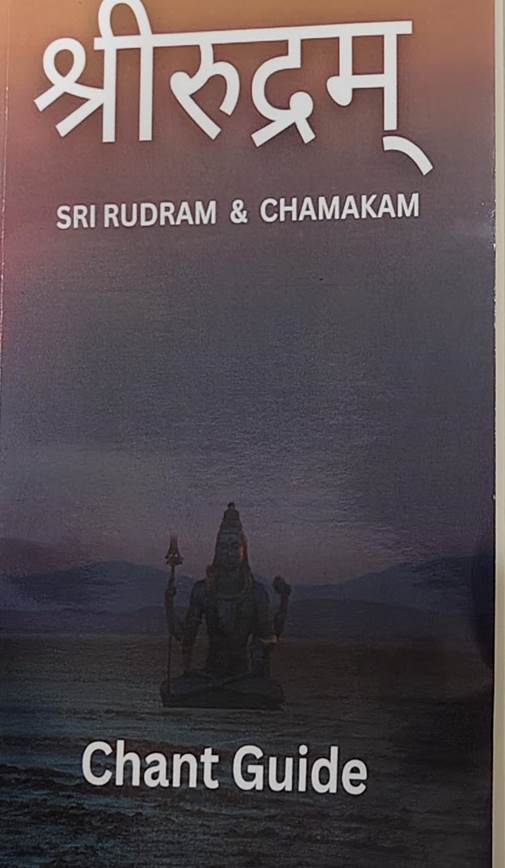
श्रीरुद्रम्
The Sri Rudram holds a position of paramount importance in Hindu spirituality, far surpassing its role as a mere hymn. This ancient Vedic chant, found in the Krishna Yajurveda, is a cornerstone of Hindu philosophy and practice, embodying millennia of spiritual wisdom. Its significance lies not only in its antiquity but in its profound ability to transform the practitioner spiritually.
At its core, Sri Rudram is a powerful invocation to Lord Rudra, an aspect of Shiva representing the transformative and destructive forces of the universe. The chant is believed to have the extraordinary power to purify the mind, body, and soul of the practitioner. Through its rhythmic verses, it's said to elevate one's consciousness, bringing the chanter closer to self-realization and cosmic understanding. This spiritual transformation is not just individual but is believed to contribute to the maintenance of cosmic balance, aligning the chanter with universal energies.
The philosophical depth of Sri Rudram is immense. It beautifully encapsulates the concept of divine omnipresence, describing Rudra as manifest in every aspect of creation, from the mundane to the cosmic. This portrayal of unity in diversity is a central tenet of Hindu philosophy, emphasizing the interconnectedness of all existence. The chant serves as a bridge between the path of devotion (Bhakti) and the path of knowledge (Jnana), making it accessible and relevant to various spiritual approaches.
In practical terms, Sri Rudram is revered for its protective and healing properties. Many believe that regular chanting creates a shield against negative energies, diseases, and misfortunes. In Ayurveda and other traditional healing systems, the vibrations produced by the chant are thought to have therapeutic effects on both body and mind. Furthermore, it's believed to have the power to dissolve negative karmas, potentially freeing the soul from the cycle of birth and death.
The cultural significance of Sri Rudram cannot be overstated. It plays a vital role in Hindu rituals and festivals, especially those related to Lord Shiva. Its verses are an integral part of elaborate pujas and yagnas, and its chanting is considered particularly auspicious during festivals like Maha Shivaratri. This cultural importance extends beyond religious boundaries, as the universal themes of Sri Rudram have attracted interest from spiritual seekers worldwide.
For the individual practitioner, Sri Rudram offers a profound journey of self-discovery. Regular practice is said to lead to deeper self-understanding and awareness, helping one recognize the divine within oneself. It's considered a form of Mantra Yoga, where the repetition of sacred sounds focuses the mind and can lead to higher states of consciousness. Some traditions even attribute mystical powers or siddhis to mastery of the chant, though this aspect is often de-emphasized in favor of spiritual growth.
In essence, the importance of Sri Rudram lies in its potential to profoundly impact the spiritual journey of the practitioner. It's not just an ancient text or a religious ritual, but a powerful tool for personal transformation, cosmic connection, and ultimate liberation. Its verses are seen as a manifestation of the primordial sound of creation, connecting the chanter with the very essence of the universe. As such, Sri Rudram continues to be a revered and vital part of Hindu spiritual practice, offering a path to deeper understanding and enlightenment for those who embrace its profound teachings.
Good Luck Yogis!
Ross Stambaugh
Purpose and Significance:
1. The Sri Rudram is considered one of the most sacred and potent chants in Hindu scripture, found in the Krishna Yajurveda.
2. It's chanted to invoke Lord Rudra's blessings, seeking protection, peace, prosperity, and spiritual enlightenment.
3. The hymn describes various aspects and forms of Rudra, emphasizing his omnipresence in the universe.
4. It's believed to have purifying effects, removing negative energies and bestowing positive vibrations.
When to Chant:
1. Daily Practice: Many devotees chant it as part of their daily spiritual routine, especially in the morning.
2. Special Occasions: It's often chanted during important Hindu festivals, particularly those related to Lord Shiva.
3. Maha Shivaratri: This is one of the most auspicious times to chant the Sri Rudram.
4. During Puja: It's an integral part of elaborate Shiva pujas and yagnas.
5. For Healing: Some believe in its healing properties and chant it during illness or distress.
How to Learn Chanting on Your Own:
1. Start with the Text: Familiarize yourself with the Sanskrit text and its meaning. Understanding the content enhances the chanting experience.
2. Listen to Recordings: There are many audio recordings available online. Listen to them repeatedly to get accustomed to the pronunciation and rhythm.
3. Break it Down: The Sri Rudram is divided into 11 Anuvākas (sections). Learn one Anuvāka at a time.
4. Practice Pronunciation: Pay special attention to Sanskrit pronunciation. Each sound is considered sacred and should be uttered correctly.
5. Start Slow: Begin by chanting slowly, focusing on accuracy rather than speed.
6. Use Visual Aids: Some learners find it helpful to use texts with phonetic translations or videos that show the text while playing the audio.
7. Regular Practice: Consistency is key. Set aside time daily for practice.
8. Join a Group: If possible, join a local group or temple where the Sri Rudram is chanted regularly.
9. Seek Guidance: If available, learn from a knowledgeable teacher who can correct your pronunciation and explain the nuances.
10. Understand the Meter: The Sri Rudram follows a specific Vedi meter. Understanding this can help with rhythm and flow.
Tips for Effective Chanting:
1. Create a Sacred Space: Have a dedicated, clean area for your practice.
2. Proper Posture: Sit in a comfortable, upright posture to ensure proper breath control.
3. Breath Control: Pay attention to your breathing. The chant should flow with your natural breath.
4. Visualize: Try to visualize the meanings as you chant. This deepens the meditative aspect.
5. Be Patient: Learning the entire Sri Rudram can take time. Be patient with yourself.
6. Respect the Tradition: Approach the learning process with reverence and respect for the ancient tradition.
7. Mind Your Diet: Some practitioners recommend following a sattvic diet to enhance the effects of the chant.
8. Time of Day: Early morning (Brahma Muhurta) is considered the best time for Vedic chanting.
Remember, while self-learning is possible, guidance from an experienced teacher can be invaluable in mastering this profound chant.
Sri Rudram
Sri Rudram Namakam
NAMAKAM FIRST ANUVAKA
OM NAMO BHAGAVATE RUDRAYA!
Namaste Rudra manyava utota ishave Namah |
Namaste astu dhanvane bahubhya muta te Namah ||
Oh! Rudra Deva! My salutations to your anger and also to your arrows. My salutations to your bow and to your two hands.
Ya ta Ishu shivatama shivam babhuva te dhanuh |
Shiva sharavya ya tava taya no Rudra mrudaya ||
Oh! Rudra! By favor of your arrow, bow, and quiver, which have shed their anger and turned auspicious, please render us happy.
Ya te Rudra Shiva tanura ghora papakashini |
taya nastanuva shantamaya girishanta bhichakashihi ||
Lord Rudra, who confers happiness, by that form of yours which is not terrible, which will not injure us, and which is highly auspicious, behold and illuminates us.
Yamishum giri shanta haste bibharsya stave |
shivam giritra tam Kuru ma higmsih purusham jagat ||
My Lord who dwells on Mount Kailas and confers gladness to all! You, who fulfills your vow of protecting all who serve you and take refuge in you; that arrow of yours which you hold ready to let fly, withhold it and make it tranquil and auspicious.
Shivena vachasa tva giri shacchavadamasi |
Yatha nah sarvam ijjaga dayakshmam sumana asatthu ||
Lord of Mount Kailash of the Vedas! We pray to attain you by our auspicious words. We ask that for all our days, this entire world will be free from ills and discord, and that we may live in amity and concord.
Adyavocha dadhivakta prathamo daivyo bhisak |
Ahimscha sarvan jam bhyayant sarvascha yatudhanyah ||
Let Him intercede on my behalf and speak in my favour, even Rudra, that foremost one, held high in honor by the gods, the physician. Let him annihilate the enemies of mine like scorpions, snakes, and tigers, and the unseen enemies like the Rakshasas, spirits and demons.
Asau yastamro aruna uta babhru sumangalah |
You chemam Rudra abhito dikshu shritaha Sahasra sho vaisagum heda imahe ||
This Sun who is copper-red when he arises, then golden-yellow, this highly auspicious and beneficent one is truly Rudra. These other Rudras who are quartered roundabout in all directions of this earth, may I ward off their anger by my praise.
Asau yo vasarpati nilagrivo vilohitah |
utainam gopa adrushanna drushannu daharyah |
Utainam vishva bhutani sa drusto mridayati nah
The black-throated Rudra who has assumed the form of the sun that glows red when rising. Him the cowherds, the women carrying water, and all the creatures behold. He, who is seen by all, let Him send happiness to us.
Namo astu nilagrivaya sahasrakshaya midhushe |
Atho you asya sattvano ham tebhyo karan namah ||
Let my salutations be to the blue-throated one, who has a thousand eyes. I also bow to his followers.
Pramuncha dhanvanastva mubhayorartni yorjyam |
yascha te hasta isavah para ta bhagavo vapa ||
Bhagavan Rudra, loosen the string from both ends of your bow. Remove out of sight the arrows from your hands.
Avatatya dhanustvam sahasraksha Shatesudhe |
Nishirya shalyanam mukha shivo nah sumana bhava ||
You having a thousand eyes, and bearing a hundred quivers, after looser your bow, kindly blunt the edges of your shafts. Assume your peaceful a auspicious Siva form and become well-intentioned towards us.
Vijyam dhanuh kapardino vishalyo banavam uta |
Ane shanna syoushava abhurasya nishangathihi ||
Let the bow of Kapardin, Rudra of the matted locks, be without its strin there be no arrows in His quiver. Let His arrows lose their capacity to s and pierce. Let His scabbard contain little power.
Ya te hetirmidhu stama haste babhuva te dhanuh |
Taya sman visvatastva mayakshmaya Paribbhuja ||
You, Oh showerer of blessings, with your weapons and the bow in Y hand, completely protect us.
Namaste astvayudhayana tataya dhrusnave |
Ubhabhyam muta te namo bahubhyam tava dhanvane ||
Let there be salutations to your sturdy and potent weapons, and a your hands and your bow.
Pari te dhanvano hetir asman vrunaktuvisvatah |
Atho ya ishudhis tavare asmannidhehi tam ||
Let the arrow of your bow spare us in all ways. And place your quiver of arrows far away from us.
Namasteastu bhavagan vishvesvaraya mahadevaya
triyambakaya triupurantakaya trikalagni kalaya kalaagni
Rudraya nilakanthaya mrutyunjayaya sarveshvaraya
sadashivaya
Sriman mahadevaya Namah
Let my salutations be to that great God who is the Lord of the universe; the great God who has three eyes and who destroys Tripura, the three Asura cities. To that God who is the Dandhya time when the three sacred fires are lit; who is Rudra the fire that consumes the universe; whose throat is blue; who has conquered death; the Lord of all; the ever auspicious one; salutations to that glorious and great God.
NAMAKAM SECOND ANUVAKA
Namo Hiranya bahave senanyou disham ca pataye namo |
Salutations to Lord Rudra with the golden arms, the leader of hosts, to the Lord of the four directions, salutations.
Namo vrukshebhyo harikeshebhyah pashunam pataye namo Namah||
Salutations to the trees tufted with green leaves; salutations to the Lord of the cattle.
saspincharaya tvishimate pathinam pataye namo |
Salutations to Him who is light yellow-red tinged and radiant; to the Lord of the pathways, salutations.
Namo babhlu shaya vivyadhinen nanam Pataye namo ||
Salutations to Him who rides on the bull, to him who has the power to pierce all things, to the Lord of food, salutations.
Namo harike shayopavitine pustanam pataye namo ||
Salutations to Him who is always black-haired, who wears the yajnopavita (sacred thread); to him the Lord of the sleek, salutations.
Namo bhavasya hetyai jagatam pataye namo |
Salutations to Him the instrument that destroys Samsara (Ignorance); to the Lord of all the worlds, salutations.
Namo Rudrayata ta vine kshetranam pataye namo namah |
Salutations to Him who protects the world by the might of His drawn bow, to Rudra the destroyer of all miseries; to the Lord of the fields and sacred places, salutations.
Suta yahantyaya vananam pataye namo |
Salutations to the charioteer, He who cannot be overcome and slain. Salutations to the Lord of the forests.
Namo rohitaya stha pataye vrikshanam pataye namah |
Salutations to the red One, the Lord; to the Lord of trees, salutations.
Namo mantrine vanijaya kakshanam pataye namah||
Salutations to the counselor of assemblies, the chief of traders, to the Lord of dense impenetrable clumps and clusters of thickets, salutations.
Namo bhuvantayou varivaskrutayau shadhinam pataye namo ||
Salutations to Him who has created the world and spread it broad, the creator of riches and lover of those who are devoted to Him; to the Lord of all vegetation, salutations.
Nama ucchair ghoshaya krandayate pattinam pataye namo |
Salutations to Him of the fearsome war cry, who causes His enemies to weep. To the leader of the foot-soldiers, salutations.
Namah krutsnavitaya dhanvate satvanam pataye namah ||
Salutations to Him who surrounds His enemies completely, and cuts off their retreat by running swiftly after the retreating stragglers; to the protector of the good who have taken refuge under Him, salutations.
NAMAKAM THIRD ANUVAKA
Namah sahamanaya nivyadhina avyadhin inam pataye namah |
Salutations to Him who cannot only withstand the shock of the onset of His enemies, but overpower them. He who can effortlessly pierce His enemies; the Lord of those who can fight on all sides, salutations to Him.
Namah kakubhaya nishanginestenanam pataye namo |
Salutations to Him who stands prominent, the wielder of the sword; to the prince of thieves, salutations.
Namo nishangina ishudhimate taskaranam pataye namo |
Salutations to Him who holds a dart in His hand to fit in His bow, who has a quiver in His back; to the Lord of those who thieve openly, salutations.
Namo vanchate pari vanchate stayunam pataye namo |
Salutations to Him who worms himself into the confidence of others cheats them occasionally, and He who cheats them systematically; to Him pretending to be an acquaintance steals and misappropriated articles, salutations.
Namo nicherave paricharayaranyanam pataye namo |
Salutations to Him who moves about guardedly ever with intention to steal; to Him who moves amidst crowds and thronged places for pick-pocketing; to the Lord of forest thieves, salutations.
Namah shrukavibhyo jigham sadbhyo mushnatam pataye namo |
Salutations to Him who is in the form of those who protect themselves in armor, who want to kill others; to the Lord of those who want to steal crops and wealth, salutations.
Namo simadbhyo naktam charadbhyah prakruntanam pataye namo ||
Salutations to Him who is in the form of swordsmen who wander about at night; to the Lord of those who kill and seize others possessions, salutations.
Nama ushnishine giricharaya kuluncha nam pataye namo |
Salutations to Him who wears a turban, who wanders about the mountains; to the leader of the landlords, salutations.
Nama ishumadbhyo dhanvavibhyascha vo namo |
Salutations to you who bear darts, who carry bows; to you salutations.
Nama atanvanebhyah pratida dhane bhyascha vo namo |
Salutations to you who string your bows and you who fit arrows in them; to them my salutations.
Nama ayacchadbhya visrujad bhyascha vo namo |
Salutations to you who pull the bowstrings and let fly the shafts; to you salutations.
Namo syadbhyo vidhyad bhyascha vo namo ||
Salutations to you who loosen the arrows and pierce the persons you aim at to you salutations.
Nama ashinebhyash shayane bhyascha vo namo |
Salutations to you Rudras who are seated and who are reclining, salutations.
Namah svapadbhyo jagrad bhyascha vo namo |
To you Rudras who are in the form of those who are asleep and awake, salutations.
Nama stishthadbhyo dhavad bhyascha vo namo |
To you Rudras who are in the form of those who stand and those who run, salutations.
Namah sabhabhya sabhapati bhyascha vo namo |
To you Rudras who are in the form of those who sit as members of assemblies and those who preside over them, salutations.
Namo ashvebhyo svapati bhyascha vo namah ||
To you Rudras who are in the form of horses and those who command them, salutations.
NAMAKAM FOURTH ANUVAKA
Nama avyadhinibhyo vividhyanti bhyascha vo namo |
Salutations to you who can hit and pierce from all sides, and you who can pierce in diverse and manifold ways.
Nama uganabhya strumhati bhyascha vo namo |
Salutations to you who are in the form of the superior female Gods and the fierce vengeful and powerful Goddesses.
Namo grutsebhyo gratsapati bhyascha vo namo |
Salutations to you, the covetous and greedy, and the leaders of such men.
Namo vratebhyo vrata pati bhyascha vo namo |
Salutations to you of diverse crowds and races, and the leaders of them.
Namo ganebhyo Ganapati bhyascha vo namo |
Salutations to you Ganas and their lords.
Namo virupebhyo vishvarupe bhyascha vo namo |
Salutations to you who assume grotesque and monstrous forms and other diverse shapes.
Namo mahadbhyah kshullake bhyascha vo namo |
Salutations to you, the great ones and the small ones.
Namo rathibhyo rathe bhyascha vo namah
Salutations to you who ride in chariots and you who ride on no conveyance, but walk on foot.
Namah senabhya senani bhyascha vo namah
Salutations to you who are in the form of chariots and those who own them.
Namah kshattrubhya sangrahitru bhyascha vo namah
Salutations to you in the form of armies and the leaders of such armies.
Nama stakshabhyo ratha kar bhyascha vo namah
Salutations to you who are in the form of those who teach the chariot driving to others, and those who drive the vehicles themselves.
Namah kulalebhyah karmare bhyascha vo namah
Salutations to you who are in the form of carpenters and fashioners of chariots.
Namah punjishtebhyo nishade bhyascha vo namah
Salutations to you who are in the form of those who mold clay and make mud vessels, and artisans working in the metals.
Nama ishukrudbhyo dhanva krud bhyascha vo namah
Salutations to you who are in the form of fowlers who net flocks of birds and fishermen who net shoals of fish.
Namo mrugayubhyah sva ni bhyascha vo namo
Salutations to you who are in the form of makers of arrows and bows.
Namah svabhyah svapati bhyascha vo namah
alutations to you who are in the form of hunters and that of the leaders of me hounds.
NAMAKAM FIFTH ANUVAKA
Namo bhavaya cha Rudraya cha
Salutations to Him who is the source of all things and to Him who is the destroyer of all ills.
Namah sharvaya cha pashupataye cha
Salutations to the destroyer and to the protector of all beings in bondage.
Namo nilagrivaya cha shiti kanthaya cha
Salutations to Him whose throat is black and whose throat is also white.
Namah kapardine cha vyuptake shaya cha
Salutations to Him of the matted locks, and to Him who is clean-shaven.
Namah sahasrakshaya cha shatadhanvane cha
Salutations to Him who has a Thousand eyes and a hundred bows.
Namo giri shaya cha sipivishtaya cha
Salutations to Him who dwells on the mount and who is in the form of Vishnu.
Namo middhushta maya ceshumate cha
Salutations to Him who showers blessings very much and who bears arrows.
Namo hrasvaya cha vamanaya cha
Salutations to Him who assumes a small size, and Him who is in the form of a dwarf.
Namo bruhate cha varshiyase cha
Salutations to the great and majestic one, to Him who is full of all excellence.
Namo vruddhaya cha samvrudhvane cha
Salutations to the Ancient One who is loudly praised by the scriptures.
Namo Agriyaya cha prathamaya cha
Salutations to Him who was before all things and who is foremost.
Nama Ashave chajiraya cha
Salutations to Him who pervades all and moves swiftly.
Namah shrighriyaya cha shibhyaya cha
Salutations to Him who is in fast moving things and in headlong cascades.
Nama urmyaya chavas vanyaya cha
Salutations to Him who is in great waves and in the still waters.
Namah srotasyaya cha dvipyaya cha
Salutations to Him who is in the floods and in the islands.
NAMAKAM SIXTH ANUVAKA
Namo jyoushthaya cha kanishthaya cha
Salutations to Him who is senior and who is junior. stod mit
Namah purvajaya chaparajaya cha
Salutations to Him who was born before all and who will be born after all.
Namo Madhya maya chapagalbhaya cha
Salutations to Him who appears in the middle, and who appears undeveloped.
Namo jaghanyaya cha, budhniyaya cha
Salutations to Him who is born from the back side and from the under side.
Namah shobhyaya cha, prati saryaya cha
Salutations to Him who is born in the mixed world of good and bad and in things that move.
Namo yamyaya cha, kshemyaya cha
Salutations to Him who is in the worlds of Yama and in the worlds of safety.
Nama urvaryaya cha khalyaya cha
Salutations to Him who is in the form of the bountiful fields and the threshing floors.
Nama shlokyaya chavasanyaya cha
Salutations to Him who is praised by the Vedic Mantras and who is expounded in the Vedantic Upanishads.
Namo vanyaya cha, kakshyaya cha
Salutations to Him who is in the form of trees in the forests and of creepers in the shaded areas.
Namah shravaya cha pratisravaya cha
Salutations to Him who is sound and the echo of the sound.
Nama asu shenaya chashurathaya cha
Salutations to Him whose armies move swiftly and who rides on a swift chariot.
Nama shuraya cha, chavabhindate cha
Salutations to the warrior, He who pierces his enemies.
Namo varmine cha, varuyour cha
Salutations to Him who is clad in armor Himself, and who has provided for the safety of His charioteer.
Namo bilmine cha kavacine cha
Salutations to Him who wears a helmet and breast-plate.
Namah shrutaya cha shrutasenaya cha
Salutations to Him who is praised in the Vedas and whose army is also praised.
NAMAKAM SEVENTH ANUVAKA
Namo dundubhyaya chahananyaya cha
Salutations to Him who is the kettle drum and who is also the drum stick.
Namo dhrusnave cha pramrushaya cha
Salutations to Him who never turns his back in fight, but is at the same time prudent.
Namo dutaya cha, prahitaya cha
Salutations to Him who is in the form of the messenger and the representative sent for special purposes.
Namo nisangine cheshudhi mate cha
Salutations to Him who has a sword and a quiver of arrows.
Nama stikshneshave chayudhine cha
Salutations to Him having keen shafts and all weapons.
Namah svayu dhaya cha sudhanvane cha
Salutations to Him bearing a beautiful and powerful weapon and bow.
Namah srutyaya cha payouraya cha
Salutations to Him who is in the narrow footpaths and the broad highways.
Namah katyaya cha nipyaya cha
Salutations to Him who is in the narrow flow of waters and in their descent from higher to lower levels.
Namah sudyaya cha, sarasyaya cha
Salutations to Him who is in the marshy and muddy places and in the lakes.
Namo nadyaya cha, vaishantaya cha
Salutations to Him who is in the flowing waters of rivers and in the still waters of mountain tarns.
Namah kupyaya chavatyaya cha
Salutations to Him who is in the wells and in the pits.
Namo varshyaya cha chavarshyaya cha
Salutations to Him who is born in the rivers as river water and in the absence of rains.
Namo meghyaya cha, vidyutyaya cha
Salutations to Him who is in the clouds and in the lightning.
Nama idhriyaya chatapyaya cha
Salutations to Him who is in the glittering white autumn clouds and who is in the rains and mixed with sunshine.
Namo vatyaya cha, reshmiyaya cha
Salutations to Him who is in the rains accompanied by winds and in the rains accompanied by hail.
Namo vastavyaya cha vastupaya cha
Salutations to Him who is household wealth and the guardian deity of the household.
NAMAKAM EIGHTH ANUVAKA
Namah somaya cha Rudraya cha
Salutations to Him who is with His consort Uma.
Namastamraya charunaya cha
Salutations to Him who is red and rosy-red also.
Nama shangaya cha pashupataye cha
Salutations to Him who brings happiness and who is the Lord of all creatures.
Nama ugraya cha bhimaya cha
Salutations to Him who is fierce and strikes terror at sight into His enemies.
Namo Agrevadhaya cha dure vadhaya cha
Salutations to Him who kills in front and from afar.
Namo hantre cha haniyase cha
Salutations to Him who is in the form of everyone who slays, and who kills all at the time of Pralaya.
Namo vrukshebhyo harikeshebhyo
Salutations to the stately trees with green tufts of leaves.
Nama staraya
Salutations to Him who is the Pravana mantra; Om.
Namash shambhave cha mayo bhave cha
Salutations to Him who is the source of happiness here and hereafter.
Namah shankaraya cha mayaskaraya cha
Salutations to Him who is inherently of the nature of conferring happiness directly in this world and the world hereafter.
Namah Shivaya cha shivataraya cha
Salutations to Him the auspicious one, who is more auspicious than all others.
Nama stiryouraya cha kulyaya cha
Salutations to Him who is ever present in holy places and on the banks of the rivers.
Namah paryaya chavaryaya cha
Salutations to Him who stands on the further shore and on this shore.
Namah prataranaya chottaranaya cha
Salutations to Him who ferries men over the sins and evils of Samsara (the Illusions of the world), and who by the grant of knowledge ferries them over Samsara altogether.
Nama ataryaya chaladyaya cha
Salutations to Him who is born again and again in Samsara and who tastes the fruits of Karmas in the form of Jiva.
Namah shaspyaya cha, phenyaya cha
Salutations to Him who is in the form of tender grass and foam.
Namah sikatya ya cha pravahyaya cha
Salutations to Him who is in the form of the sands and flowing water.
NAMAKAM NINTH ANUVAKA
Nama irinyaya cha prapayouraya cha,
Salutations to Him who abides in saline tracts and in trodden pathways.
Namah kigim shilya cha kshayanaya cha
Salutations to Him who is in the rocky uninhabitable and rugged tracts and in habitable places.
Namah kapardine cha pulastayou cha,
Salutations to Him who binds His matted locks and wears them majestically like a crown and Him who ever stands before His devotees.
Namo goshyouraya cha, grihyaya cha
Salutations to Him who is in the cowpens and in the homesteads.
Nama stalpyaya cha, gehyaya cha,
Salutations to Him who reclines on couches and who takes his ease in stately store yard buildings.
Namah katyaya cha, gahvareshthaya cha,
Salutations to Him who is in the thorny impenetrable forest places and in accessible mountain caves.
Namo hradayyaya cha niveshpya ya cha
Salutations to Him who is in deep waters and in the dew drops.
Namah pam savyaya cha rajasyaya cha
Salutations to Him who is in the visible and invisible dust.
Nama shuskyaya cha Harityaya cha
Salutations to Him who is in dry things and green things.
Namo lopyaya cholapya cha
Salutations to Him who exist in hard places which do not sustain even grass and in coarse and other grasses.
Nama urvyaya cha surmyaya cha
Salutations to Him who is in the earth and in the fair waves.
Namah parnyaya cha parnashadyaya cha
Salutations to Him who is in the green leaves and the dried ones.
Namo paguramanaya chabhighnate cha,
Salutations to the Rudraganas (soldiers of Rudra) who have their weapons uplifted and who strike from the front.
Nama akkhyidate cha, prakkhi date cha,
Salutations to them (Rudraganas) who afflict slightly and also grievously.
Namo vah kirikebhyo devanam hrudayou bhyo,
Salutations to you who shower wealth and who dwell in the hearts of the Gods.
Namo vikshina kebhyo,
Salutations to you who are not liable to decay (and who abides in the hearts of the Gods).
Namo vichinvakte bhyo,
Salutations to you who search and examine the good and bad that each one does (and who abides in the hearts of the Gods).
Nama anir hatebhyo
Salutation to them who have rooted out sin utterly (and who abides in the hearts of the Gods).
Nama amivaktebhyaha ||
Salutation to those who have assumed a gross form and stand in the material shape of the universe (and who abide in the hearts of the Gods).
NAMAKAM TENTH ANUVAKA
Drape Andha saspate daridran nilalohita, esham purushanam esham pushunam ma bhermaro mo esham kim chanamamat
You who makes sinners lead contemptible lives, Lord and dispenser of food. You who choose to remain poor amidst your riches. You are dark in the neck and red elsewhere. Frighten not our near and dear persons or our cattle. Let not even one among them perish or get ill.
Ya te Rudra Shiva tanu Shiva vishvaha bheshaji, Shiva Rudrasya Bhesaji tasya no mruda jivase ||
Oh Lord Rudra! By that form if your which is peaceful and auspicious, more highly auspicious since it is a panacea for human ills for all days, most highly auspicious since by the grant of knowledge and illumination, it utterly uproots ignorance and the entire misery of samsara, by that gracious form of your make us lead a full and happy life.
Imam Rudraya tavase kapardane kshayadviraya Prabhara mahe matim,
Yatha na sha masa dvipade chatushpade vishvam pushtam
Grame asminnana turam |
May we foster and cherish this attitude of mind towards Rudra even, the strong one with the matted locks, opposing whom his enemy warriors are defeated and meet their doom. May we adopt a mental inclination which results in Rudra maintaining friendship with our human relations and our wealth of cattle; sleek and content.
Mruda no Rudrota no maya skrudhi kshayadviraya Namasa vidhema te, yacchamcha yoscha manurayaje pita Tadshyama tava Rudra pranitau ||
Lord Rudra! Confer on us happiness in this world, and in the next. You who has destroyed our sins, we shall serve and worship you by our salutations. That freedom from sorrow which Manu, our progenitor, sought for and the happiness which he obtained, we shall taste it, if You are inclined and gracious to us.
Ma no mahanta muta ma no arbhakam ma na ukshanta Muta ma na ukshitam,
ma no vadhih pitaram mota Mataram priya ma nastanuvo Rudra ririshaha ||
Lord Rudra! Afflict not the elders in our midst, nor the tender babe, nor the procreating youth, nor the child in the womb, nor the father or mother, nor our bodies dear to us.
Ma nastoke tanayou ma na ayusi ma no goshu ma no Ashveshu ririsaha |
Viranma no Rudra bhamito vadhirhavi - shmanto namasa vidhema te ||
Lord Rudra! Getting angry at our transgressions hurts not only our children, our sons in particular, but also our cattle and horses, and our warriors. Making offerings into the sacred fire, we shall serve and calm you by our Namaskars (salutations).
Aratte goghna uta purushaghne kshayadviraya sumna masme Te astu, Raksha
cha no adhi cha deva bruhyatha cha nah Sharma yacchavi barhah ||
Oh Deva! Let that terrible form of yours be far away from us -that which afflicts our cattle, our sons and grandsons, and wastes your enemy warriors Let that form which confers happiness be near to us. Protect us. Recommend us to the other Gods and bespeak in our favor. You who increase the happiness of both worlds. Please confer happiness upon us.
Stuhi shrutam garta sadam yuvanam mrugannabhima mupahat numugram,
mruda jaritre Rudra Satvano anyante asmanniva pantu senaha ||
I praise you the famous one, seated in the heart, the ever-youthful, terrible like the lion, fierce for the purpose of destruction. Lord Rudra, having been praised by us, let your armies strike at others than us.
Parino Rudrasya hetir vrunaktu pari tve shasya durmati raghayoho |
Ava sthira maghavad bhyastanushva midhvasttokaya tanayaya mridaya
Let the weapon of Rudra give us a wide berth. Let the fixed displeasure of Rudra blazing with just anger based on our sins, and keen to punish us, depart from us. Showers of Blessings! Your purpose and your shaft are ever unerring: loosen them in regard to us; we who approached you with sacrifices and prayers. Make our sons and their sons happy,
Midhushthama shivatama shivo nah sumana bhava parame vriksha Ayudhan
nidhaya krittim vasana achara pinakam bibhradagahi |
Supreme showerer of blessings. Supreme auspicious One! Be auspicious and beneficent, and bear goodwill to us. Place your threatening and hurtful weapons on some tall and distant tree. Approach us wearing your elephant hide garment. Come bearing your Pinaka bow.
Vikirida vilohita Namaste astu bhagavaha, Yaste
sahasragam hetayo nyamasmanniva pantu tah ||
Showerer of wealth! You white One! Lord Bhagavan! Salutations to you. Let your thousands of weapons not destroy us, but rather destroy our enemies.
Sahasrani sahasradha bahuvostava hetayah |
Tasamishano bhagavah parachina mukha krudhi ||
In your arms exist thousands of kinds of weapons in thousands of numbers. But Bhagavan, You art Lord and master of them. Turn their hurtful faces away from us.
NAMAKAM ELEVENTH ANUVAKA
Sahasrani sahasrasho you Rudra Adhi bhumyam,
teshagam Sahasra yojane vadhanvani tanmasi ||
Those Rudras who live on the face of the earth in thousands of varieties, we shall cause the strings of their bows to be loosened, and the bows themselves to be deposited thousands of yojanas far away from us.
Asmin mahatyarnaven tarikshe bhava adhi
Those Rudras who dwell in the sublime ocean and the space between sky and earth, we shall cause the strings of their bows to be loosened and the bows themselves to be deposited thousands of yojanas far away from us.
Nila griva shiti kantha sharva adhah kshama charah
The Rudra Ganas, blue throated, where the Kalakuta poison rested; and white throated in other portions; those Rudras who dwell in the nether regions; we shall cause the strings of their bows to be loosened, and the bows themselves to be deposited thousands of yojanas far away from us.
Nila griva shiti kantha divam Rudra upashritaha||
Blue throated where the poison rested and elsewhere white throated Rudras who dwell in heaven, we shall cause the strings of their bows to be loosened, and the bows themselves to be deposited thousands of yojanas far away from us.
Yo vrikshesu saspinjara nilagriva vilohitaha,
Yo bhutana madhi patayo vishikhasah kapardianaha,
Those Rudras of the color of tender grass who are black throated, those who are red in color, who live in trees, we shall cause the strings of their bows to be loosened, and the bows themselves to be deposited thousands of yojanas far away from us.
You annesu vividhyanti patresu pibato janan
Those Rudras who stand in the food and in the liquids, and pierce the persons who eat the food and drink the liquids, we shall cause the strings of their bows to be loosened, and the bows themselves to be deposited thousands of yojanas far away from us.
You patham pathi rakshaya ailabruda yavyudhah,
Those Rudras who are the protectors of the pathways, the givers of food, who fight with one enemy, we shall cause the strings of their bows to be loosened, and the bows themselves to be deposited thousands of yojanas far away from us.
You tirthani pracharanti srukavanto nisanginah
Those Rudras who haunt the sacred places wearing short daggers and long swords, we shall cause the strings of their bows to be loosened, and the bows themselves to be deposited thousands of yojanas far away from us.
You etavanta scha bhuyam sascha disho Rudra vitasthire,
Those Rudras so far mentioned, and over and above them, who have entered the quarters and occupied them, we shall cause the strings of their bows to be loosened, and the bows themselves to be deposited thousands of yojanas far away from us.
Tesagam sahasra yojane vadhanvani tanmasi.
Those Rudras who are on this earth, to whom food turns into shafts, I bow to them with my speech. With my ten fingers joined, I bow to them with my body facing the east, the south, the west, the north, and upwards, I bow to them with my mind. May they render me happy. Oh Rudras, to whom we bow! I consign him whom we hate and he who hates us, into your yawning mouths.
Namo Rudrebhyo you pruthivyam you ntarikshe, You divi yousa mannam vato varsamisa vastebhyo Dasha cirdasha dakshina dasha prati cirda sho dicirda shor Dhvastebhyo Namaste no mridayantu te yam dvismo Yascha no dvestim tam vo jambhe dadhami.
Those Rudras who dwell in the middle region between heaven and the earth, for whom the wind furnishes the shaft, salutations to them. With the ten fingers joined, I bow to them in the east, the south, the west, the north and upwards. Salutations to them. May then render me happy. They whom we hate, and they who hate us, I consign them into their yawning mouths. Those Rudras who dwell in heaven, to whom rain serves as a shaft, salutations to them. With the ten fingers joined, I bow to them in the east, the south, the west, the north and upwards. Salutations to them. May then render me happy. He whom we hate, and he who hates us, I consign them into your yawning mouths.
Tryambakam yajamahe sugandhim pushtivardhanam
urvarurkamiva bhamdhanam mrityor mukshiya mamritate.
He who has divine fragrance, He who makes men powerful and full of plenty, Him even we worship, the three-eyed Rudra. Like a ripe berry from its stalk, release me from death, and let me not turn away from immortality and enlightenment.
Yo Rudro agnau yo apsu ya oshadhishu yo Rudro
vishva bhuvana vivesha tasmai Rudraya namo astu
That Rudra who has even entered into and pervaded fire, the waters, vegetation, and all the worlds, let my salutations be to that Rudra.
Tamu shthuti yah svishuh sudhanva yo vishvasya shyati bheshajasya Yakshvamahe saumanasaya Rudram namo bhrdevamasuram duvasya
He who holds a beautiful and powerful shaft and a strong bow, He who is the source and repository of all medicines, praises Him alone. To gain the favor and goodwill of that supreme and effulgent God Rudra, let us worship Him, honor and adore Him by salutations.
Ayam me vishvabhesajo yam shivabhimarshanaha
Due to its contact with the Linga image, this right hand of mine is fortunate. Indeed this hand of mine is a panacea for all human beings for all ills.
Yo te sahasramayutam pasha mrityo martyaya hantave
Tanyagyasya mayaya sarvanava yajamahe
Oh Death in the form of Rudra. Those countless nooses of yours by which You destroy all mortal creatures, we shall loosen them by the efficiency of our worship of you.
Mrityave Svaha, Mrityave Svahaha
I offer this sacred food offering in sacrifice to Rudra the Destroyer.
OM Namo Bhagavate Rudraya Vishnave mrityume pahi
Om, Salutation to the omnipresent Bhagavan Rudra. Protect me from death.
Prananam granthirasi rudro ma vishantakaha.
Tenan nenapyayasva.
OM Namo Bhagavate Rudraya Vishnave mrityume pahi
Prananam granthirasi rudro ma vishantakaha.
Tenan nenapyayasva.
Kamadhenu, the divine cow discovered the hymns by which the gods are invoked. Manu was the sacrificer. Brihaspathi repeated the Sasthra Mantras which were gladden. May the Visva Devas praised in the hymns and Mothe Earth not cause me any suffering. Let me think sweet thoughts; let me perform sweet actions which bear sweet fruits; let me bear sweet offerings, let my speech and praise be sweet; let me utter words which sound sweet to the Gods; let me utter sweet words to men who would lend their ears. Let the Gods illumine me and render my speech sweet. Let the Prithis, the forefathers feel glad and approve of me.
END OF NAMAKAM
Sri Rudram Chamakam
After praying and identifying Rudra with everything in the Namakam, the Chamakam is recited, in which the devotee identifies himself with Lord Shiva and asks him to give him everything!! This excellent prayer is intended for the bulk of the people and every thing to be cherished in the world is included in this ascend to the state of Jnani to attain Moksha i.e. eternal happiness. Chamakam assures granting of what all you ask in a full throated manner unabashedly. The creator makes no distinction between the things of the world and the other world. Both belong to him and desire born out of Virtue is really a manifestation of divinity and Dharma.
Chamakam furnishes completely the ideal of human happiness and defines in the highest degree the desires and do not delimit to be asked or to be granted. In the First Anuvaka prayer is made to keep fit in the human being, his vitalities, internal and sensory organs and mind heal and healthy, a long and peaceful and happy old age.
The Second Anuvaka prominence and leadership, common sense, intellectual acumen, capability to face trying circumstances, Spiritual elevation, worldly splendor and enjoyments. The third develops innate urge of God and meditative flights and spiritual ecstasy, service to Divinity and humanity and a condition where the world wants him and he wants the world for upliftment. The fourth ensures courtesy, fitness of the body and the best food for the body, cozy and comfortable. The fifth asks for the Nava ratnas, the precious stones and all the animals to sub-serve his interest and the qualified materials best in their form for his rituals.
The sixth emphasizes the importance of Indra as a co-sharer in the offerings to the other Gods. Thus makes him big to get the major obtainers of Havis among all Gods and his special honor and supremacy.
The Seventh lists the various instruments necessary for some and sacrifices in the "Homa Kunda", the site of offerings to the fire God with Svahakara.
The ninth is the prime prayer consisting of all the contents of four Vedas.
The tenth invokes all the biological species to co-operate in his daily wealth and also for the sacrificial fire. It also involves higher spiritual elevations, and makes it as Jnana Yajna. The Eleventh Anuvaka brings out the long list of benedictions asked for in the odd divine number and even human numbering. Chamakam roots are firmly implanted in the worldly desires ultimately leading to divine fulfillment. It is prayed that the Divine is immortal, infinite and is the cause of earth and heaven, space and time, reborn after the end of everything and is the presiding deity.
Chamakam Namakam caiva purusa suktam tathaiva ca |
Nityam trayam prayunjano Brahmaloke mahiyate ||
He who ever recites Namakam and Chamakam along with Purusa suktam daily will be honored in Brahmaloka.
CHAMAKAM FIRST ANUVAKA
Om Agnaavishhnuu sajoshhasemaa vardhantu vaam girah Dyumnairvaajebhiraagatamh Vaajashcha me prasavashcha me prayatishcha me prasitishcha me dhiitishcha me kratushcha me svarashcha me shlokashcha me shraavashcha me shrutishcha me jyotishcha me suvashcha me praanashcha me apaanashcha me
vyaanashcha me asushcha me chittam cha ma aadhiitam cha me vaakcha me manashcha me chakshushcha me shrotram cha me dakshashcha me balam cha ma ojashcha me sahashcha ma aayushcha me jaraa cha ma aatmaa cha me tanuushcha me sharma cha me varma cha me angaani cha me asthaani cha me paruushhi cha me shariiraani cha me
Let God grant me food, permit me to eat the food, ensure purity of food and keen desire to relish, digest and cause it to obtain. Let me recite, chant Vedic mantras with Specific intonation with pleasing and absorbing voice with proper hearing, mental alacrity and bless me to reach the abode of Gods. Cause the proper functioning of the three airs prana, Apana and Vyana and the mukhya prana circulation and the secondary airs of udana and samana mental knowledge, powerful speech and a perfect and harmonious mind, Keen vision and hearing, healthy and active functioning of sense organs, highest intelligence (ojas) and the strength and virility and vigor to crush the enemies, assured longevity and honorable old age; and a sustainable egotism and a sound and well built body with full happiness ensuring protection to all the limbs and well built body with full happiness ensuring protection to all the limbs and well arranged bones and joints. Ensure birth in esteemed and noble bodies forever and in future. These thirty six items are prayed in this Anuvaka for the body which is the cornerstone for upholding Dharma.
CHAMAKAM SECOND ANUVAKA
Jyaishhthyam cha ma aadhipathyam cha me manyushcha me bhaamashcha meamashcha meambhashcha me jemaa cha me mahimaa cha me varimaa cha me prathimaa cha me varshhmaa cha me draaghuyaa cha me vriddham cha me vriddhishcha me satyam cha me shraddhaa cha me jagachcha me dhanam cha me vashashcha me tvishhishcha me kriidaa cha me modashcha me jaatam cha me janishhyamaanam cha me suuktam cha me sukritam cha me vittam cha me vedyam cha me bhuutam cha me bhavishhyachcha me sugam cha me supatham cha ma riddham cha ma riddhishcha me kliptam cha me kliptishcha me matishcha me sumatishcha me
I implore you to grant these to me. Recognition as the
CHAMAKAM THIRD ANUVAKA
Shancha me mayashcha me priyam cha menukaamashcha me kaamashcha me saumanasashcha me bhadram cha me shreyashcha me vasyashcha me yashashcha me bhagashcha me dravinam cha me yantaa cha me dhartaa cha me kshemashcha me dhritishcha me vishvam cha me mahashcha me samvichcha me gyaatram cha me suushcha me prasuushcha me siiram cha me layashcha ma ritam cha me amritam cha meayakshmam cha meanaamayachcha me jiivaatushcha me diirghaayutvam cha meanamitram cha me abhayam cha me sugam cha me shayanam cha me suushhaa cha me sudinam cha me
Let Lord Shiva grant us happiness in both worlds (earth and heaven). All the materials are dearer and attractive and worthy of possession in heaven and endearing relations. Material and spiritual welfare; prosperity, cozy and comfort; name, fame and fortune and enormous riches, proper guidance from elders and well wishers, palatial mansions, and due support from all including parents. The capacity to protect all belongings earned and bequeathed, undaunted courage, chivalry, valor, stand fastness possessing the community pleasure and honor and be an embodiment of Vedic knowledge and the proficiency to impart the same to all others, command obedience and service from the progeny, capacity to develop expertise in cultivation of agricultural works. Ardent desire to conduct spiritual rituals and thereby gain the fruits of the holy acts. Be free from bodily ailments, ensuring longevity, circumventing untimely death, devoid of enemies and antagonism, assured of bountiful sleep and a very successful and glamorous day and dawn. These thirty six aspirations are prayed to be fulfilled in this third Anuvaka.
CHAMAKAM FOURTH ANUVAKA
Uurkcha me suunritaa cha me payashcha me rasashcha me ghritam cha me madhu cha me sagdhishcha me sapiitishcha me krishhishcha me vrishhtishcha me jaitram cha ma audbhidyam cha me rayishcha me
Most cherished senior and eminent person overriding among men; combat resentment and control internal anger, and the outward manifestation of anger; and the in depth mind and general character, and obtaining sweet waters; commanding and victory over enemies. The wealth and fame derived by me, from these successes, longed and valued by others; Increase of my worldly possessions, and my offspring and perennial progeny to posterity and superiority born out of knowledge and personality. conscious of truth always, discipline and staunch belief in Vedas and scriptures in the days ahead and enhancement in both movable and immovable assets and treasure in Gold and Silver and in the special attractiveness and personal charm, Feeling pride of body; and in the diversion towards sports and other games and the pleasures accrued by such avocations and all that I inherited through heritage and for future acquisitions and proficiency in Vedic mantras and the auspiciousness derived due to the conduct of such sacred rites and rituals.
The wealth of past and future prosperity with great advanced strides with excellent and harmonious resorts for my stay and recreation as diversion, secured and well guarded path ways for my movements of coming and going, assured increased spiritual benefits and merits during and after life and all befitting sumptuous requirements to make my life journey most pleasing and comfortable and the will and ability to put them for efficient use, a perfect and balanced intellect and wisdom and the dexterity to tackle difficult situation gloriously with tremendous success. These thirty eight things are requested in this Anuvaka.
raayashcha me pushhtam cha me pushhtishcha me vibhu cha me prabhu cha me bahu cha me bhuuyashcha me puurnam cha me puurnataram cha me akshitishcha me kuuyavaashcha me annam cha meakshuchcha me vriihiyashcha me yavaashcha me maashhaashcha me tilaashcha me mudgaashcha me khalvaashcha me godhuumaashcha me masuraashcha me priyamgavashcha meanavashcha me shyaamaakaashcha me nivaaraashcha me
Let me be granted food, good reception, hospitality, milk, tasty sweet bountiful juices, ghee, honey and blessed with participating at food, drinking with others company, abundant agricultural activities, Sumptuous rains, Virgin cultivable fertile lands; with lushy tall sky high green trees and foliage, flower beds, gold, and costly and rare navaratna stones; blessed with great grandchildren with a pleasant feeling of possession and oneness and complete security and protection, with a well built and nourished and maintained body, with teaming cereals, pellets, pulses profusely available and proliferating, ever on the increase, devoid of hunger by consuming them perpetually with complete satisfaction, always with growing paddy, barley black gram, gingerly seeds, green gram castor oil seeds, wheat and White Bengal gram, with elongated bushy millets (small paddy) and fine Superior paddy and excellent roots and all readily available grains in the Jungles. All the above thirty eight desires are prayed for to be fulfilled in this Anuvaka.
CHAMAKAM FIFTH ANUVAKA
Ashmaa cha me mrittikaa cha me girayashcha me parvataashcha me sikataashcha me vanaspatayashcha me hiranyam cha me ayashcha me siisam cha me trapushcha me shyaamam cha me loham cha me agnishcha ma aapashcha me viirudhashcha ma oshhadhayashcha me krishhtapachyam cha me akrishhtapachyam cha me graamyaashcha me pashava aaranyaashcha yagyena kalpantaam vittam cha me vittishcha me bhuutam cha me bhuutishcha me vasu cha me vasatishcha me karma cha me shaktishcha me arthashcha ma emashcha ma itishcha me gatishcha me
Let Lord grant me stone, earth spectrum of mountain ranges, basins of river waters, hillocks, sands, Medicinal herbs, tall and fruit bearing trees, gold, silver, lead, tin, steel, bronze and copper. Be blessed with fire, water, creepers, fine foliage everlasting green vegetation, cultivable products, and stray growth millets, and sacrificial animals wild and domestic, wealth ancestral and acquired, progeny and property under acquisition, all worldly benefits, and accompanying advantages, hard earned income and valued belongings minor and major, cozy and comfortable dwellings and abodes to my progeny and the capability to perform sacred rituals and sacrificial rites such as yajnas perfectly and very successfully and enjoying the fruits there of, assuring harmony, happiness and prosperity achieving my desired objects and finally attaining the goal of liberation. Thirty one specific desires are prayed to be fulfilled in this fifth Anuvaka.
CHAMAKAM SIXTH ANUVAKA
Agnishcha ma indrashcha me somashcha ma indrashcha me savitaa cha ma indrashcha me sarasvatii cha ma indrashcha me puushhaa cha ma indrashcha me brihaspatishcha ma indrashcha me mitrashcha ma indrashcha me varunashcha ma indrashcha me tvashhtaa cha ma indrashcha me dhaataa cha ma indrashcha me vishhnushcha ma indrashcha meashvinau cha ma indrashcha me marutashcha ma indrashcha me vishve cha me devaa indrashcha me prithivii cha ma indrashcha meantariiksham cha ma indrashcha me dyaushcha ma indrashcha me dishashcha ma indrashcha me muurdhaa cha ma indrashcha me prajaapatishcha ma indrashcha me
This Anuvaka is titled as 'Arthendram' because all Gods are clubbed with Indra and Indra is God of Gods and he gets a share of all sacrificial offerings along with every God. Thus a bigger share is offered to Indra, the Antaryami. Thus twenty five Gods are invoked along with Indra to grant us benevolence. Agni, Indra, Soma and Indra; Sivata and Indra; Saraswati and Indra; Pusa and Indra; Bruhaspati and Indra; Mitra and Indra; Varuna and Indra; Tvasta and Indra; Vishnu and Indra; The two Aswins and Indra; The Maruts and Indra; The Visve devas and Indra; the earth and Indra; the intervening space in between celestial earth and Indra; the four sides (Disas) and the space above Indra and prajapati and Indra.
CHAMAKAM SEVENTH ANUVAKA
Ashushcha me rashmishcha meadaabhyashcha me adhipatishcha ma upaashushcha me antaryaamashcha ma aindravaayashcha me maitraavarunashcha ma aashvinashcha me pratipasthaanashcha me shukrashcha me manthii cha ma aagrayanashcha me vaishvadevashcha aindraagnashcha me vaishvadevaashcha me me dhruvashcha me vaishvaanarashcha ma ritugraahaashcha me atigraahyaashcha ma
marutvatiiyaashcha me maahendrashcha ma aadityashcha me saavitrashcha me saarasvatashcha me paushhnashcha me paatniivatashcha me haariyojanashcha me
Let the vessels used in the sacred soma sacrifice be granted to us. They are the Amsu, the Rasmi, the Adhabya; Adhipati (for curds), the Upamsu (for Soma Juice) the Antaryama, the vessels for Mitra, Varuna, the twin Aswins, the pratiprastana, the Sukra, the Manthi, the Agramana, the Vaisvadeva, the Dhruva, the Vaisvanara, the Rtugrahas, the Atigrahas, Indra and Agni, for the Visvedas, for Maruts, the supreme Indra, Aditya, Savita, Saraswati, Pusa, Patnivata and the Hariyojanas.
CHAMAKAM EIGHTH ANUVAKA
Idhmashcha me barhishcha me vedishcha me dhishhniyaashcha me sruchashcha me chamasaashcha me graavaanashcha me svaravashcha ma uparavaashcha me Adhishhavane cha me dronakalashashcha me vaayavyaani cha me puutabhrichcha me
aadhavaniiyashcha ma aagniidhram cha me havirdhaanam cha me grihaashcha me sadashcha me purodaashaashcha me pachataashcha me avabhrithashcha me svagaakaarashcha me
May God bless me with all the external Sacrificial practices to perform the sacrifices. Such as sacred samidhaas (holy sticks) darbha (dried grass on the river banks) the vedica the flat form (Homa Kunda) to perform the Yagna, the money (Dakshina) and the raised seat for the Hotha, the vessels for Homams, the wooden vessel for keeping the soma juice and the instrument to prepare the juice, wooden knives and the four Homa gundams (the pits for offering the Homa) dravya, wood from fig trees, vessel made of banyan tree in which the crushed juice is stored, and the mud pots, and the lighting place of fires; the raised elevated place for keeping the Haves and the wives of the priests and the high raised seating place for the udghatan who chants the mantras and to keep the rice and cooked offering in the sacrificial Homa fire and for the auspicious bath at the end of the Homa ritual and for invoking Gods in the Sacrificial fire by mantras.
CHAMAKAM NINTH ANUVAKA
Agnishcha me dharmashcha mearkashcha me suuryashcha me praanashcha meashvamedhashcha me prithivii cha meditishcha me ditishcha me dyaushcha me shakkvariirangulayo dishashcha me yagyena kalpantaam rikcha me saama cha me stomashcha me yajushcha me diikshaa cha me tapashcha ma ritushcha me vratam cha me ahoraatrayorvrishhtyaa brihadrathantare cha me yagyena kalpetaamh
Let Lord grant me the sacrificial fire, the pravarga for performing soma yaga, the Arka, Suurya and prana Homa and the horse Sacrifice and the deities earth Aditi, Dhiti, heaven, the pointing finger of the holy sacrifices, and all the requisite necessities for the performance of the holy sacrifices, and the powerful mantras in the veda i.e, Rig veda, Sama Veda, Stoma Mantras in Adharvana veda and yajur veda, the Diiksha to perform the ritual and the necessary time to conduct the Homa, the vrata, the oaths, the disciplines codified and sumptuous constant rains day in and day out with the two i.e, Bruhat and Ritantara hymns for the successful efficacious sacrifices.
CHAMAKAM TENTH ANUVAKA
Garbhaashcha me vatsaashcha me travishcha me travii cha me dityavaath cha me dityauhii cha me pajnchaavishcha me pajnchaavii cha me trivatsashcha me trivatsaa cha me turyavaath cha me turyauhii cha me pashhthavaath cha me pashhthauhii cha ma ukshaa cha me vashaa cha ma rishhabhashcha me vehashcha me anadvaajncha me dhenushcha ma aayuryagyena kalpataam praano yagyena kalpataamapaano yagyena kalpataam vyaano yagyena kalpataam chakshuryagyena kalpataam shrotram yagyena kalpataam mano yagyena kalpataam vaagyagyena kalpataam aatmaa yagyena kalpataam yagyo yagyena kalpataamh
Let me be granted the protection of calves in the wombs of the cows new born and one half year old male and female offsprings, and two year male and female calves, two and half year old male and female calves and also three years calves males and females and four years calves male and female and five years calves male and female, the majestic breeding bulls, the virgin cows and the non conceived cows, the newly delivered ones the luggage pullers and all these are made efficacious to be very useful for multipurpose and be granted long life full of sacrifices with prana, Apaana, Vyaana airs, the eye and ear with sacrifices of the ming, speech, the Ego 'I' along with sacrifices with perfection in the truest term. This tenth Anuvaka consists of thirty one specific desires to be granted as ultimate ones.
CHAMAKAM ELEVENTH ANUVAKA
Ekaa cha me tisrashcha me pajncha cha me sapta cha me nava cha ma ekadasha cha me trayodasha cha me pamchadasha cha me saptadasha cha me navadasha cha ma eka vishatishcha me trayovishatishcha me pamchavishatishcha me saptavishatishcha me navavishatishcha ma ekatrishachcha me trayastrishachcha me chatasrashcha me ashhtau cha me dvaadasha cha me shhodasha cha me vishatishcha me chaturvishatishcha meashhtaavishatishcha me vaatrishachcha me shhattrishachcha me chatvarishachcha me chatushchatvaarishachcha meashhtaachatvaarishachcha me vaajashcha prasavashchaapijashcha kratushcha suvashcha muurdhaa cha vyashniyashcha antyaayanashcha antyashcha bhauvanashcha bhuvanashchaadhipatishcha
Let me be granted the uneven number one, three, five, seven, Nine, eleven, thirteen, fifteen, seventeen, Nineteen, twenty one, twenty three, twenty five, twenty seven, twenty Nine, and thirty one, thirty three, and even numbers four, eight, twelve, and sixteen, twenty, and twenty four, twenty eight, thirty two thirty six, and forty and forty four, forty eight to ensure food and its production, its continuity, and the urge to enjoy, the origin of all productions, the sun, the heaven, the head of all, the infinite, the all pervading like the sky, time and the like present at the end of total consummation exists at the end of it on the earth as universal form, the Antaryami the immortal, the inner ruler of everything, the omnipresent and omnipotent.
CHAMAKAM SHANTI PATHA
Idaa devahuurmanuryagyaniirbrihaspatirukthaamadaani shasishhadvishvedevaah suuktavaachah prithiviimaatarmaa maa hisiirmadhu manishhye madhu janishhye madhu vakshyaami madhu vadishhyaami madhumatiim devebhyo vaachamudyaasa shushruushhenyaam manushhyebhyastam maa devaa avantu shobhaayai pitaroanumadantu
The Divine Gods are implored through the mantras of Kamadhenu. Manu does the Sacrifices, Bruhaspati recites the pleasant mantras. Let these praises of Visva devas and mother earth save me from suffering. Let my pleasant thoughts bring forth pleasant actions and the resultant enjoyable fruits. Let my Joyous offerings bear fine and worthy speech and my words please the divinity, make men lend their ears to gladden and Gods enlighten me and invoke my speech very powerful and my forefathers feel excellently glad over it and bless me to perpetuate it.
Om shaantih shaantih shaantih |
About Ross Stambaugh
Ross is an Authorized Level 2 instructor who learned Ashtanga Yoga directly under the teachings of Saraswati Jois in Mysore, India and has assisted Saraswati on multiple occasions. He has been practicing for over 25 years and continues to take annual trips to India to further his studies. In 2017, he received his Authorization to teach from Saraswati Jois, becoming one of the few teachers to be authorized to teach Intermediate Series by her.
Ross seeks to preserve the traditional Ashtanga method by maintaining a daily practice and teaching his students with the same integrity and patience that was taught to him by his teachers.
Ross has a Master's Degree in Education and was a public school teacher.